MAKEUP BLOG- Looking back on SDG’s and The Democratic Republic of the Congo

By: Lana Henderson

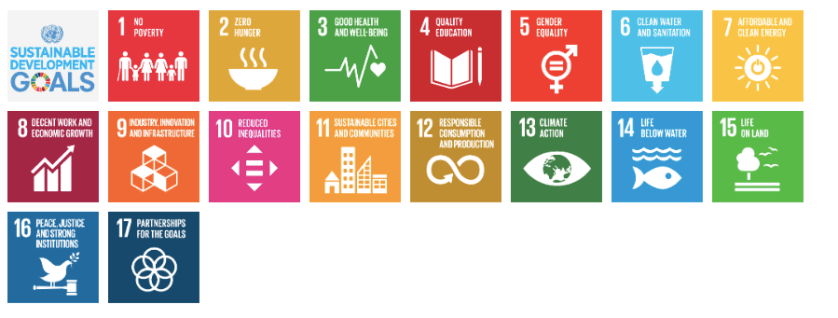
When we began analyzing the sustainable development goal’s at the beginning of the course, I learned a lot about how effective goal setting truly was. By this I mean that there is a constant rhetoric in the news that discusses how “pouring aid” into Africa would not be beneficial to either side. Though this project has shown that with aid targeted in very specific ways although the problems has not been completely solved there is visible progress. The SDG’s first were introduced in 2000 with a halfway point coming at 2015 for them to reflect on the progress that has been made this far.  As of 2015, 43 million more children go to school, new HIV infections went down by 40%, over 2 billion more people got clean drinking water, extreme poverty got reduced in half. At this point seeing all that was accomplished in 15 years the SDG’s released multiple social posts about not stopping halfway to continue the progress that was made in the first 15 years we can see that the next 15 years can make most of these goals attained.
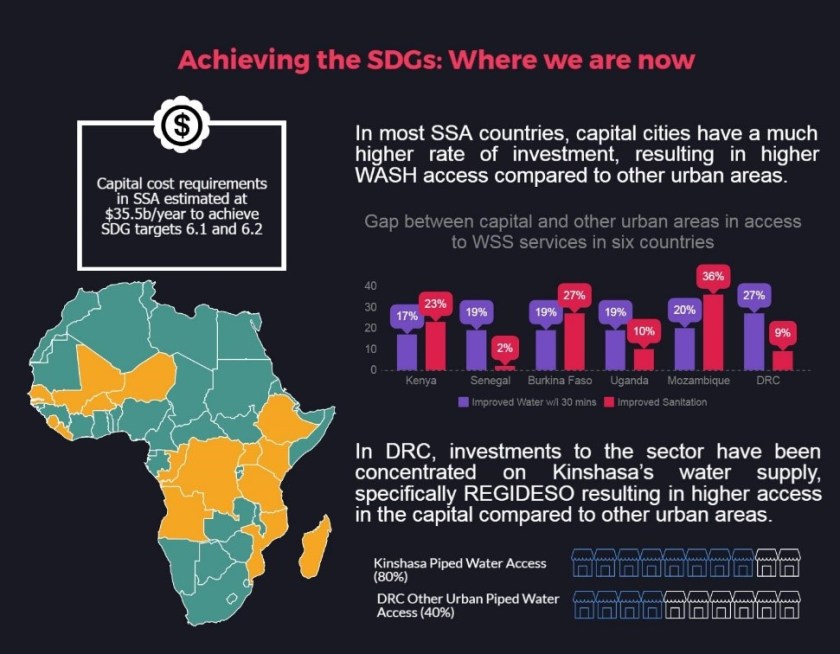
 At the start of the class I was assigned to look at the Democratic Republic of the Congo. The DRC though it has improved still has notable problems with access to clean drinking water especially in rural areas where only 31% of the population has reliable access to clean water and 81% in urban areas.  According to the world bank the Democratic Republic of the Congo has had a lot of sporadic data that seems to coincide with not only the changing of leaders but the change in names it encountered. The GDP remained on the lower side trending up and down until a sharp plunge down in 1999 that has been on a continuous increase since 2001, it reached its previous height in 2008 and has exponentially grown since then. Their GNI also follows the same trend line where 1999 was a low year that has increased since. The primary school enrollment was consistently high until 1984 when it dropped continuously hitting a record low in 1999 but around 2007 the number began to climb up now higher in 2015 than it was ever in previous years. While their import rates have remained relatively similar their export rates have increased by $2 billion.
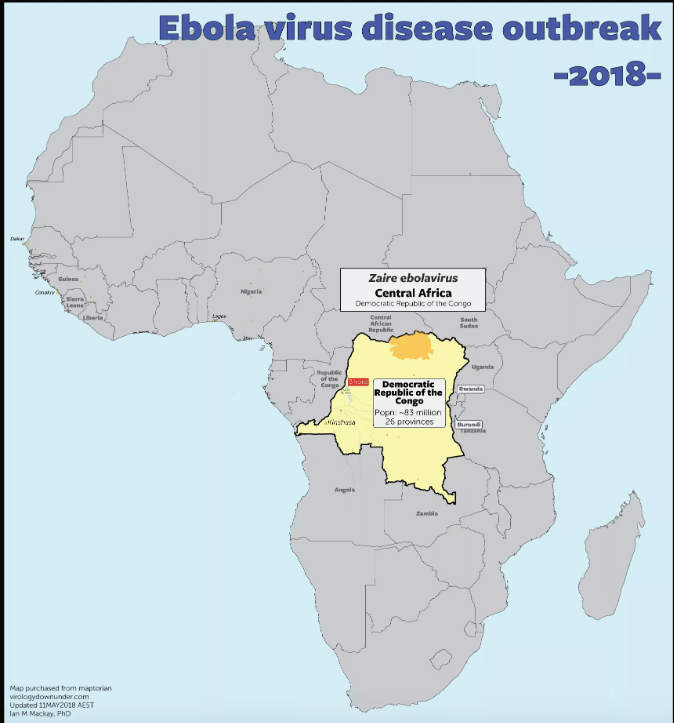
The DRC has made a lot of progress though toward changing and one thing this class taught me is the impact of the cheetah generation.  The Cheetah generation seems to be the ones that are going to help pull Africa out of the problems caused during the Hippo generation due to corruption in power by being the educated investors of their countries future. The SDG’s partnered with DRC creating Young African Leaders that works to make a strong “cheetah” generation that talks about the youth becoming more involved in the institutions that govern them so they can have strong skills in being a part of their emerging society. Though as of last year they had an Ebola outbreak that affected many who were younger than 5 years old according to CNN. Their rates are the second deadliest recorded in history so looking forward how much of this population can survive or be strong enough to join this new discussed workforce. With problems such as disease it is hard to see the real impact that these programs are making because a big part of children are wiped out and even the children who survive through these diseases in their villages often, they or their family have lost something that doesn’t make education a top priority. One thing that is not missing though is the passion and drive to better their societies. There is a rise in the cheetah generation even with the fear of disease notable change has been made in this country with the help of the SDG’s and I believe that is probably having a very similar effect in the other countries that have been impacted by this help.

Resources

Congo, Democratic Republic of (Kinshasa). 22 Jan. 2016, https://freedomhouse.org/report/freedom-world/2016/congo-democratic-republic-kinshasa.

“Country of the Week: Democratic Republic of the Congo | YALI.” Young African Leaders Initiative Network, 2 Mar. 2017, https://yali.state.gov/country-of-the-week-democratic-republic-of-the-congo/.

Education | Democratic Republic of the Congo | U.S. Agency for International Development. 19 Apr. 2017, https://www.usaid.gov/democratic-republic-congo/education.

“Sustainable Development Goals.” UNDPhttps://www.undp.org/content/undp/en/home/sustainable-development-goals.html. Accessed 5 Mar. 2019.
Blog Post 12 – Muslim Youth and the Future of Europe

By Jacob Feist

Part a: An overview of Muslim Youth in Europe

Struggles and Identity in Europe

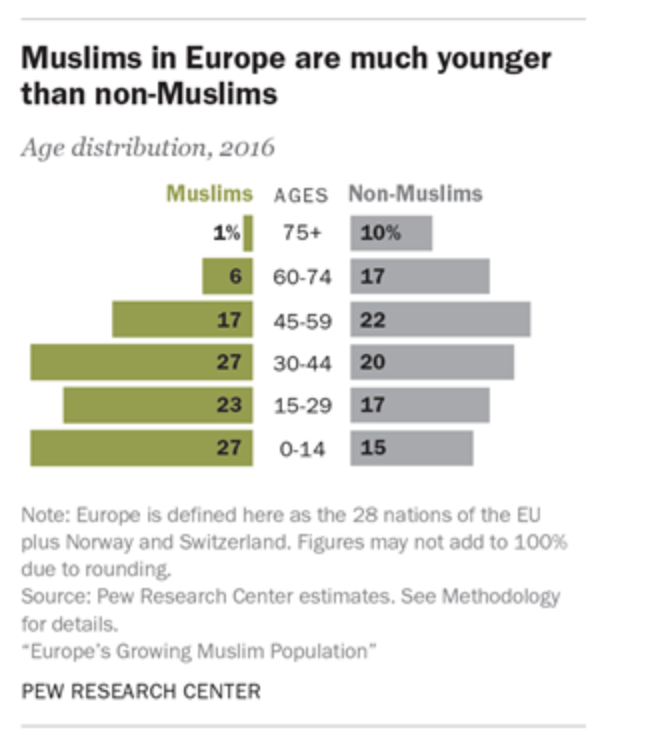
In the book, “Islam, Europe’s Second Religion”, Peter Mandeville outlines the complicated and precarious topic of Muslim Youth in Europe. Mandeville explains that there must be a distinction in explaining the plight, progress, and outlook for Muslim youth because their experience will invariably be different than their parents. Many of the youth are second or third generation and consider themselves integrated part of European society. Thus, when topics of Muslim discrimination arise, there is a duality forced upon them between their European home and their religion. This struggle is amplified by those Muslim youth that have prioritized and focused on their religion. This youth group uses their religion has self-identification, but also in forms of social action.

What role does discrimination play in the formation of Muslim youth identities?

The duality mentioned above is an enormous burden for any young person. Thus, many young Muslims feel that Europe has not been an easy place to call home. There is the constant imagery issues mentioned in the post 11, proliferating stereotypes and creating barriers. Moreover, there is the constant pressure for youth to conform to their society, which is a harsh reality for young Muslims. Thus, many Muslim youth struggle with this conflict. They view assimilation as cultural abandonment and religion as conflict with Europe.

Making this decision more difficult is the idea that assimilation into to European culture may not be possible, or invited, with all groups. There are undoubtedly issues with islamophobia and discrimination in Europe. This presents the idea that potentially assimilating is betrayal. Moreover, it makes the idea of assimilation seem unwelcomed. It is tragic that these ideas and decisions are thrust onto Muslim youth. Rather than being able to naturally form their own religious identity, they are forced to create an identity based on conflict, discrimination, and cultural dualities.

Part b: Assimilation, Communitarianism, or New modes of integration

            In the concluding portion of, “Islam, Europe’s Second Religion”, the modes of integration are outlined. Shireen Hunter explains that those in favor of assimilation focus on European culture. They feel that Muslim citizens should focus on their citizenship and blend into society. They should not allow their religion to create conflict, it should remain a household focus. Communitarianism believes in a blend of religion and culture. A society in which the two interact, acknowledge each other, and act in a harmony. Those that prefer a more European focus can do so, those that prefer a religious lifestyle may also peruse those goals. The key is that these groups engage and discuss with themselves and external parties.

            There is no correct method, preferred method, or perfect method. Yet, this will inevitably be a decision for most Muslim youth in Europe. It appears ever more likely that even those that choose assimilation will be brought into communitarianism. This is because Muslim is a reality of European life and a part of Europe’s future. It will be a topic discussed in politics, households, and schools. The conversations will occur and eventually Muslim youth will be forced to be part of that conversation.

Part c: Malik’s “Diversity Myth”

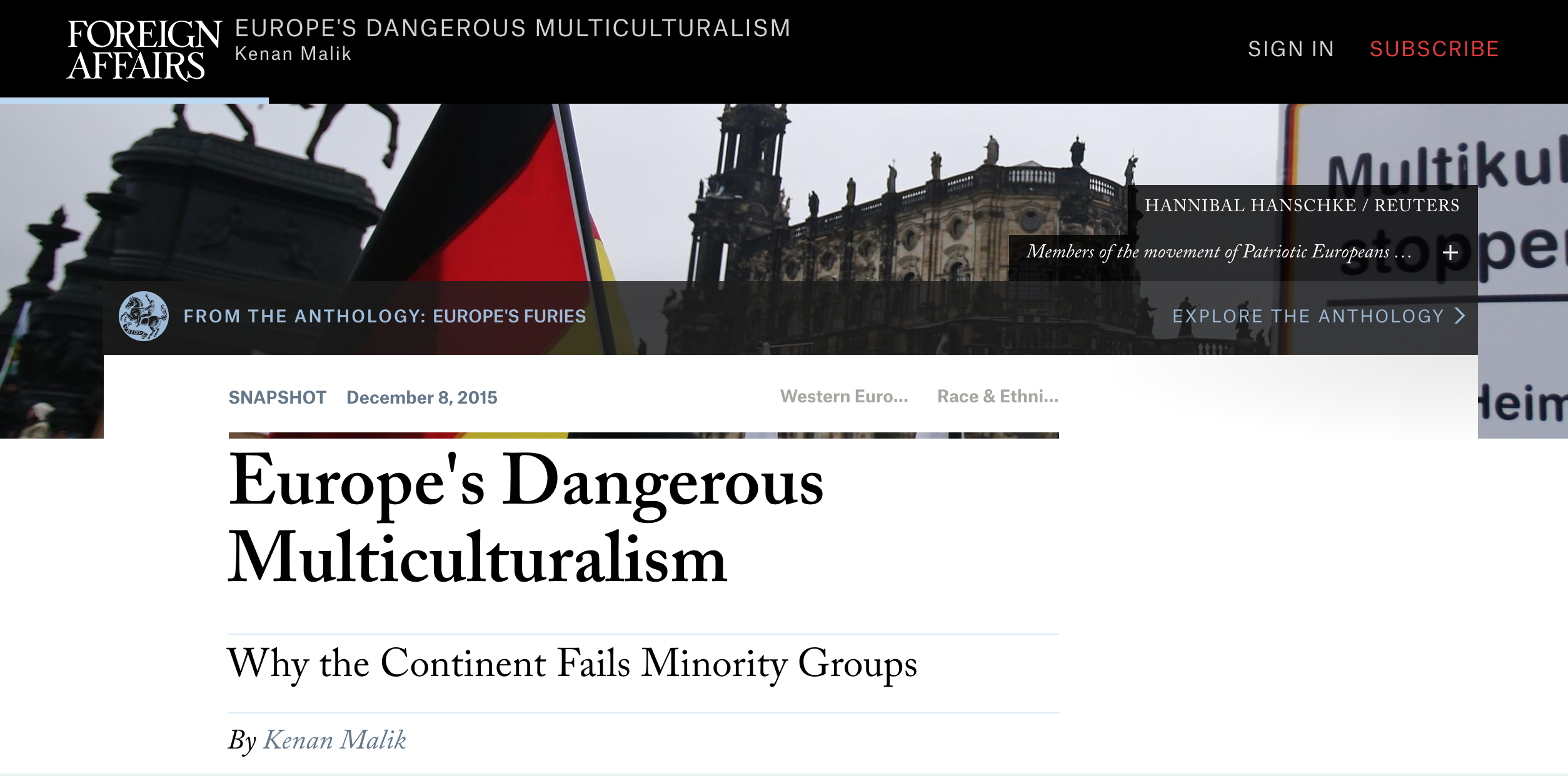
            Kenan Malik explains that the Diversity Myth is a concept that has existed within Europe for centuries. It is the idea that despite public efforts towards integration and multiculturalism there has always been perceptual differences towards immigrants. This is because multiculturalism focuses on the integration and blending of cultures. Yet, this requires sacrifices and acceptance from the native group, which typically breeds resentment. Thus, extending from Victorian France until today, native groups that have the same values, interests, and socio-economic status, as immigrants will still view immigrants as the “other”. Rather, native groups prefer assimilation, where a culture joins the native population and sacrifices its own culture.

https://www.foreignaffairs.com/articles/western-europe/2015-12-08/europes-dangerous-multiculturalism
Kenan Malik’s follow-up article in his “Europe’s Furies” anthology

Part d: Sajan

 In Jainism, there is a concept, “Anger begets more anger”. It is the idea that hate breeds hate, resentment creates frustration, and any conflict only serves to create more conflict. It is not a revolutionary concept, but it is one worth noting as it is ever-relevant and often forgotten. Moreover, it is an idea very relevant to Sajan’s article, which outlines the origin of Europe’s homegrown terrorism. She explains that the countries that experienced an influx of Muslim immigrants are now dealing with the ramifications of racism, ostracism, and lack of integration. She explains that those marginalized by society have lost their identity and found solace in hatred. It is a tragic truth that by no means justifies the actions of those that commit crimes of terrorism, but highlights the dire need for integration and empathy in these trying times.  

Sources:

Malik, Kenan. “The Failure of Multiculturalism.” Foreign Affairs, Foreign Affairs Magazine, 19 Feb. 2019, http://www.foreignaffairs.com/articles/western-europe/2019-02-18/failure-multiculturalism.

Sajan, Thomas, and Titto Idicula. “Decoding Europe’s Homegrown Terror.” @Businessline, The Hindu BusinessLine, 12 Jan. 2018, http://www.thehindubusinessline.com/opinion/decoding-europes-homegrown-terror/article9718569.ece.

“12 & Conclusion.” Islam, Europe’s Second Religion: the New Social, Cultural, and Political Landscape: by Shireen T. Hunter, Praeger, 2002.

Blog 11- How hate found its way to limit immigration and divide the world

By: Lana Henderson

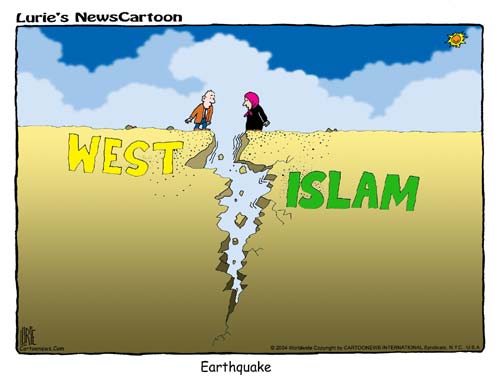
This is a political cartoon meant to address the divide between Islam and the West

The first thing this text brings to the reader’s attention in the even use of the east vs. the west and create an idea of an us versus them. There a narrative that may be tied to certain events but are often framed through the media and affect the way that people interact with or think about other cultures. One of the biggest things that creates this problem is the lack of dialogue and understanding across the two cultures. There also needs to be conflict resolution due to the power of narrative there is a collective idea passed down through generations who haven’t even interacted with each other due to the way that people have been raised to feel about or thought about a culture before they ever got the basis to interact with these cultures for themselves. There are the words passed down through stories in social or political groups that pass down these narratives and derive them out of bits of truth such as taking one instance like 9/11 and painting that as the basis to judge Muslims. The longer these things become part of the narrative lifestyle of that community the longer it is inside and manifests in that community they are the shared feeling that creates unity in this area through creating a shared feeling toward an “other”. We must look past the retold stories and move into learning and living along those we consider the other to learn more about their true identity than the reinforced stereotypes. What are the hard decisions about immigration according to Frum that need to be taken in the US Do you agree? Is there a right level of immigration?

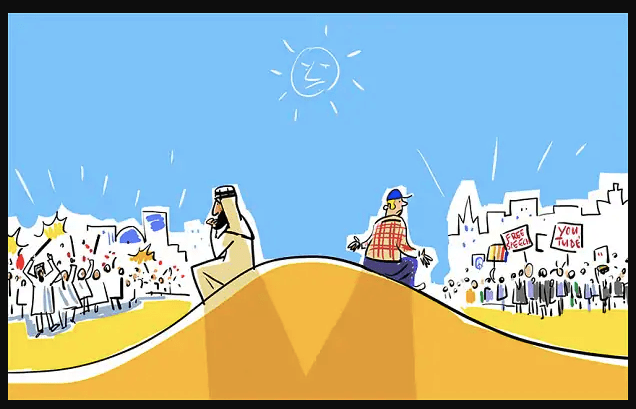
This political cartoon addresses the way that both sides are pit against each other and some don’t understand the meaning behind it all.

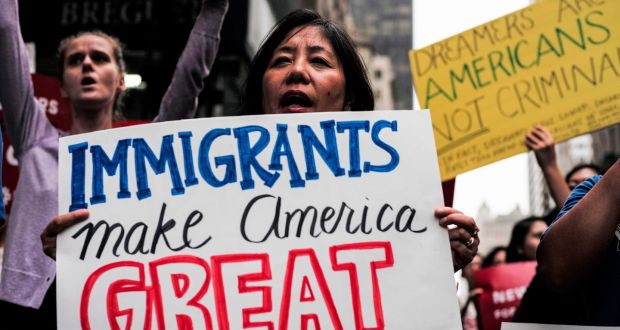
This article discusses immigration rates and the way that migration has changed not only in America but in other countries in the past century. There has been a shift in the number of refugees and immigrants that America took in the past and especially where these immigrants came from was a big part of the changing demographics. Today in populations of Europe though they may take in fewer actual numbers the percentage as compared to their population is much higher than that of the United States. Though immigrants have been a big part of the successful areas noted as Americans from fortune 500 companies to Nobel prize winners. Hilary Clinton in 2018 issued a warning to European cultures for them to be aware of the ways that large numbers of migrant population would affect them, and many citizens of these countries cited migration as problem. One third of British people said the reason they voted for exiting the EU was due to immigration. Especially since the inauguration of Trump the United States has also had a rise of immigration concerns and sentiment toward immigration. Though the author says that contrary to Trumps no immigration stance in a growing globalized world that is impossible the question isn’t yes or no migration it is how much? Those you pick can be either the basis to create a stronger more educated society or a society that places hostilities on each other and create social issues. There is a look at immigrants as either reinforcements or replacements due to many developed societies not reproducing at high enough rates to replace themselves. This has led to anxieties among Americans as feeling like strangers to their own country. This is due to a lot more mobilization between countries that within them, due to cost a citizen may not see the need to move from one state to another for opportunity but for an out of country immigrant the cost is nothing compared to the opportunity of life they may get.

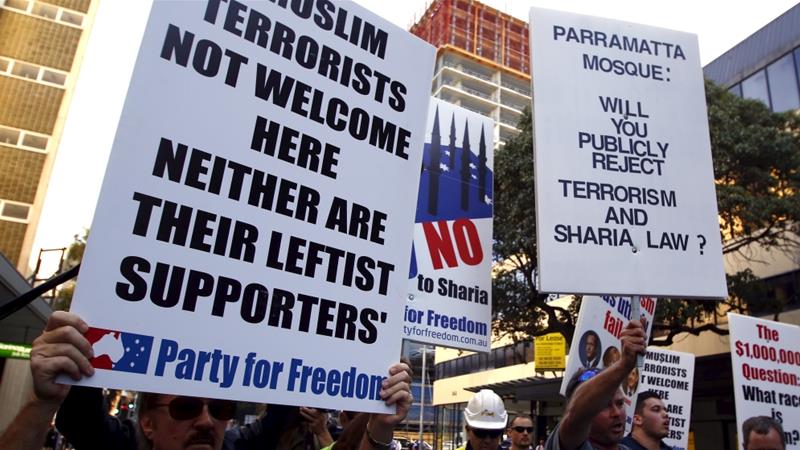
This image is from protests in Australia against Muslim Immigration and refugees.

There is a lot of discussion on immigrants coming in and stealing jobs but the reality for many whose “jobs have been stolen” it is clear that they are actually upskilling and getting better jobs though this is hard to track as unemployed people leave the labor force statistics. Due to this it may be true that the only ones reaping benefits from this labor shift are the wealthy within America not the low income. Though the money they bring in can be compared against the costs for taxpayers to pay for the social institutions that help them but when looking at the two one doesn’t outweigh the other. There is also a discussion of immigrants possibly having connection to safer America through lower suicide, drug abuse, alcohol use and crime rates in high immigrant communities though the media often makes it look otherwise. Companies who higher larger immigrant workers than native born workers are seen to have problems when it comes to providing safety for their workers. The author discusses how immigration needs to address as a system rather than a symbol. Many time family ties are what make the decision between who will transition from immigrant to citizen. The movement of long-term immigrants out of the country would serve no well purpose as they have become members of communities. Liberals need to change their tone on immigration according to the author because when they make claims of only being able to have reduced immigration with fascism will lead voters to vote for fascists if they see immigration as a main problem. Though Americans have a right to choose their peers they have also felt that the country is beginning to lose its right to be called the place of opportunity and the American dream as it seldom delivers and this a cornerstone of building a strong community native or immigrant.

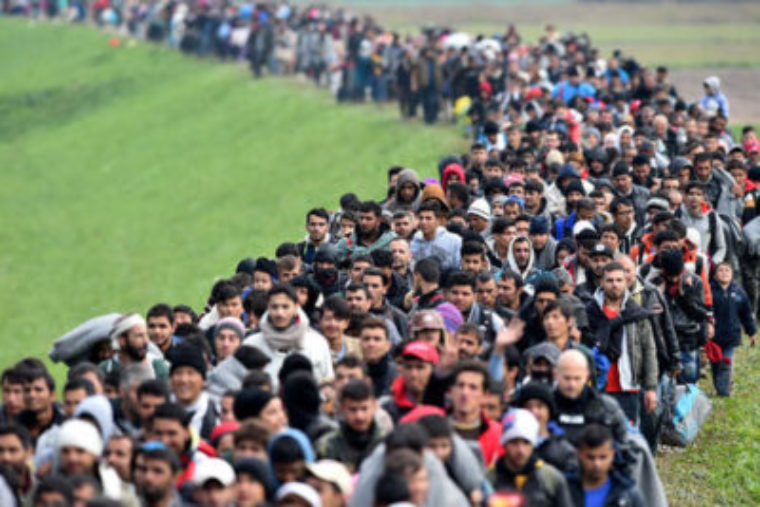
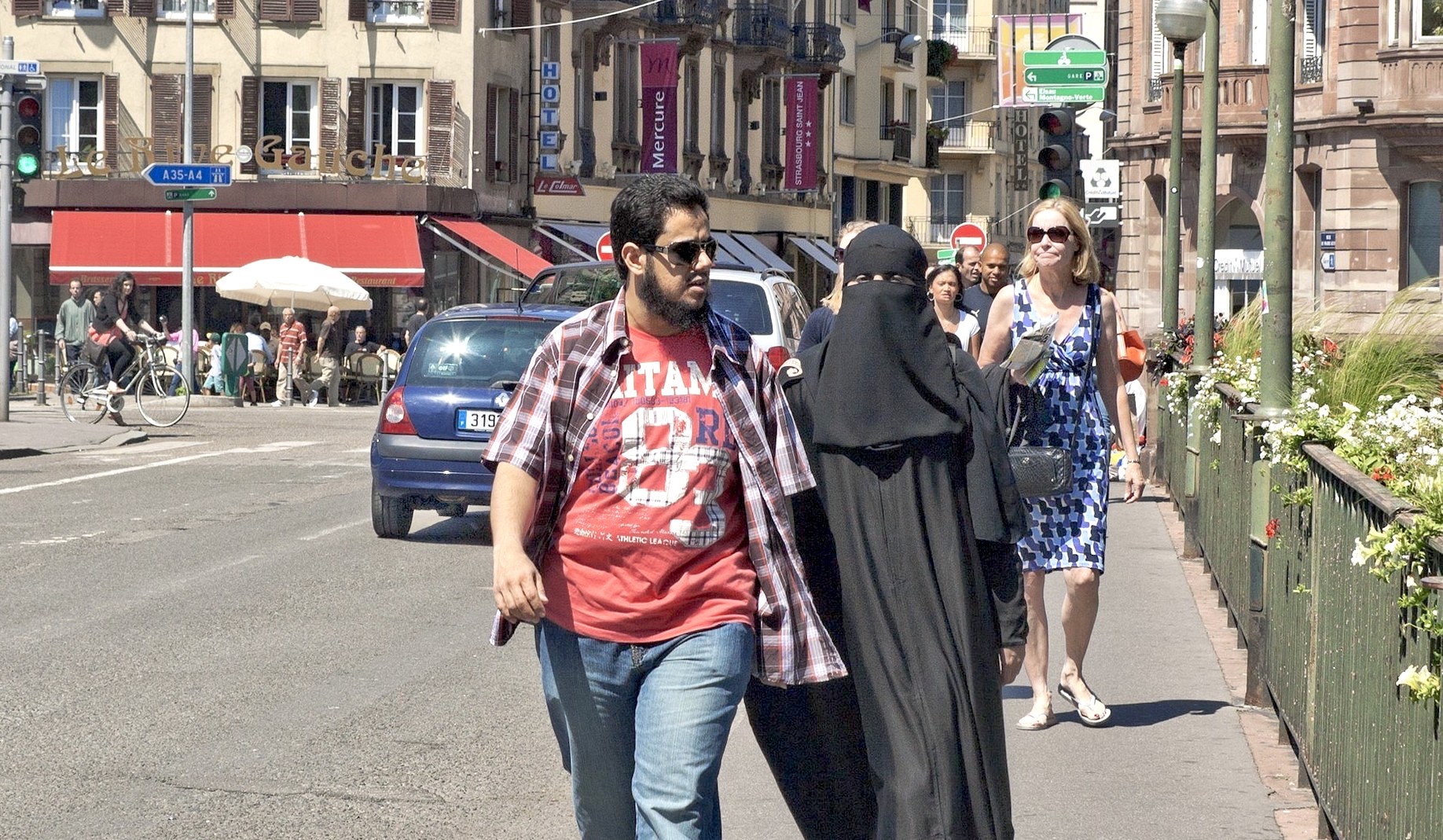
This image is of Muslim immigrants traveling together to a new country.

Resources

Collom, Rachael. “A2 Government and Politics: Islam vs The West.” A2 Government and Politics, 7 Feb. 2016, http://rachaelsa2politicsblog.blogspot.com/2016/02/islam-vs-west.html.

Frum, David. “If Liberals Won’t Enforce Borders, Fascists Will.” The Atlantic, Apr. 2019. The Atlantichttps://www.theatlantic.com/magazine/archive/2019/04/david-frum-how-much-immigration-is-too-much/583252/.

Oprea, Megan G. “Is the U.S. Better at Assimilating Immigrants Than Europe?” The National Interest, 9 Aug. 2017, https://nationalinterest.org/feature/america-better-assimilating-immigrants-europe-21846.

TLAXCALA: The Failure of Western Narrative on Middle East</A>http://tlaxcala-int.org/article.asp?reference=11024. Accessed 16 Apr. 2019.

Blog Post #11, Week 12: Culture & Immigration

By: Amber Jones

When we look at the article “Islam and the West”, we have to understand the idea of conflict transformation to understand the importance behind it.  Cultural transformation refers to the idea that a person can alter perceptions in order to create new realities.  This idea usually refers to religious issues and racial issues between multiple groups.  This idea hopes to bring a tempered state of conflict between the groups, as long as the perceptions of them can change.  If a group can change their perception, they can also change the relationships that they have with others.

Now that the basis of this idea is explained, we can apply this information to the Middle Eastern and Western conflict.  The authors describe the relations between the two cultures in terms that both cultures tend to have issues with each other.  In the West, we find that many people have skewed views of the culture and the religion, while in the Middle East, they tend to look at Western culture as indulgent, immodest, and other things.  The authors note that while the Middle Eastern cultures do have much to offer us, both economically and socially, we still look at them negatively.  To the Western world, they are seen as terrorists, or a culture looking to invade and take over.

This type of thinking leads to this idea of “the other”, which is defined as seeing those who are unlike us as people in conflict with us.  This ideal breed ill will and contempt and furthers relations.  By understanding this, we note that this idea of “the other” promotes conflict and promotes discontent between groups.  I personally agree with this ideology of this statement, but not the promotion of the topic.  I feel that we as a society should be able to look that “the other” and integrate more cultures into our own, as this is what America was founded on.

Shifting focus to immigration, we look at Frum’s article “How Much Immigration is Too Much”.  He presents the idea that this is a complex issue, and he’s not wrong.  Even today, our government is fighting to lock borders, keep others out, and calling for strict reform, instead of helping those truly looking to start a new life.  Frum also points out that immigration is rising not only due to this idea of needing opportunity, but also people reacting to the need to get away from their own country of origin, whether due to political climates or other societal problems.  This however, is causing issues with the American population, as many see new immigrants as a bad idea, that no matter the culture, we are going to be “overrun” with immigrants, instead of seeing these people as peoples in need.

Frum goes on to say that none of our political systems, whether Republican or Democrat, are either right or wrong.  We as a country obviously need to respond to humanitarian issues.  We also need to realize the benefits that come with immigration, such as finding workers who are willing to accept lower paying jobs to support families while they seek to obtain their version of the American dream.  But with this idea of lower paying immigrant work, we have to also put into perspective that some of these immigrants may not ever be able to carry insurance or have benefits, which in the long run, could put a strain on the medical culture and workforce as this population ages and requires more from the system.  Frum greatly illustrates that immigration needs to be compromised and set up in both parties, and that it is up to us to make the change.

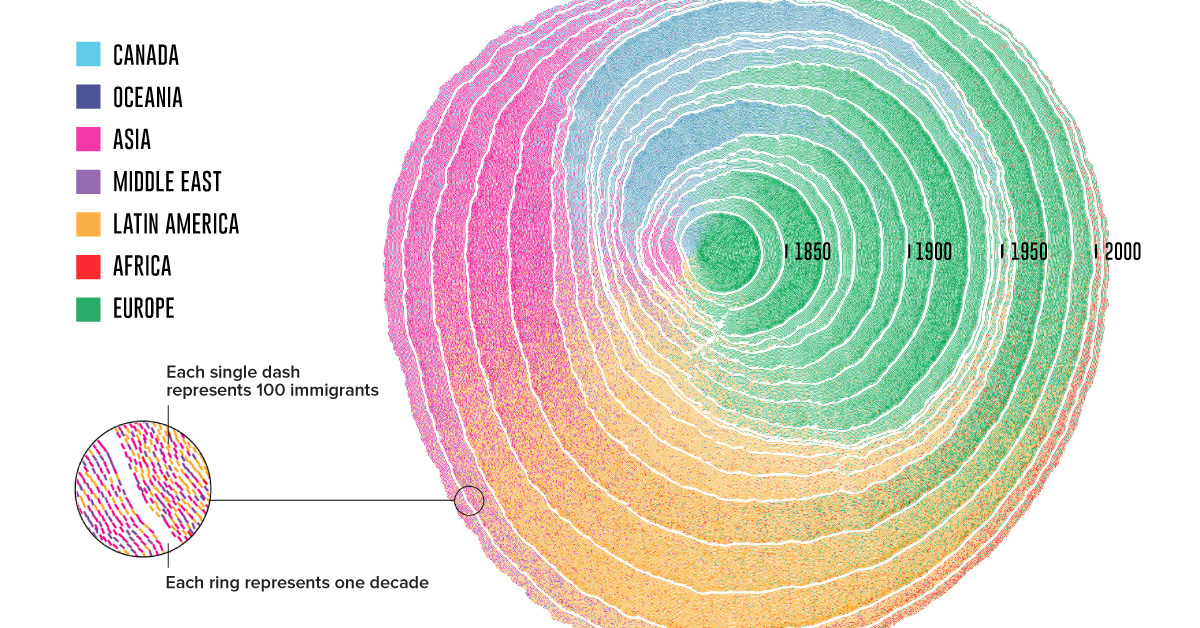
Image result for us immigration
https://www.visualcapitalist.com/200-years-u-s-immigration/

This is an animation site, but it distinctly shows the pattern of U.S. Immigration for the past 200 years, and the populations migrating here.

Blog Post 11 – The Conflict of Immigration and Integration

By Jacob Feist

Part a: Intercultural Confrontation and Intercultural Compatibility Impact Conflict Transformation

Conflict transformation is the idea that one can alter perception in order to create a changed reality. This term typically applies to racial and religious conflict between two groups. If one can change the conversation, the dynamics, and the imagery associated with a certain group then they can also change the relationship with that group. Thus, this tool has been employed as a potential system to ease tension between conflicting groups.

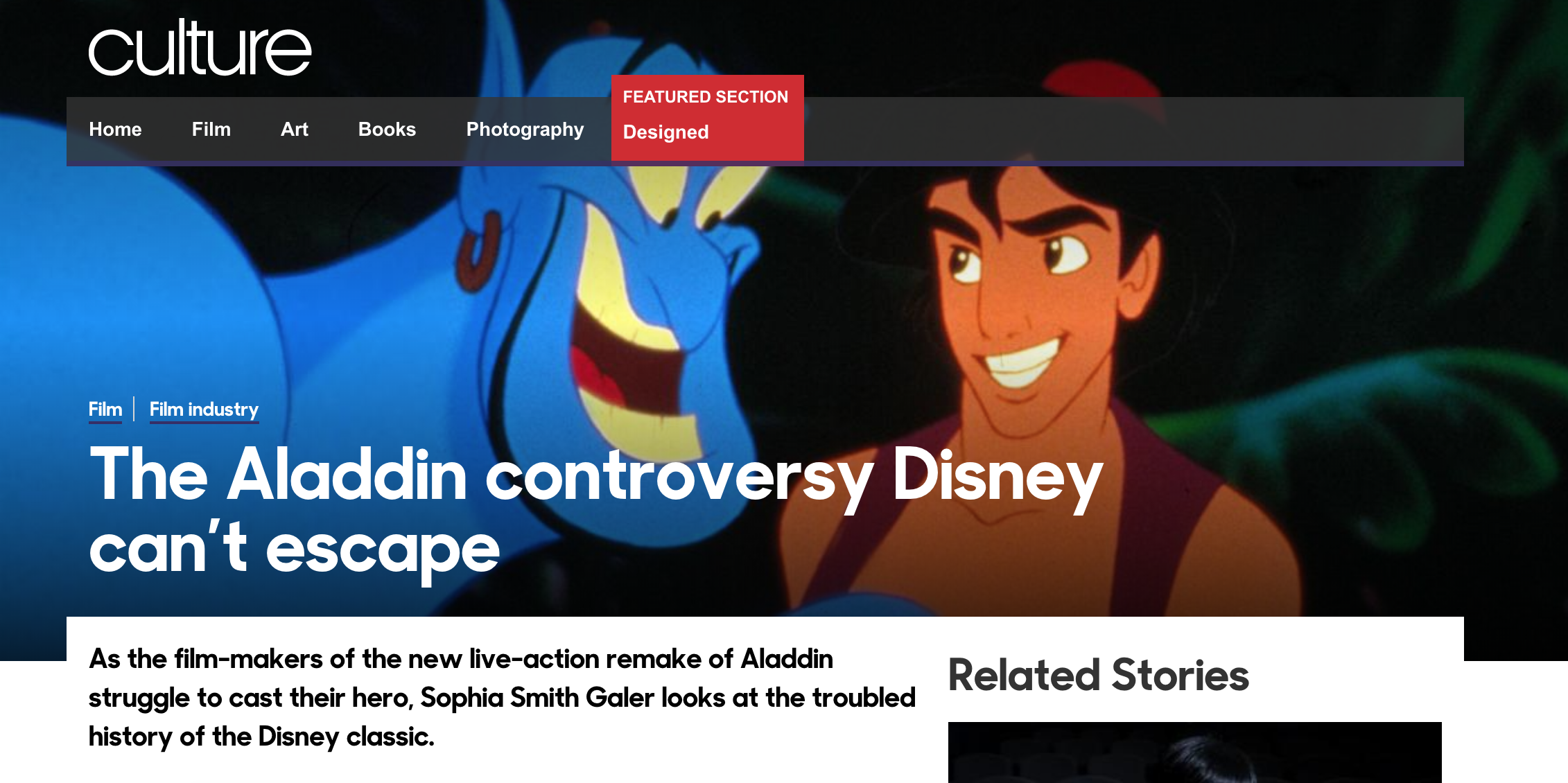
BBC Article related to this issue and its relationship with the Disney film Aladdin

http://www.bbc.com/culture/story/20170714-the-aladdin-controversy-disney-cant-escape

Authors Nathan Funk and Abdul Said explain conflict transformations impact and capabilities in the landscape of Western relations with the Middle East and Arab communities. They outline that negative imagery associated with Muslim communities and the Middle East have permeated Western Culture. Despite mutually beneficial trade scenarios and growing diplomacy, imagery towards the Middle East still seems generally negative. Many mediums paint the region as either conflicted or archaic with war-leaders wielding swords and caravans trading goods. Others display a region of desert with romantic scenery and opportunity for adventure. Regardless, the common theme is that the Middle-East is shown as a symbol of the “other”.

The “other” is the concept that those not like us are in conflict with our ideology. This idea tends to breed contempt and distance between two groups. Thus, narratives of struggles between the west and east, or conflict of culture, serve to reinforce this idea of otherness. It is the belief of the Funk and Said, that they harm the ability for a group to attain conflict transformation in a new society. Moreover, as a firm believer in the idea that perception often shapes reality, I agree with their thesis. Art is typically a reflection of society, or society a reflection of art. Hence, if we are constantly shown imagery of two groups in opposition, the society will view that group as the opposition.

Part b: David Frum on Immigration in the U.S.  

In David Frum’s article, “How Much Immigration is too much” he outlines the many complexities impacting the American debate on immigration. He begins by outlining the current landscape of immigration in global context. Simply, immigration is rising as more people seek opportunity and react to displacement. Thus, the context of the debate has changed and become more divisive. Many citizens are reacting with frustration that the geographic make-up of their nation is changing. A frustration that is compounded due to a lack of proper immigration policies and integration systems within their nation. This can be seen in countries such as the United States, France, and The United Kingdom. However, the other side of this debate has also become more prevalent. Many argue that America, and other first world nations, are responsible for the well-being of the global community. They advocate for allowing more immigrants, more lenient policies, or completely open borders.

The problem with this debate is that is has become more divisive and toxic over the past few years. Moreover, this toxicity has allowed for politicians to bend immigration to fit their agenda. Many liberal politicians claim that those against open borders are enemies to humanitarian efforts. On the other hand, more conservative politicians use immigration as a tool for fear. They explain that immigrants will steal their jobs and way of life. They explain that bringing in an uneducated population will halt development and drain recourses. Unfortunately, in today’s trying times the conversation has become more hostile. This is especially frustrating because it is more crucial now than ever to have these conversations. As immigration rises there will need to be a clear system outlining the number of immigrants allowed and the process for integration. Yet, neither side appears willing to make concessions. Rather, it appears the opposite is occurring.

Frum explains that neither side is necessarily right or wrong. Clearly humanitarian issues need to be addressed, but economic issues should be considered as well. There are legitimate benefits to immigration: greater diversity of ideas, new entrepreneurial mindsets, lower crime statistics. However, there are also legitimate challenges approaching: aging immigrant populations, lower average skill levels, lower government and corporate accountability. Thus, as these issues go unaddressed more fear rises in the native populations, further dividing the two sides. Furthermore, as more fear grows people will elect and advocate for more radical leaders and closed policies. As a result, Frum concludes his article, “If liberals insist that only fascists will enforce borders, then voters will hire fascists to do the job liberals refuse to do.”

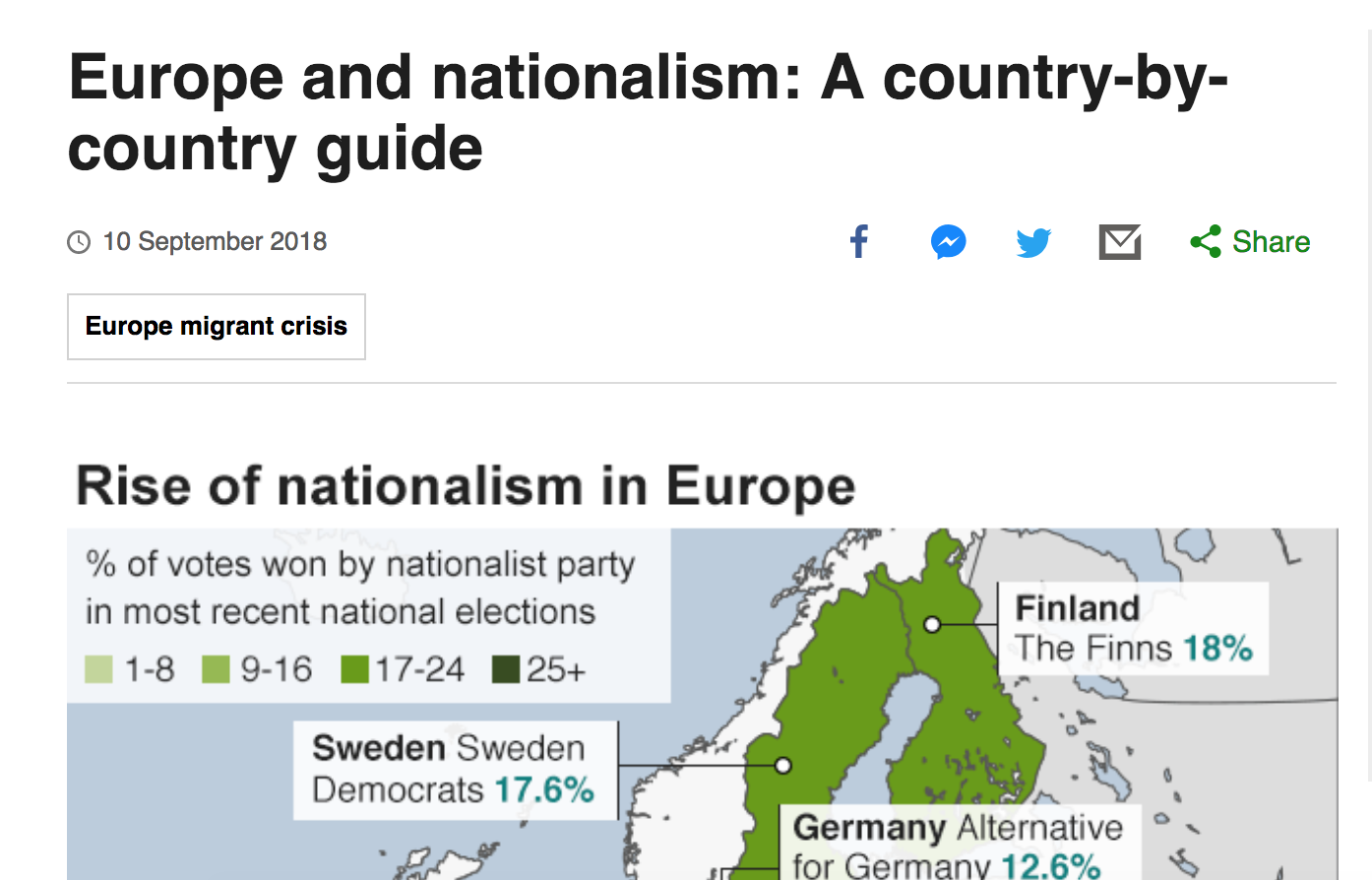
BBC Article outlining the rise of nationalism in Europe

https://www.bbc.com/news/world-europe-36130006

I agree with Frum’s thesis. We see more countries elected anti-immigration leaders. This is because people fear ambiguity. Until we have more policies directed towards integration, immigration will remain ambiguous. Hence, there needs to be finite policies in place that outline numbers of immigrants, reasons for immigration, and systems for integration. However, this funnels directly back into Frum’s article. There is no proper discourse in today’s political environment. This creates a vicious cycle immigration policy never changes, the two parties refuse to make concessions, and the two sides become more radical. This is made more challenging because immigration is human issue, one that is complex in cause and function.

Sources:

“Europe and Nationalism: A Country-by-Country Guide.” BBC News, BBC, 10 Sept. 2018, http://www.bbc.com/news/world-europe-36130006.

Galer, Sophia Smith. “Culture – The Aladdin Controversy Disney Can’t Escape.” BBC, BBC, 14 July 2017, http://www.bbc.com/culture/story/20170714-the-aladdin-controversy-disney-cant-escape.

Frum, David. “If Liberals Won’t Enforce Borders, Fascists Will.” The Atlantic, Atlantic Media Company, 11 Mar. 2019, http://www.theatlantic.com/magazine/archive/2019/04/david-frum-how-much-immigration-is-too-much/583252/.

Funk, Nathan C. and Said, Abdul Aziz. Islam and the West: Narratives of Conflict and Conflict Transformation. International Journal of Peace Studies, Volume 9, Number 1, Spring/Summer 2004

Islamic Law & Fluidity of Change

Amber Jones, Blog Post #10

When we look at this term “Jihadi”, we find that this term was dubbed to Western languages to describe Islamist militant movements.  But there is much more to the term than what our language has given it. 

Islamic Scholar Rudoph Peters tells us that Islamic modernists choose to emphasize the aspect of Jihad, while more fundamentalists view it as a struggle for the expansion of Islam and its ideals.  This idea of fundamentalism could be seen all the way back to the 19th century, in which Islamic followers struggled against colonial powers in northern Africa, such as seen in the Mahdist War in Sudan.

What’s equally as interesting is that the Jihad is actually 2 movements.  The first, as mentioned above, regards the battle to expand Islam and fight those that persecute it.  But this lesser know jihad is one figured around resisting temptation and believing in the appropriate Islamic value system.  This second jihadi system promotes less “Westernization” and have led to the extremist groups of Al Queda and ISIS, in which most of the globe knows, and many fear.

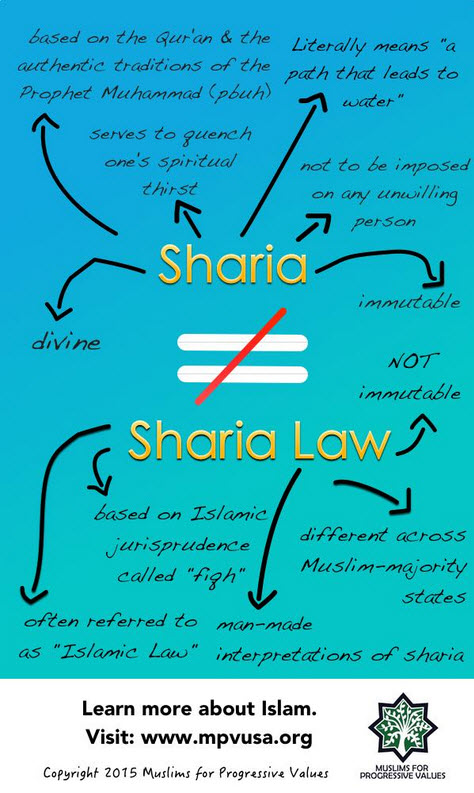
Now that we’ve looked at this idea of Jihadi, we need to also understand the concept of Shari’a law.  Now, the Arabic definition of sharia is “way” or “path” and is not a legal system in and of itself.  Sharia law is based on the Qur’an, as well as things Muhammad said and did.  Shari’a is not a legal system in Islamic culture.  It instead is a set of principles that help guide people to new answers and includes common cultural practices that date back to specific times and places in history.  Many Muslim rulers wanted to find a way to make Shari’a into law, and decided which rules needed to actually be laws.  This interpretation led to what the community now recognizes as Islamic law.

How many people see or feel when they hear the word Jihad

https://nationalinterest.org/feature/isis-here-return-the-jihadi-14600

Islamic law is based on a person’s interpretation of Shari’a.  Because it is based on a human’s reading, Islamic law can and does mean different things to different sects and places, as well as different time periods.  It is important to not that while many Islamic countries believe that family law matters should be handled according to Shari’a, many of these matters have to have some sort of Islamic law saught out as well, as Shari’a is not a legal system.

Islamic fundamental purists are affected because they feel that “modernization” or western & colonial influence is moving their law and practice in a direction that is against Shari’a and the Qur’an.  A large portion of this is directed at how women are seen, treated, and activities they partake in.  Many countries and sects have varying degrees of how women are treated.  One good example is that in some Islamic countries, only men are allowed to vote, while in more progressive countries, both sexes have the option to partake, especially Muslims living in countries like America, Britain, Canada, and other democratic nations.  Fundamentalists worry that this modernization will rock the foundation.

Mehreen Baig, 28, Who Wants To Be A Good Muslim and a Modern British Woman
Mehreen Baig, a Muslim woman who also wants to be a modern British woman.

http://www.meramirpur.com/mehreen-baig-28-who-wants-to-be-a-good-muslim-and-a-modern-british-woman/

I personally don’t think that Islamic law at its foundation is consumed with this idea of “punishment”.  I feel that as a religion and a set of laws, it seeks to help people lead a good and faithful life.  Many differing Muslim groups and sects that practice Islam are adopting new practices.  Some Islamic countries are allowing women to stop wearing the headscarves, some countries are giving everyone the right to vote or attend school.  Islamic law and the Shari’a feel fluid, in that as long as a person is leading a good life, free of temptation, they are fulfilling the Qur’an’s ideals.

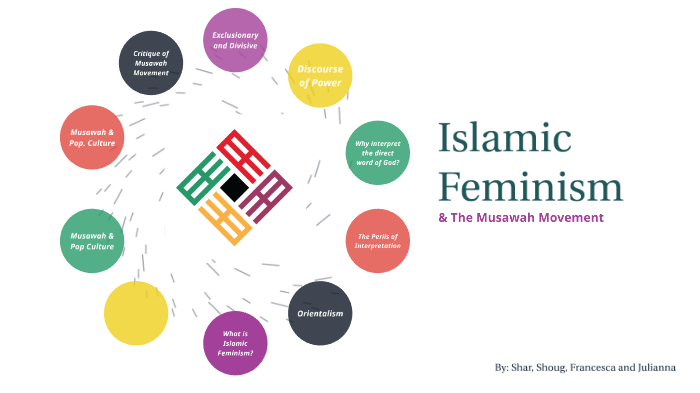
Image result for musawah movement

In keeping with this idea of Islamic law being fluid and more tolerant, we look to this group called Musawah.  This is a movement started by women of Islam in 2009 who seek to teach, engage, and provide outreach regarding Islamic law and culture.  They seek to promote equality in the Muslim family, primarily for women.  Musawah facilitates access to existing knowledge about women’s rights in Islam, and how to apply feminist and rights-based ideals into understanding, equality, and justice with the Muslim legal tradition.

Image result for musawah movement

http://www.mpvusa.org/sharia-law

http://www.musawah.org/

Blog Post 10 – Law and Order

by Jacob Feist

Part a: The foundation of the current fundamentalist jihadi movement

The jihadi movement stems the word and ideology of Jihad. It refers to the idea that one should fight within oneself to prevent sin and promote purity. However, it also pertains to the protection and proliferation of Islam. These definitions are specific enough to create cause, but vague enough to leave interpretation. Thus, you have many different extensions of Jihad. Many view it as a method to abide by the laws of the Quran. These interpretations usually stem from Muhammad’s proclamation upon his return from war. After defending the Muslim community through war, he returned home and explained that he must now focus on the “greater Jihad”. This being a reference to the internal struggle over studying, overcoming anger, and being an active and productive member of a Muslim community.

However, a more sinister interpretation has also been derived from the text. One that emphasizes the definition of Holy War. This sector believes that violence against those that would oppose Islam is the true calling of Jihad. As conflict and tension rose in the Middle East, these groups grew in number and influence. Eventually, they adopted aggressive recruiting techniques focused on susceptible at-risk youth. These groups then educate and radicalize new members into committing violent acts against those who do not obey Jihad. One of the most harrowing and vivid depictions of this process is told by Manwar Ali. He explains the historic background, the methods employed by the fundamentalist jihadi, and the impact it has on himself and the international community.  

https://www.ted.com/talks/manwar_ali_inside_the_mind_of_a_former_radical_jihadist/transcript?language=en

Part b & c: Sharia Law, Fundamentalists, & Punishment

Sharia law is a set of laws outlined by the Quran designed to help guide Muslims. The text specifically refers to lifestyle choices, daily prayers, times of fasting, and acts of charity. Moreover, it is an interpretable process that categorizes actions into those that are encouraged, discouraged, and forbidden. The primary focus is the extension and longevity of the religion. Thus, it tends to focus on abiding by the text and marriage. However, there are also legal principles. In U.S. law these principles would be parallel to criminal law. They are guidelines for addressing the harshest crimes that disrupt civility. These are categorized by laws punishable by the words of the text and punishments dictated by the judgment of a tribunal.

This is where the division in interpretation tends to materialize. Unfortunately, fundamentalists have also skewed and misrepresented the value of Sharia law, placing greater emphasis on the system of punishment than necessary. They promote archaic punishments and treatments of others. These stories typically create more headlines than those who use Sharia law to simply live a peaceful life and as a result have created a negative impression of Sharia law on the global community.

Thus, an impression has been created that Islamic law is consumed by punishment. Unfortunately, there are incidents that tragically reinforce this stereotype. The United Nations has had to condemn punishments of lashings and stoning in certain communities, but that does not reflect on the beliefs on an entire people. Personally, I find the notion of an over-emphasis on punishment strange because foundationally every legal system has to have a system of punishments. Moreover, while I agree that certain aspects of the punishments may be overly harsh, simply criticizing the concept of a punishment focused legal system seems peculiar.

Part d: Musawah

Musawah is an organization designed to promote equality and justice within the Muslim community. The organization is comprised of Muslim leaders, both male and female on their joint mission. The primary focus of this objective being the use of Islamic holy texts and values to combat injustices against women and promote equality. Additionally, they assist in human rights campaigns in Muslim countries. The organization achieves these goals through advocacy programs, education programs, and community building.

Musawah outlines this cause into four distinct categories:

  1. Equality
  2. Non-Discrimination
  3. Justice
  4. Dignity

My assessment of this organization is that it is the exact program one would search for in combating the negative stereotypes associated with Islam. This program highlights the positive values of Islam and Sharia law. Moreover, it operates internally through advocacy programs and externally through education programs. I also applaud their mission towards creating inclusive communities focused on dialogue and community action.

Sources:

http://www.bbc.co.uk/religion/religions/islam/beliefs/jihad_1.shtml

https://www.bbc.com/news/world-27307249

http://www.bbc.co.uk/religion/religions/islam/beliefs/sharia_1.shtml

http://www.musawah.org/ourwork/

Blog 10- Understanding the Pillars of Islam

By:Lana Henderson

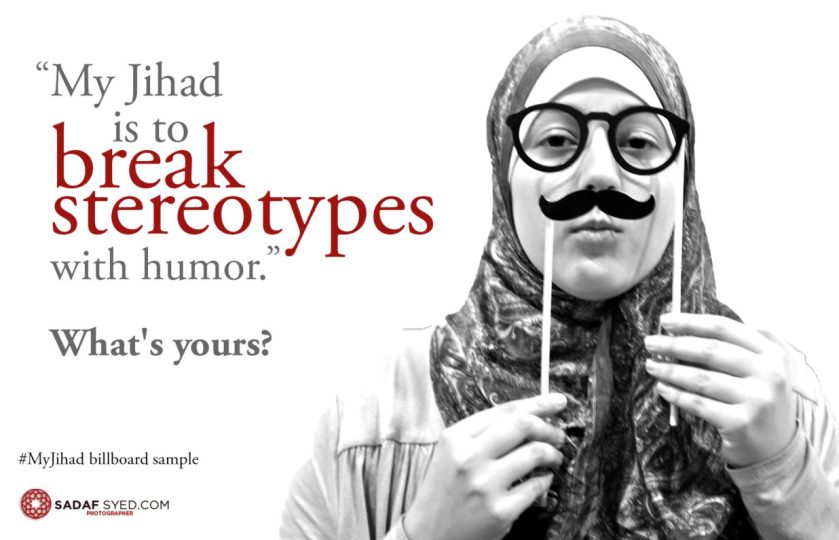
This image addresses the difference between the lesser and greater jihad to break the stereotypes on the Jihad definition.

The Jihadi movement is one that really began out of the Quran with the well-known pillar of Jihad. What many don’t know is that there are two jihads one that is the battle to expand Islam and to fight against those who persecute it and the jihad around fighting against temptation or ill thoughts within yourself to assure that you are upholding the correct values. There has been a lot more media coverage of the lesser jihad and it has become known as the face of the jihadi movement often with extremist as the banner of this face. Sadly, this has misrepresented the way that the Jihadi movement has come to be known especially in recent generations with movements in the 70’s that advocated for less westernization and a rebel groups that wanted sharia law to be the prominent governing force over the countries they live in and see the need to have a jihad against the way the western countries have been able to influence their culture as well as the attacks and history they have had with hurting many of these cultures. Al Queada and ISIS are good examples of the understanding that currently goes along with the jihadi movement.

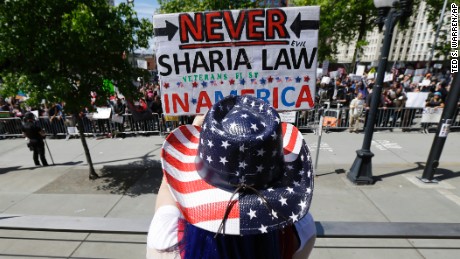
This image is from protests that occurred in America in 2017 during a height of anti-sharia law in America.

Sharia law is the foundations put in place in the Quran as the pillars of how to be a practicing Muslim. Rather than thinking of it like rules or laws it is more a set of values presented as the way to live a full Islamic life. Sharia law gives people a guide to the ways that day to day life is lived from the questions of marriage, divorce, rituals of life and how to deal with the problems. Though this is something that is usually practiced in Middle eastern countries that has not stopped many states from passing legislation that prohibits sharia law much of this shows that there is a lot of fear of Islam in the United States and also a lack of education about Islam and what sharia law truly is. When looking at population of Muslims in America this scare seems even more comical as the percentage of Muslims in America is very low. I think the biggest fear for people is due to misconceptions and sharia’s ties to extremist groups leaving people to believe that this will lead to women who are oppressed or having to lose foods they love, to become part of a terrorist organization. This is sadly because Islam has become misrepresented I the way that it is portrayed in media so therefore people see sharia as the thing that is pushing extremists to be extreme rather than thinking of them as a guiding book such as the ten commandments are for Christianity.

This is a look into the inequalities addressed in the film the stoning of Soraya M

No, I do not agree with the statement that Islamic law is consumed with punishment it is filled with warnings and guides whether you follow them or not there is no direct punishment for you to fear. That was until man got involved much luck other religions once man bends the words to his will and decides what consequences will ensue, he can use religion as his cover. In the movie the stoning of Soraya M it discusses what injustices have happened due to people using Islam as a way to control their people. A woman was wrongly accused of cheating on her husband and when the community Iman was told her sentenced her to death by stoning. On the date marked for her stoning a lot of evidence was gathered to prove her innocence and her husband’s cheating but that did not stop the community members from stoning her to death. When people look to use religion to their advantage the punishments are often deadly but when looking at Islam itself it is a religion that promotes peace and harmony with your neighbors.

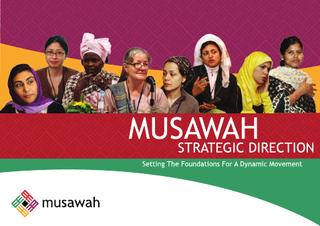
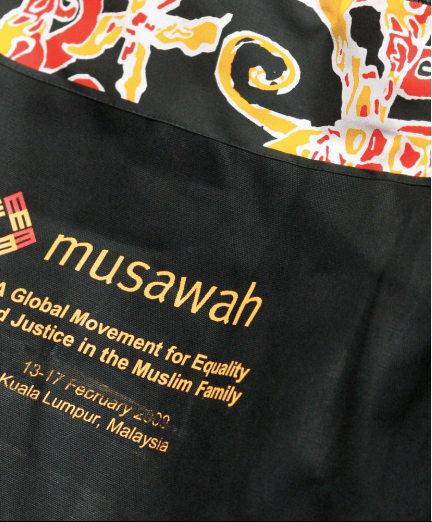
This image is from the MUSAWAH site.

The Musawah organization is about working toward the equality for Muslim families and the ability to create strong communities. Having strong communities includes being able to create a community including people who aren’t Muslim as well or in big diverse cities and not facing discrimination as they are an international organization. Musawah is an Arabic term for equality and it is the basis for what this organization stands for.  This organization is run and started by Muslim women that aims to create not only a unified space for Muslims but a safe space for all through creating an easy way to create events and make them well known. They have made it very accessible through making the signup very simple to be able to receive information about events.

Resources

“’The Movement Remains,’ Two Scholars Address the Future of Jihadi Culture.” National September 11 Memorial & Museumhttps://www.911memorial.org/blog/movement-remains-two-scholars-address-future-jihadi-culture. Accessed 9 Apr. 2019.

BBC – Religions – Islam: Jihadhttp://www.bbc.co.uk/religion/religions/islam/beliefs/jihad_1.shtml. Accessed 9 Apr. 2019.

CNN, Ralph Ellis and Tony Marco. “Anti-Sharia Groups, Counterprotesters Clash.” CNNhttps://www.cnn.com/2017/06/10/us/protests-against-sharia-law/index.html. Accessed 9 Apr. 2019.

“Home.” Musawahhttp://www.musawah.org/. Accessed 9 Apr. 2019. The Misrepresentation of Jihad –. 21 July 2015, https://www.connectfutures.org/the-misrepresentation-of-jihad/.

The Stoning of Soraya M.www.imdb.comhttp://www.imdb.com/title/tt1277737/. Accessed 9 Apr. 2019.

VICE News. This Is What Life Is Like Under Sharia Law | VICE on HBOYouTubehttps://www.youtube.com/watch?v=3SPkw-1_rb0. Accessed 9 Apr. 2019.

What Is Sharia? 7 May 2014. http://www.bbc.comhttps://www.bbc.com/news/world-27307249.

Immigration Failure & European Opinions

Amber Jones, Blog Post #9

When we look at Zenni and Parker’s explanation of this notion of “Failure to Immigrate” regarding Muslims in Europe, we have to understand the perspective they are writing from.  The authors point out that, much like Western culture, many European nations have painted Islam to be a religion that is anti – European culture, and one that cannot or does not fit in with the social structure of modern European countries.  But why is this?

First, we look at how the media portrays this group.  As we’ve talked in former class periods and blog posts, this idea of Muslim and Islam to many who don’t fully understand the difference between the culture and the religion tend to just lump them all together.  Because of this, the media uses fear tactics to spread mis-truths and misunderstandings, to a degree.  The portrayal of the head scarf as being a tool of oppression, instead of a religious choice, or the radical fringe of Islam who perpetrate horrible acts being broadcasted worldwide, while the good that their communities do is overshadowed plays a huge role in how these countries view the culture and religion.  Because these ill representations are broadcast more than the good, communities and governments seek to try to keep them out, thus thinking they are protecting their citizens. When we look at the infographic below from Al – Jazeera, it is important to notice that the majority of all countries listed SUPPORT this idea of a halt in Muslim immigration. What’s even more bizarre is that Poland is the highest supporter, but… has the lowest percentage of Muslim population in relation to the other countries listed. This begs the question why?

european muslims immigration infographic
A startling VAST majority believe that a ban show be imposed, with the lowest % being from Spain, with a large number of 41%, which still would be the majority.

https://www.aljazeera.com/indepth/interactive/2017/02/europeans-ban-muslim-immigration-170209212657135.html

Not only is the media responsible, but Zenni and Parker talk about this idea of the Muslim culture being opponents of free markets and trading, but this is also a lie.  While it is noted that the Muslim community is particular, they by no means seek to hinder or halt trading, or anything that would pose threats to the communities at large.  The majority realize that trade among cultures promotes not only sharing of goods and services, but also of sharing culture and understanding.

https://immigrationlab.org/project/the-struggle-to-integrate-muslims-in-europe/

Because of these factors, we realize that Europe is seeking to create a society in which their own views and cultures are celebrated, but those of outside influence are dangerous, and have the potential to oppose society.  This burdens the Muslim population, as they must seek to not only integrate into new cultures but have to also prove that they seek to be an active member of that society, and “fit in”.  The reason this is an issue, is that like any culture, the Muslim population seeks to hold their identity, and this creates tensions within the culture and communities that these peoples have immigrated into and makes the society around them exclude them or treat them as outsiders.

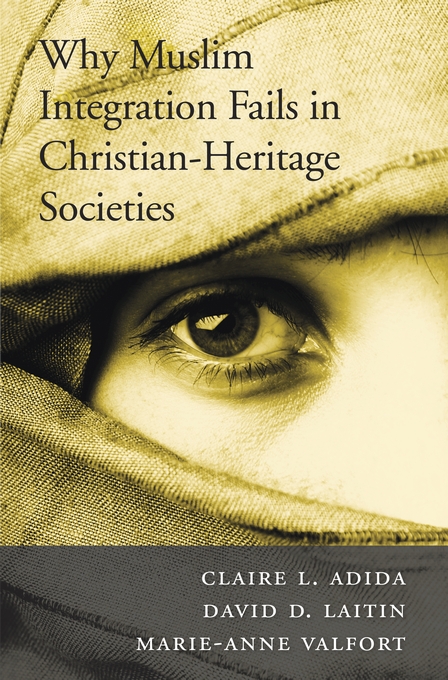
This book seeks to shame the Muslim community, and push the notion they cannot co-exist within a Christian society.

Shifting from this idea, I’d now like to focus on how my perception of “The Dispossessed” and “My Escape” really relate to this discussion of “Fearful Immigration”.  “The Dispossessed” tries to normalize an issue and get the audience to understand how these people are affected when immigrating. I found it interesting that the authors not only spoke of Europe being the front line of the refugee crisis, but also highlights that Africa faces refugee immigration as well.  But since we are speaking of Europe, I’ll focus on how the article applies to it.  One of the most poignant points this article makes is that many of the countries that these refugees are seeking refuge do not even have the appropriate amount of resources to house and care for them.  The article speaks of Jordan, and that while Jordan is a moderate and stable Arab state, it has very few natural resources, as well as having civil wars.  The article remarks the Jordan has coped well, but for how long?  And we have to ask this question to all countries who are hosting refugees.  While first world countries are more equipped to handle these peoples, we find that they are often the countries taking the least amount of refugees, including European nations.  This attitude is due for adjustment, as the top two countries worldwide housing these people are Lebanon at #1 and Jordan at #2.  This is staggering, considering neither of these countries have near the resources that many of the European nations have. 

It is important to note these differences and understand that stories like “The Dispossessed” and “My Escape” really highlight the plight of both the refugees and the countries that receive them.  We note that more countries need to be more open and accepting and stop blaming the many for the fringe.  These peoples are refugees because they seek to also free themselves from the radical sides and seek to only live in peace with themselves and the societies they choose.  It will require change in opinions in governments and communities alike, and that change is not easy nor does it come overnight, but advocating and spreading the word of the plight of these people, as well as the good they do and the attributes they can bring to the cultures they immigrate to. Even referencing the book above, many still have this idea that the Islamic faith is incompatible with other Christianity based religions and society, but what we have to start tuning our thought processes to is this idea of acceptance. Jesus preached acceptance among all, so who are we to judge a singular faith and culture, without giving them a chance?

https://immigrationlab.org/project/the-struggle-to-integrate-muslims-in-europe/

https://www.aljazeera.com/indepth/interactive/2017/02/europeans-ban-muslim-immigration-170209212657135.html

Blog Post 9 – “Failure of Integration”

Part a: Explaining the “Failure of Integration”

In Chapter 13 of “Islam, Europe’s Second Religion” the authors Zemni and Parker outline the current aspects of European culture halting Muslim Integration. They outline the political efforts of creating a “multicultural Europe” and mindsets towards this initiative.

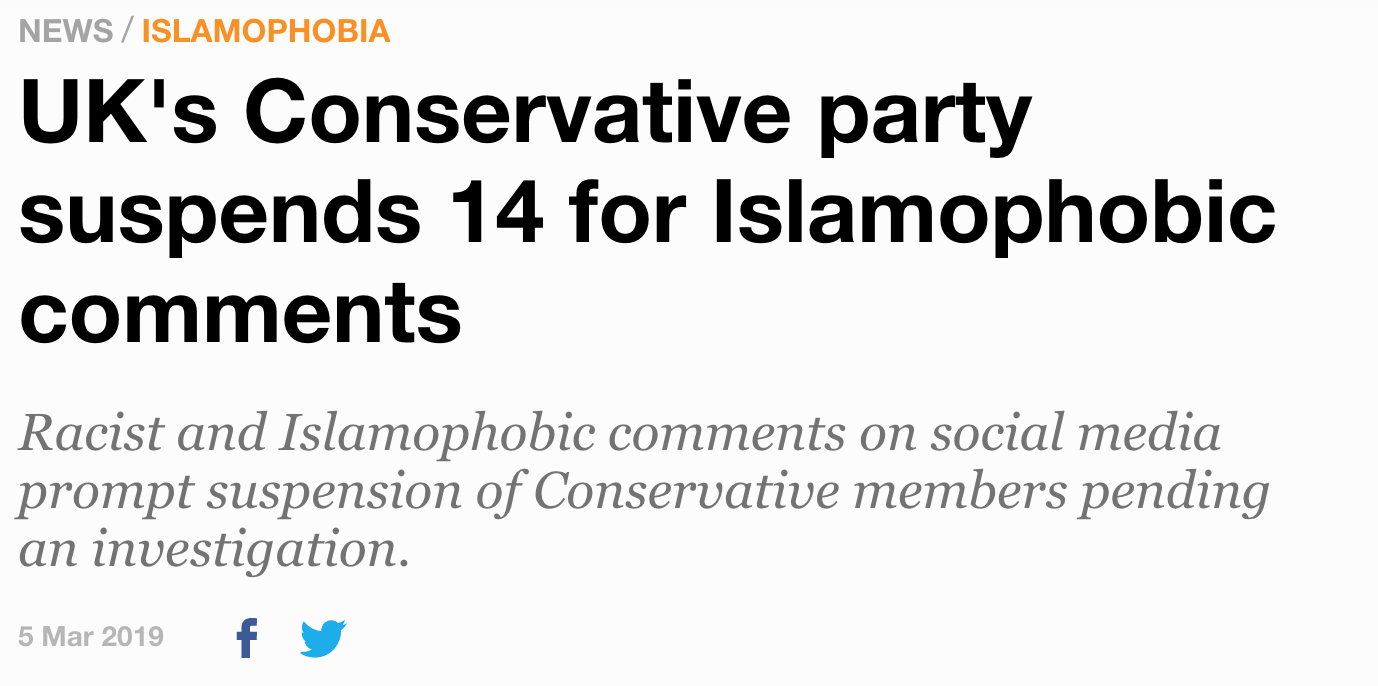
The current issue plaguing efforts of immigrant integration is European discourse has shaped Islam as an anti-Europe religion. Articles, news stories, and public images have focused on creating an image of immigrants fighting free market economics and international trade. These claims are obviously false, but nonetheless create a toxic environment for discussions about Islam on the going efforts for a more multicultural Europe. Moreover, this mindset is not limited to citizens, it extends to members of great power an authority. This is evident in Willy Claes, former Secretary General of NATO, labelling Islam as a threat to Europe.

https://www.aljazeera.com/news/europe/2019/03/uk-conservative-party-suspends-14-islamophobic-comments-190305134930144.html

Additionally, historical associations with the term “multicultural Europe” create a negative perspective on the whole project. The term originates from the observance and research of Muslim integration in the 1980s. These topics usually focused on the failure to integrate those that migrated to the country for low-income jobs during the 1950s. Moreover, these discussions and articles created the image focused on difference. A mindset was created of us, the Europeans, against them, the immigrants.

This cultural and mindset shift also created a barrier of culture. The authors explain that many Europeans began to see culture as something that must maintain a relationship with politics and civil society. Thus, by default, a culture either builds or opposes society. Compounded with a growing skepticism of Muslim immigrants, this created greater tension between the two communities as people saw Muslim culture as an opposition of European culture.

New York Times article about a book related to the topic

Zemni and Parker conclude that as native Europeans become more animus towards immigrants, immigrants are less educated about current social norms and are not given the opportunity to form their own imprint or impression. Thus, distance between the two grow and the these pre-conceived notions often becomes “self-fulfilling” (Chapter 13).

Part b: Reaction towards “The Dispossessed” & “My Escape”

During this year’s True/False festival, I had the pleasure of attending the film, “Midnight Traveler”. The documentary by Hassan Fazili outlines his harrowing journey from Afghanistan to Germany after, the Taliban put out a kill order for him and his family. The family is tested by corrupt smugglers, packed into crowded refugee centers, and setback by bureaucracy and anti-immigration policies. The film showed the true trials and tribulations of a family in peril and their search for a better life. It truly humanized a greater issue and put the idea of immigration and the aspiration of immigrants into perspective. Similarly, the video “My Escape” achieves a the same goal with its detailed filming of individuals stories of immigration.

Brief video about Hassan Fazili

Moreover, the comic, “The Dispossessed” invoked similar feelings. It is able to humanize a very macro-issue and allow the viewer to empathize with the individuals affected. The comic did a fabulous job weaving photos and comic to create an engaging medium for Muhanid’s story. Additionally, it showed the individual setbacks and dangers that immigrant families face.

These stories, “The Dispossessed”, “Midnight Traveler”, and “My Escape” are crucial in creating a dialogue about immigration. Many people engaging in debates about the topic of immigration are uninformed about realties of immigration. Often it feels that people focus on biased rhetoric or dated stereotypes. Stories like these allow for people to understand the greater issue through an individual. It makes the topic much easier to understand and analyze. Moreover, if it gives greater context to why certain policies exist or should not exist. On a large scale, these stories have the potential create informed voters and lasting change.