Blog Post 12, Week 13: The Muslim Youth
When looking at the Muslim youth in Europe, it is important to realize that this group of Muslims are very important, but also in conflict. Like any other Muslim, they face the reality and scrutiny of the assumptions of the societies around them, as well as the prejudices that follow Muslims. But also, Muslim youth represent an opportunity, as they have the potential to push for change in their own culture and adapt to their new countries and surroundings. One big movement in Europe is FEMYSO, the Forum of European Muslim Youth and Student Organization. This organization seeks to promote justice for all, as well as equality. This group also denounces the hate and extremist sects of their culture, as it reflects poorly on them and their way of life. This group promotes inter-faith meetings, as well as trying to spread knowledge against Islamophobia. Discrimination can have detrimental effects on this group, as many are just trying to find themselves among their own culture, as well as the culture they are assimilating to, so it is important to give them proper support and groups to nurture and support them, not put them down and make them feel ostracized.

Turning to Malik’s paper regarding diversity, we see that his definition of the Diversity Myth includes the main two aspects of diversity. First, we understand that the term “multicultural” includes a society that is diverse, and the policies that go into it. With that, Malik talks about this idea that many believe diversity through immigration can lead to dangerous platforms. Malik gives the example of Jewish immigration in Britain, and that those in Britain feared the loss of their own culture and wanted to stem the immigration of the Jewish peoples. This example proves Malik’s point, that cultures. Like Britain, fear losing who they are when mass immigration of other cultures is permitted into their countries. Malik goes on to say that the prevention of this problem is one of inclusion. The idea that one culture is there to oppress the other needs to be disproven, and the youth of both cultures can be the partial answer to this. By countries becoming more progressive and accepting, it is seen that diversity can be something that every country can have peacefully, instead of the peoples on both sides living in fear.
In looking at Saian’s article, we see that the argument presented is aimed at the youth of the Muslim culture. The article talks about the importance of youth, and the influence the both sides of culture, whether it be peaceful or extremist, and how both sides seek to “recruit” youth to their stance. Saian explains how different obstacles, from moving, displacement, to even loss of identity can prove difficult for these kids, and how they seek to find identity in a very confusing time and place of new societies and culture. I definitely agree with Saian’s article. Even in countries like America, we see that youth are very impressionable, and their beliefs can be shaped and molded, or even changed by those around them. Religion and culture can play a huge role in these youth’s lives, and they are in dire need of positive leaders, ones who display acceptance across borders and cultures, not extremist groups who seek to divide and isolate them.
This week’s readings drill down and focus on the Muslim youth, and how much of a vulnerable population they truly are. I agree with our readings, and realize that this population in Europe is one that deserves nurturing and development in both their Muslim, possible Islamic, culture, but also assimilation into the culture they are moving to. It is vital to these kids to be taught and receive acceptance and understanding, as they are the future of their cultures, and to illustrate kindness and understanding will help form strong bonds in the communities they live, instead of giving them reason to seek out and join terrorist communities and sects that seek to destroy a normalization of civil life.
Blog Post 11, Week 12: Culture & Immigration
By: Amber Jones
When we look at the article “Islam and the West”, we have to understand the idea of conflict transformation to understand the importance behind it. Cultural transformation refers to the idea that a person can alter perceptions in order to create new realities. This idea usually refers to religious issues and racial issues between multiple groups. This idea hopes to bring a tempered state of conflict between the groups, as long as the perceptions of them can change. If a group can change their perception, they can also change the relationships that they have with others.
Now that the basis of this idea is explained, we can apply this information to the Middle Eastern and Western conflict. The authors describe the relations between the two cultures in terms that both cultures tend to have issues with each other. In the West, we find that many people have skewed views of the culture and the religion, while in the Middle East, they tend to look at Western culture as indulgent, immodest, and other things. The authors note that while the Middle Eastern cultures do have much to offer us, both economically and socially, we still look at them negatively. To the Western world, they are seen as terrorists, or a culture looking to invade and take over.

This type of thinking leads to this idea of “the other”, which is defined as seeing those who are unlike us as people in conflict with us. This ideal breed ill will and contempt and furthers relations. By understanding this, we note that this idea of “the other” promotes conflict and promotes discontent between groups. I personally agree with this ideology of this statement, but not the promotion of the topic. I feel that we as a society should be able to look that “the other” and integrate more cultures into our own, as this is what America was founded on.
Shifting focus to immigration, we look at Frum’s article “How Much Immigration is Too Much”. He presents the idea that this is a complex issue, and he’s not wrong. Even today, our government is fighting to lock borders, keep others out, and calling for strict reform, instead of helping those truly looking to start a new life. Frum also points out that immigration is rising not only due to this idea of needing opportunity, but also people reacting to the need to get away from their own country of origin, whether due to political climates or other societal problems. This however, is causing issues with the American population, as many see new immigrants as a bad idea, that no matter the culture, we are going to be “overrun” with immigrants, instead of seeing these people as peoples in need.
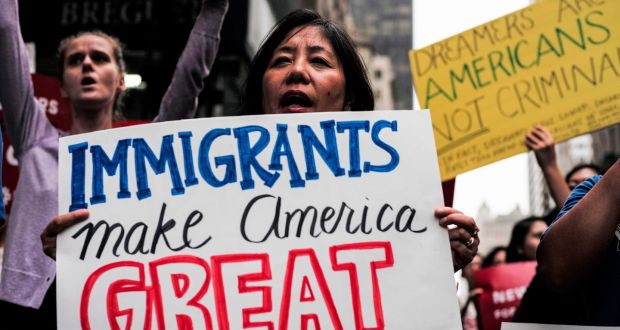
Frum goes on to say that none of our political systems, whether Republican or Democrat, are either right or wrong. We as a country obviously need to respond to humanitarian issues. We also need to realize the benefits that come with immigration, such as finding workers who are willing to accept lower paying jobs to support families while they seek to obtain their version of the American dream. But with this idea of lower paying immigrant work, we have to also put into perspective that some of these immigrants may not ever be able to carry insurance or have benefits, which in the long run, could put a strain on the medical culture and workforce as this population ages and requires more from the system. Frum greatly illustrates that immigration needs to be compromised and set up in both parties, and that it is up to us to make the change.
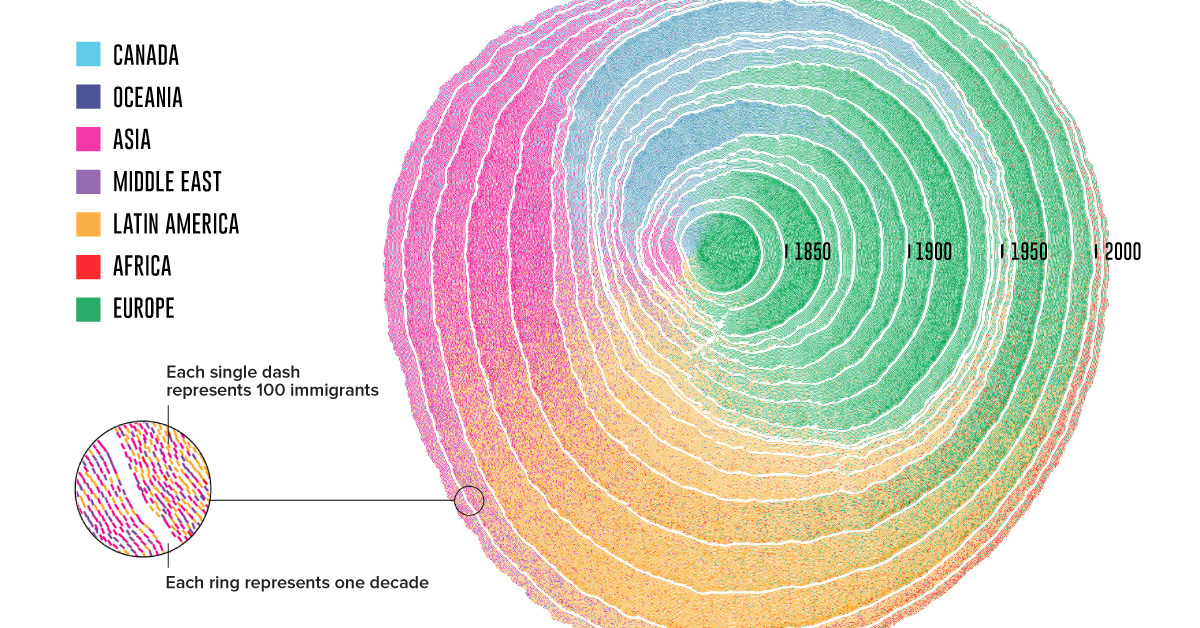
This is an animation site, but it distinctly shows the pattern of U.S. Immigration for the past 200 years, and the populations migrating here.
Islamic Law & Fluidity of Change
When we look at this term “Jihadi”, we find that this term was dubbed to Western languages to describe Islamist militant movements. But there is much more to the term than what our language has given it.
Islamic Scholar Rudoph Peters tells us that Islamic modernists choose to emphasize the aspect of Jihad, while more fundamentalists view it as a struggle for the expansion of Islam and its ideals. This idea of fundamentalism could be seen all the way back to the 19th century, in which Islamic followers struggled against colonial powers in northern Africa, such as seen in the Mahdist War in Sudan.
What’s equally as interesting is that the Jihad is actually 2 movements. The first, as mentioned above, regards the battle to expand Islam and fight those that persecute it. But this lesser know jihad is one figured around resisting temptation and believing in the appropriate Islamic value system. This second jihadi system promotes less “Westernization” and have led to the extremist groups of Al Queda and ISIS, in which most of the globe knows, and many fear.
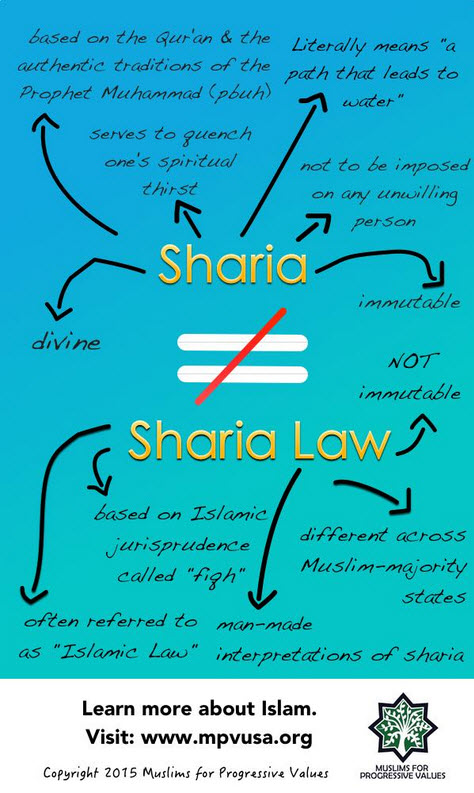
Now that we’ve looked at this idea of Jihadi, we need to also understand the concept of Shari’a law. Now, the Arabic definition of sharia is “way” or “path” and is not a legal system in and of itself. Sharia law is based on the Qur’an, as well as things Muhammad said and did. Shari’a is not a legal system in Islamic culture. It instead is a set of principles that help guide people to new answers and includes common cultural practices that date back to specific times and places in history. Many Muslim rulers wanted to find a way to make Shari’a into law, and decided which rules needed to actually be laws. This interpretation led to what the community now recognizes as Islamic law.

https://nationalinterest.org/feature/isis-here-return-the-jihadi-14600
Islamic law is based on a person’s interpretation of Shari’a. Because it is based on a human’s reading, Islamic law can and does mean different things to different sects and places, as well as different time periods. It is important to not that while many Islamic countries believe that family law matters should be handled according to Shari’a, many of these matters have to have some sort of Islamic law saught out as well, as Shari’a is not a legal system.
Islamic fundamental purists are affected because they feel that “modernization” or western & colonial influence is moving their law and practice in a direction that is against Shari’a and the Qur’an. A large portion of this is directed at how women are seen, treated, and activities they partake in. Many countries and sects have varying degrees of how women are treated. One good example is that in some Islamic countries, only men are allowed to vote, while in more progressive countries, both sexes have the option to partake, especially Muslims living in countries like America, Britain, Canada, and other democratic nations. Fundamentalists worry that this modernization will rock the foundation.

http://www.meramirpur.com/mehreen-baig-28-who-wants-to-be-a-good-muslim-and-a-modern-british-woman/
I personally don’t think that Islamic law at its foundation is consumed with this idea of “punishment”. I feel that as a religion and a set of laws, it seeks to help people lead a good and faithful life. Many differing Muslim groups and sects that practice Islam are adopting new practices. Some Islamic countries are allowing women to stop wearing the headscarves, some countries are giving everyone the right to vote or attend school. Islamic law and the Shari’a feel fluid, in that as long as a person is leading a good life, free of temptation, they are fulfilling the Qur’an’s ideals.
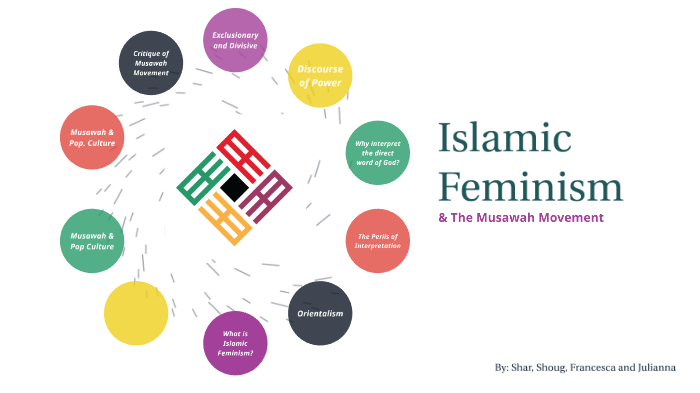
In keeping with this idea of Islamic law being fluid and more tolerant, we look to this group called Musawah. This is a movement started by women of Islam in 2009 who seek to teach, engage, and provide outreach regarding Islamic law and culture. They seek to promote equality in the Muslim family, primarily for women. Musawah facilitates access to existing knowledge about women’s rights in Islam, and how to apply feminist and rights-based ideals into understanding, equality, and justice with the Muslim legal tradition.

http://www.mpvusa.org/sharia-law
Immigration Failure & European Opinion
When we look at Zenni and Parker’s explanation of this notion of “Failure to Immigrate” regarding Muslims in Europe, we have to understand the perspective they are writing from. The authors point out that, much like Western culture, many European nations have painted Islam to be a religion that is anti – European culture, and one that cannot or does not fit in with the social structure of modern European countries. But why is this?
First, we look at how the media portrays this group. As we’ve talked in former class periods and blog posts, this idea of Muslim and Islam to many who don’t fully understand the difference between the culture and the religion tend to just lump them all together. Because of this, the media uses fear tactics to spread mis-truths and misunderstandings, to a degree. The portrayal of the head scarf as being a tool of oppression, instead of a religious choice, or the radical fringe of Islam who perpetrate horrible acts being broadcasted worldwide, while the good that their communities do is overshadowed plays a huge role in how these countries view the culture and religion. Because these ill representations are broadcast more than the good, communities and governments seek to try to keep them out, thus thinking they are protecting their citizens.

https://www.aljazeera.com/indepth/interactive/2017/02/europeans-ban-muslim-immigration-170209212657135.html
Not only is the media responsible, but Zenni and Parker talk about this idea of the Muslim culture being opponents of free markets and trading, but this is also a lie. While it is noted that the Muslim community is particular, they by no means seek to hinder or halt trading, or anything that would pose threats to the communities at large. The majority realize that trade among cultures promotes not only sharing of goods and services, but also of sharing culture and understanding.
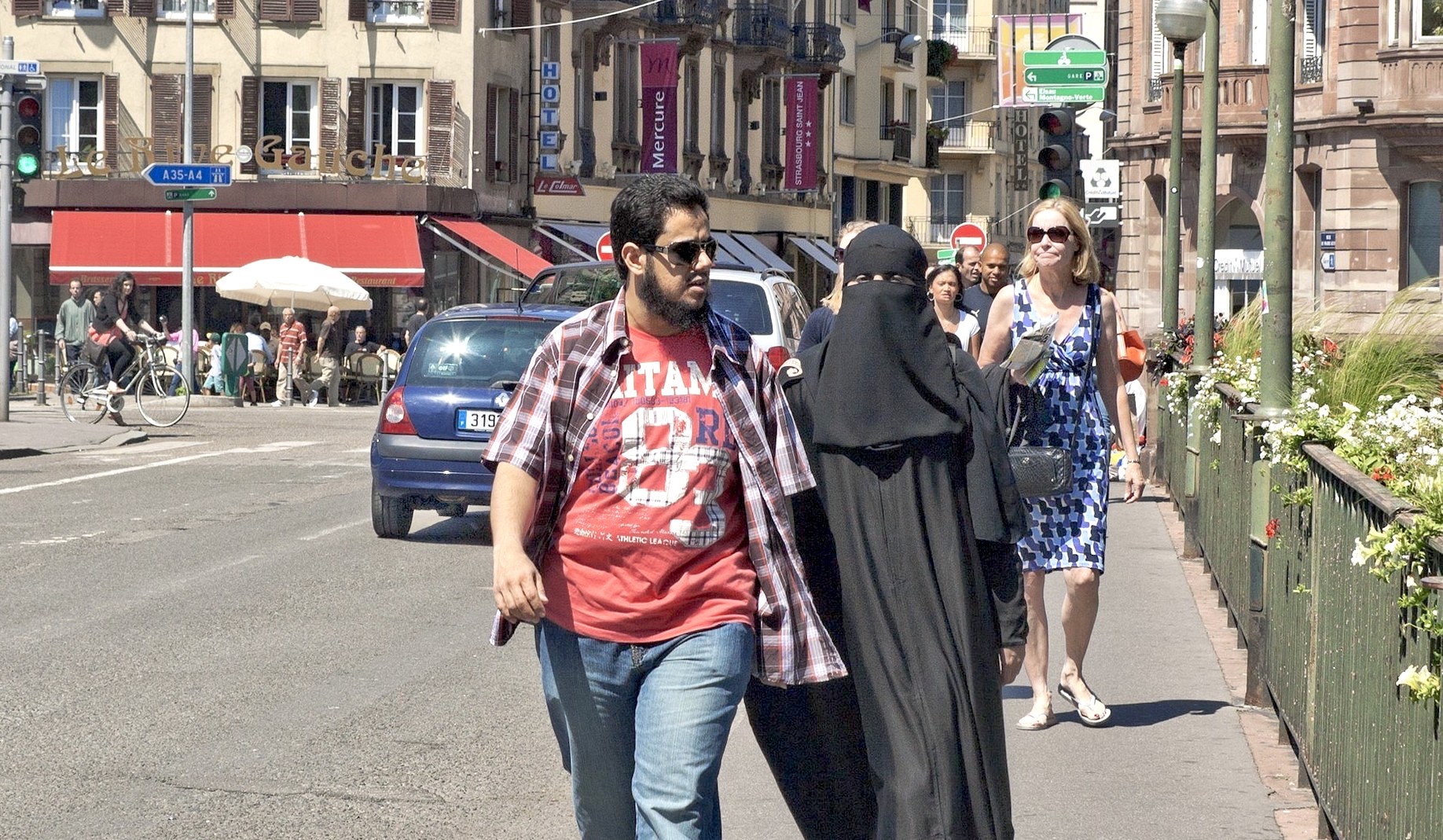
Because of these factors, we realize that Europe is seeking to create a society in which their own views and cultures are celebrated, but those of outside influence are dangerous, and have the potential to oppose society. This burdens the Muslim population, as they must seek to not only integrate into new cultures but have to also prove that they seek to be an active member of that society, and “fit in”. The reason this is an issue, is that like any culture, the Muslim population seeks to hold their identity, and this creates tensions within the culture and communities that these peoples have immigrated into and makes the society around them exclude them or treat them as outsiders.
Shifting from this idea, I’d now like to focus on how my perception of “The Dispossessed” and “My Escape” really relate to this discussion of “Fearful Immigration”. “The Dispossessed” tries to normalize an issue and get the audience to understand how these people are affected when immigrating. I found it interesting that the authors not only spoke of Europe being the front line of the refugee crisis, but also highlights that Africa faces refugee immigration as well. But since we are speaking of Europe, I’ll focus on how the article applies to it. One of the most poignant points this article makes is that many of the countries that these refugees are seeking refuge do not even have the appropriate amount of resources to house and care for them. The article speaks of Jordan, and that while Jordan is a moderate and stable Arab state, it has very few natural resources, as well as having civil wars. The article remarks the Jordan has coped well, but for how long? And we have to ask this question to all countries who are hosting refugees. While first world countries are more equipped to handle these peoples, we find that they are often the countries taking the least amount of refugees, including European nations. This attitude is due for adjustment, as the top two countries worldwide housing these people are Lebanon at #1 and Jordan at #2. This is staggering, considering neither of these countries have near the resources that many of the European nations have.
It is important to note these differences and understand that stories like “The Dispossessed” and “My Escape” really highlight the plight of both the refugees and the countries that receive them. We note that more countries need to be more open and accepting and stop blaming the many for the fringe. These peoples are refugees because they seek to also free themselves from the radical sides and seek to only live in peace with themselves and the societies they choose. It will require change in opinions in governments and communities alike, and that change is not easy nor does it come overnight, but advocating and spreading the word of the plight of these people, as well as the good they do and the attributes they can bring to the cultures they immigrate to.
https://immigrationlab.org/project/the-struggle-to-integrate-muslims-in-europe/
French Muslims & French Islam
Amber Jones Blog Post #8 3/19/2019
When we look at the Muslim population in France, we have to realize that it is one of the main focal points for many reasons. Why is France important though? We see that the highest Muslim population resides in this country. It is noted that the locale of France is a huge reason, as well as France being one of the countries that colonized many of what is now seen as Muslim countries.
Even in culture, it is noted that the French language is adopted among many Muslims, ad due to the colonization by France earlier in these Muslim countries, the French language had already spread. Because of this, France is easily accustomed to.
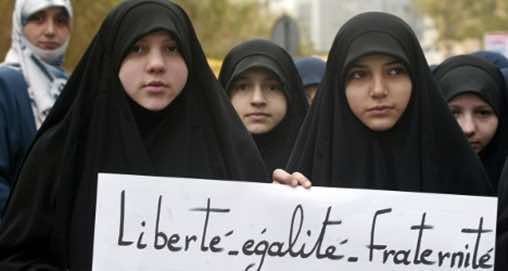
Looking at the idea of Muslims and the Islamic community lagging behind can be attributed to the fact that many Muslims and Islamists are seen as outside the cultural norm. Many refugees are looked down upon, as usually they have nothing, no money or possessions. Across many cultures, the poor and minority groups are usually pushed outside the mainstream culture. Even here in America, we look at the Hispanic population, whom we are often out to ostracize and put down, just because of their heritage and background. Sometimes they are viewed as even a threat. Our culture accuses them of stealing our jobs and so on, when all they want is just a chance at a better life. We can relate this to the Muslim culture in France, as the French people see this culture as outside the norm and pushes back on the inclusion of these cultures into their society. Because of this push back, many Muslim people can find themselves lagging socially and financially behind.

Religiously, France is much like America with their idea of Laicite. This is equated to a separation of church and state, for the best definition. France is more successful at this than the US, but it is important to realize what this is to speak about how this relates to this Muslim refugee population. France’s ideals of separation are opposite of that in the Islamic world. In the Muslim world, Islam rules the lives of those who practice the religion. Religion dictates everything in the Islamic faith, which has clashed with the secularism in France notably. Through France trying initiate burka bans and promoting a separation of religion and culture, Islam has suffered, and we see the emergence of radical extremists, who unfortunately make headlines for bombings, and threats of destroying western culture for being “infidels”. This terror has made people of all western culture, not just France, afraid of the burka / headscarf. While it may be an unfair assumption, we associate this article of clothing with a religion that has committed heinous crimes, and we have begun to fear it.
https://theintercept.com/2019/02/23/france-islamophobia-islam-french-muslims-terrorism/
Migration and Fitting In
By Amber Jones, 3/12/2019, Blog Post #7
When it comes to being a Muslim, Justin Vaisse points out that there are many misconceptions and myths regarding this religion.
First, he points out that many people believe that being a Muslim means that you have one firm, fixed identity, and that this identity is enough to make a person who they are. That sentence alone poses many issues and raises one of the main myths that Vaisse talks about. A religion cannot define a person or an identity, but rather, enhance them. Vaisse speaks of this way that the “typical Muslim” can be defined by a lack of individualism, and that the majority of the community feels that this is ok.
Another issue that Vaisse raises is that when fleeing countries in the Middle East, most immigrants are referred to as Muslims, even though many have differing faiths.
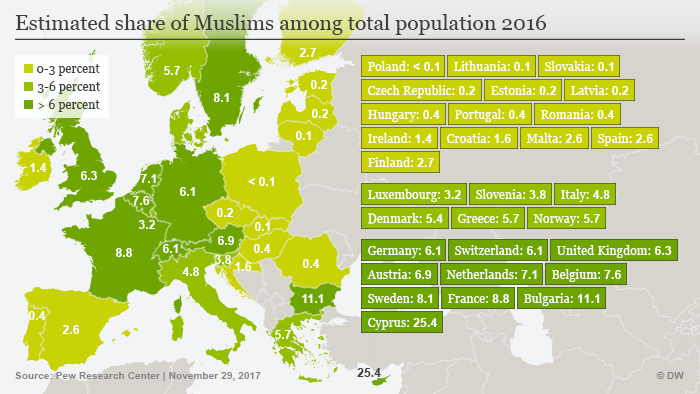
One of the bigger myths that Vaisse addresses is that the Muslim population is “gaining” on native populations in countries that they are migrating to. This could not be further from the truth. Numerically this is inaccurate, and also, why shouldn’t those who are migrating not only meld into the culture that they are immigrating into, but also bring their own spice of life to the communities they now reside. There needs to be this idea of working together. We are seeing more and more in many countries that they are becoming “melting pots” of their own. Many first world countries have immigrants of numerous nationalities that learn to mesh on their own, and this Muslim community should be treated no differently.

It is easy to understand why this population does have a more difficult time though. As with any religion, there are the fringe radicals, leaders who wish to use their religion to oppress others and stay in power. However, the majority of the Muslim community do not believe this way and would rather choose to live peacefully.
So we ask ourselves, why the misunderstanding? In America, we hear the word Muslim and it strikes heavy emotion, whether it’s anger, or fear, or sadness. We have deep feelings regarding 9/11 and other terrorist acts. But as mentioned above, it is saddening that the few fringe ruin the image for a massive population just trying to live in peace, and flee those who would seek to oppress and demean them.
The Right Side?
By Amber Jones, 3/5/2019, Blog Post #6
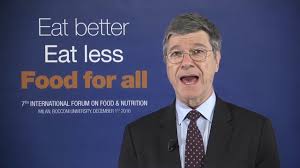
The debate on development is one of intrigue and deserves the spotlight among the economic community. When deciding “sides”, I really believe in Jeffery Sachs. His ideals are optimistic, and lead to believe that improving development in countries where poverty is a large problem will allow the people in these countries to improve their quality of life and help reduce poverty. Sachs helped oversee the Millennium projects works while serving as the director of the United Nations, as well as being the director of the UN sustainable development solutions network. I believe his work with the UN and seeing this issues upfront help shape his economic views, and lead his work to show that development helps these countries reduce their poverty rates. In a great example that we have discussed in previous weeks, programs like the millennium villages help these people improve their situation. In Mali alone, people were brought more irrigation access, more healthcare access, and better ways to financial serve their families. Programs like these are what Sachs believes in and helps put into effect. His views that development can be sustainable are what these countries need, and we need to be able to build upon them to help the poverty stricken areas in Africa. Sachs promotes forums not only on economics and financials, but also how we can aid poverty stricken countries in their food and lifestyle habits. He also helps these forums illustrate how simple it could be in theory to use food more efficiently and feed the world, so to speak.
Now, even though I believe Sachs has the upper hand, William Easterly brings up a good point in the debate. Easterly claims that Africa should be left alone. Obviously this is in contrast to what Sachs is arguing, but there is some truth to Easterly’s opinion. With the projects and developments that have already been implemented in Africa, the countries need to be open to free trade and industry, and learn how to utilize the new democracies that are forming. Thanks to Sachs ideas and projects of aid, many of the African countries have the tools to reduce the amount of poverty, but the countries need to learn to do it on their own, or they will never break the cycle.
In looking at how Banerjee and Duflo look at the SDG goals, we can see that they do address the needs of the countries. But even though they give ideas to achieve sustainable development, the ability to end poverty is far from attainable right now. One big reason is that while governments are moving towards democracy, many still have corrupt portions of their governments. Not only that, but many areas still suffer from poverty traps, and cannot break out of the cycle. These reasons can be due to poor farming, poor resources, bad governments, or lack of resources.
The solution? There are many that we can look at, and help promote. We first look at some of Jeffery Sachs ideas. The millennium goals helped achieve development in certain parts of certain countries within Africa. We go back to this idea of the Millennium villages, and realize that the improvements made they made can be made sustainable, as long as they are given appropriate resources. In Mali alone, the villages that were chosen to be a part of this project saw increased growth, healthcare, a reduction in malaria, and an increase in wages for those who were suffering in poverty.
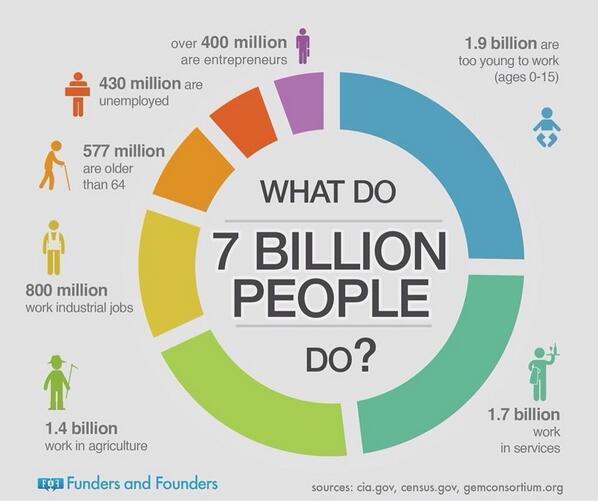
Not only do the millennium projects give hope into the SDG’s, but we also have to look at the monetary solutions. When we researched micro – credits last week, these payment methods and investments tend to aide the countries and the poverty stricken in them in ways that most banks wouldn’t. By focusing on the needs of those suffering in severe poverty, the development of appropriate funding for farming needs or other familial sustaining is now attainable for these. The only problem with some of these companies, is that they are on the verge on bankruptcy. There needs to be more initiative and funding for these programs so that they can return more to the communities they serve, and gain the trust of the citizens that they have lost. The image below reminds us the magnitude of the world population and how industry affects us. 1.4 billion people alone work in farming, and to be able to help sustain these people helps aid those who can’t work, like the 1.9 billion too young, or the 577 million who are elderly. Micro – finance works to help these people, and help relieve the stress of being severely poverty stricken by investing in them, so that they can contribute more to their own families and communities.
Micro-Finance and Micro-Credits
By Amber Jones, 2/26/2019, Blog Post #5
Micro-finance and micro-credits. These terms sound to be like something that would add insult to injury. Why would people loan large amounts of money to those most struggling? How on earth would they be able to afford to pay it back when the targeted audience for this idea are those among the highest poverty levels?
In Mali, micro-finance is struggling hard. In 2005, the Premiere Agence de Microfinance Mali was established in line with the Malian government to initiate micro-finance into the country. This area is served by 14 banks that serve the urban areas, but the micro-finance sectors serve the more rural areas, which totals upwards of 1 million clients, and 126 licensed MFI’s serving them. The sector has been in crisis for some time though, and are technically bankrupt or need strengthening. This has caused the majority of the Malian population to lose faith in the system, especially with the growing political and security issues within their government.
In reflecting on the 31 off track countries, it is sad, but not surprising that Mali is listed among them. While Mali has received a large amount of aid, the mid to long term sustainability outlook is poor. One of the largest reasons for this is the Malian government and security for their own people. Even though Mali is technically a democratic state, their government still has a large amount of corruption, especially in the northern and rural areas. To further hinder the ending of poverty, many larger nations are now afraid to take chances investing in these countries, as they do not believe the risks outweigh the risks. This attitude is not helping the mass population, and the ones who suffer are those who cannot rise above the poverty level. It’s interesting to note that this article did mention singular projects that aim at aiding the countries, and while they have small to medium success in a small range, they struggle to make at – large impacts. This whole statements brings to mind projects like the Millennium villages and other initiatives. It’s upsetting to see that all the hard work and initiative put into these projects are unable to sustain larger parts of the countries they serve.
When looking at digital technology in Mali itself, we see that MyAgro has come in and is trying to fully digitize the country’s payment methods. How MyAgro works for those is poverty is that instead of paying for seed and fertilizer in one lump sum, the farmers use scratch cards they’ve purchased over time, and thus prevent them from spending the meager monies that these people have all at once. These digital technologies are trying to make the country go full digital in their payment methods, and so far in both Mali and Senegal, MyAgro is doing quite well.
With regards to the article that we are “stealing” Africa’s wealth, I personally had a hard time with this. While I do agree that problems of what seems like tax – workarounds that tend to profit the rich in their home countries by using Africa as a means to facilitate their finances, this plays into the corruption of many of the African country’s governments. Also, the citing that many of Africa’s natural resources are being illegally farmed, such as logging and fishing, which in turn affects those who may already be in poverty, furthering their need. One large thing I didn’t agree with is assigning a monetary amount to climate change. Now, I do know that climate change is real, and not refuting that it is having and is going to continue to have a large effect on climate, production, and wildlife, I find that assigning an arbitrary number to the consequence may be downplaying the effect. I realize the 36 billion dollars is not a small amount, but Africa alone is a large continent, and this monetary figure seems like it could be lower than the actual damage done by climate change. With the climate change burden, I believe that the effect would hit those in poverty the greatest, as they may lose their ability to farm, due to the harsh climates and lack of resources. I believe the term “stealing” to be a bit of a daring headline, but there definitely is a problem of people using and abusing Africa, and it’s hurting those most in need.
https://www.akdn.org/where-we-work/west-africa/mali/microfinance-mali
https://www.aljazeera.com/indepth/opinion/2017/05/africa-poor-stealing-wealth-170524063731884.html
The Modern Mali Cheetahs
By: Amber Jones, 2/19/2019
When looking at Mali, one of the biggest issues this country faces is hunger. Now, many landlocked African nations have this problem as well, due to lack of resources, mainly water transportation.
Because of this, many “cheetah” organizations have emerged to help combat this problem in Mali. Two weeks ago, we researched the Millennium Village project, who have made head ways into solving this problem, and they have made many changes within the villages they were tending to in Mali. But the group I wanted to focus on as a “cheetah” organization is a specialized group called Freedom from Hunger. This group is not only helping Mali, but is deployed in other African countries as well. This group is partnering with Mali’s government to help educate the populace as well as help set up systems of irrigation and farming techniques for the people who are living in the vast arid climates that do not receive much waterfall. This group also partners with another NGO group, AIM YOUTH, to raise money and financially sustain themselves and the people they aid. AIM YOUTH also brings education and financial advice to the people of Mali and the other countries they serve.
When looking at the promise of Mali’s government, and the hope of freedom, Mali ranks in the 50th % for freedom. According to the Freedom House article, they rate Mali as “partly free”, and rank Mali 17/40 for political rights. Their electoral process gets a score of 50%, after ousting Moussa Mara, who resigned with all of his cabinet as well. After this, many rebel groups signed a peace treaty which was negotiated with the help of the UN. Mali does hold democratic elections for their president, who is then tasked to appoint a prime minister. One of the biggest reasons Mali’s score was hit was due to the suspending of the governmental constitution in 2012, but luckily, was restored in 2013, in which elections were held that year. This was a very large issue, as many were surprised that this election went as well as it did, considering the fragile state of the government due to the coup. It is also noted that while Mali does hold a large Islamic population (almost 90%), no single ethnic group dominates the government or security forces. This is key, as it helps the country remain free of partisan issues and attacks. One of the biggest factors for Mali’s low score is the way Mali’s government functions. Receiving only a 4/12 by Freedom House, it is noted that while the civilian rule with elections was restored in 2013, there are still many parts mainly in northern Mali that corruption remains a tenuous problem, especially with public and private contracting in that area. This contracting is a huge issue, because these companies are some that are helping build irrigation pathways and waterways to the people of the area in order to help them farm. This corruption is still finding its way through this area, and is becoming hard to oust, even after Masa left office.
Mali is up and coming in many ways, and there is hope for this country. Many organizations are aiding in helping the country reduce its poverty levels, and raise GDP and income for its citizens. Programs like the Millennium Village project and Freedom from Hunger are finding ways to help these people in spite of the still corrupt policies in their government. Mali is making strides to overcome their past flaws, but they still have a long way to go.
https://www.freedomfromhunger.org/mali
https://data.worldbank.org/country/mali
http://www.worldbank.org/en/publication/global-economic-prospects#data
The Stealthy Attack of the Old Ways
By: Amber Jones, 2/12/2019
When we look at Emerging Africa, we realize that the upcoming generation is one of hope and promise from many facets. Many of the countries are moving to democracies, looking to protect and empower their people, instead of the old dictatorships. Chapter 3 speaks of countries like Namibia having droves of people turn out for five days just to have the right to vote in their new democracy. A record 98% voted in that first round 1989. Around this time, Nelson Mandela was freed from prison, the apartheid was beginning to fall. The shadow of the cold war and old ways were slowly dissolving, which would in turn set the stage for African nations to rise to the occasion. Reflecting on that Namibian vote, it was noted that this new government would not immediately solve all the problems, and this premise was true in many of the emerging democracies, but it put African countries willing to move to democracy a chance to “fix” what was broken.
This hope though, was dashed almost immediately as it was promised. The people hoped for governments who would speak for them and their freedoms, and were met with officials who sought complete control, who allowed very little dissent, and who would end up curtailing many of the civil liberties that their people were wanting.
To understand this, we need to understand the role of “The Big Man”, which, in the mid 1980’s, was at its height. This era was characterized by lone, singular dictators, such as Ibrahim Babangida and Samuel Doe. These two dictators were characterized by tyrannical, disastrous rule. Doe’s bloody rule in Liberia was met by Charles Taylor, who brought 14 years of civil war to the area. Many countries leaders followed suit, promoting control. Democracy was a rarity at this time, and even countries that would have any type of elections, they were often not put any importance on, nor did any of the motions flow.
Another big issue with this is that the political and economic systems were intertwined, and “The Big Man” system would prove to handle the countries finance, with no real system of checks and balances. The financial control though, would lead to the beginning of the downfall of this era, as financial funding begins to dry up and not allow for the support that these dictators needed.
This discontent proved to cause uprisings, and between 1988 and 2008, the rise of democracy would spread and become one of the biggest forefront movements across the continent.
Obviously, this change doesn’t happen without proponents for it.
Enter, The Cheetah Generation.
Stealthily, quickly, these people are moving into African government bureaucracies, political leadership, private sectors, and civil society groups. This particular movement is important, as it puts both the young generation with new ideas and thoughts, as well as a mix of the old generation who are tired of the status quo. Unlike other movements that have a social designation, the “cheetah generation” is not made of any specific age group, gender, location, or educational level. Instead, they are dreamers, those of hope for change at every level of society, both public and private sectors. They have a new perspective, and a fresh one for what not only their community, but their country as a whole should look like, which in turn, promotes the growth for a new Africa.
Poverty traps exist. Usually, these are things that people are born into, and remain in when not given possibility. But sometimes, possibility is out of reach. Poverty traps exist in the form of lack of options for careers, lack of education, even lack of healthcare. In Mali particularly, there are arid parts in which the residents cannot farm well, if at all. Luckily, part of the village project researched in last week’s post brought irrigation and water to some of these villages, as well as improve their healthcare, and educate the children. The millennium village project, as well as changes in government structure has helped Mali break some of these poverty traps.
Because of the investment in the land and people, Mali’s GDP is rising, and the country has experienced a massive rise in economic growth. According to the world bank, not only has the GDP risen, but also attendance in school has increased drastically, as well as life expectancy and total population. These facts prove that when a country is invested in, even in the most remote parts, things can have a large positive upturn. With this being said, I don’t think that human capital is a factor in Mali. Because of the improvements being made, the amount per capita in the population is rising, and this allows for personal financial growth within the population.
Africa’s Comeback
By: Amber Jones, 2/05/2019
In this post, it is important to study Steven Radlet’s focus on the promise of Africa. By promise, we have to take into account that sub – Saharan Africa has long been associated with the worst of the global issues, to include poverty, civil wars, and other large problems and conflict in the many countries that make up the area.
Seventeen emerging countries are putting behind the conflict, stagnation, and dictatorships of the past.
Over the past years, many of these countries have succeeded in having a constant economic growth, as well as flourishing democratic governments. These governments are also producing strong leaders, who are helping to reduce the amount of poverty.
Not only are these seventeen nations pulling ahead, but they are influencing other countries around them. Radlet gives the example of Ghana, who not only has had a robust economic growth, but has also seen growth in income per person by 2.6%. This is a huge increase, and a good number to focus on, as the global average is only around 1.9%. Radlet goes on to discuss other African countries, such as Tanzania and Mozambique, and give examples to their emerging growth in the upward directions.
We are reminded that for a good three decades prior, all the world was hearing out of Africa was bad news. This would come in the forms of civil wars, diseases, famines, and mass poverty. Many researchers and commentators would group these sub Saharan countries together. By doing this, it created a huge disservice to them, because we were not able to focus on the countries as individuals, with their own strengths and failures, but as an area that was just doing very poorly. But Radlet reminds us to not discount these nations, that they are rich in diversity and history, and now, they are emerging onto the scene with promise.
With new focus and research being given to these countries, we are beginning to see the full turnaround that many of them are trying to accomplish. With improved markets, employment rates and pay, and stable governments, many of these countries have a lot to be proud of, many of them have come a long way to accomplish these tasks over the past thirty years.
In looking at the Millennium villages, I chose to focus on Tiby, Mali and Sauri, Kenya.
Tiby itself is a small cluster of villages in the south region of Segou, and is one of the poorest areas in Mali. The village I believe was chose for this project for not only this reason, but for many others. This village cluster has a high infant mortality rates, high levels of food insecurities due to poor and sporadic rainfalls, and overall poor climate issues. In further looking, it was noted that there is an exploitation of natural resources, as well as poor transportation, which is needed to transport goods to market, as well as an overall breakdown in traditional farming systems.
The goals for this village were to help the inhabitants become more able to farm their lands, and have adequate resources to deal with the unfavorable climate. In looking at mortality rates, to include the high infant rate, two clinics were built to help this village have access to appropriate medical care. Also, the plan was ton install roads and adequate water transportation and irrigation for the area.
There have been many successes for this area. Two new clinics were built, to make the total six to service the 75,000+ population in the area. New water pipes were indeed constructed to bring ample water to growing crops. Also, 70 km of roads were built to facilitate transportation for markets.
One of the biggest criticisms of the project and villages in general is that there is no control to measure the 14 villages to. The millennium villages were selected to figure out how to help poor villages and areas, but the project did not have any villages that they did not help or select to compare their findings and results to.
For a numbers breakdown, Mali’s GDP is 15.29 billion, GNP is 40.01 billion PPP dollars (in 2017), WDI is improving but still considered low income, and HDI is 0.34, making it #182 of 187 countries. This number may be small, but it has increased from 0.176, an almost 95% increase.
Mali is benefiting from the African growth, and looking at the Tiby village, we note that all the improvements made are leading to the overall growth of the country.
Next, we look at Sauri, in Kenya.
The Sauri cluster of villages is located in the Yala division, Siaya District, of the Nyanza Province in Kenya. This was the first site chosen for the Millennium Villages project. This area was chosen because while the area is humid and well watered, the area’s farmers have very little land to farm their staple crops, enough to say that it is insufficient to feed the average sized family. This inadequacy was measured and revealed that at the beginning of the project, over 80% of the population earned less than $1 a day, and many children were stunted, which is an indicator of poor nutrition. Also, because of the water and humidity, mosquitoes are prominent, and malaria is a huge prevalence in the area.
The goals for this village were to improve farming, as well as help supply adequate nourishment to children and adults alike, and aid farmers in having sustainable crops. Also, there was a need to improve the health care in the area.
Successes of the project in the area include Income diversification by teaching the villagers to keep bees and fish farm. Also, A new co-op pasteurizes over 600 liters of milk a day. To combat malnutrition, children in all schools are given a daily meal while at school, and more than 97% of children are vaccinated against measles. Also, healthcare for women is improving, with nearly every pregnant woman being screened for HIB and offered counselling, which is up from the dismal <50% back in 2008. Also, power connectivity has increased, as well as improved access to improved water.
One failure that is noticed that that the malaria epidemic has not been fully addressed in the area. While there are 9 clinics established, the focus has been on children and pregnant women, with malaria treatment lagging. Even so, it is noted that the malaria prevalence has reduced from 50% to around 8-9%, which is a nice drop.
Criticisms of this village in particular are many, as this was the first site to deploy this program. “One of the biggest issues is that the model follows a project-style linear model that has historically been characterized by failures. The project has been prone to many tensions despite being a high profile project deemed too important to fail. Most of the data produced has been sealed off from the public and questionable reports of its successes have been published; that have been aimed at keeping its inefficiencies under the carpet to prove that MDGs are achievable. Introduction of entrepreneurial style of farming by re-organising the community to facilitate formal ways of marketing and supplying them with inputs was abit taken afar from the local people’s social organisations.” – Taken from ‘CASTLE IN THE SKY’: SAURI MILLENNIUM VILLAGE IN REALITY by Hellen Kimanthi and Paul Hebinck in International Institute of Social Studies (ISS) The Hague, The Netherlands .
For the numbers, Kenya’s GDP is 74.94 billion, they GNP is 161.5 biollion PPP dollars (in 2017), their WDI is rising, although around the year 2000, the life expectancy dipped dramatically, but has been rising since. The countries HDI is 0.590, and ranks 142 out of 187 countries, and has been steadily rising since 2000.
Both Mali and Kenya have undergone dramatic improvements in their country. New schools, healthcare facilities, and improvements to farming life are rolling through these countries, which in turn is improving the lives of all the citizens. Not only that, but mortality rates are falling, and the wages are increasing across the countries. The improvements being made are helping these countries bounce back from the stronghold of poverty, inequalities, and food insecurities.
With Jeffery Sachs declaring the the most urgent task at hand is eliminating global poverty, through projects like the Millennium villages, and these sub – Saharan countries growing and improving their citizens lives, we are seeing a downtrend in these problems. Like the criticism from “The Castle in the Sky” paper, though, these undertakings have flaws that need the kinks worked out in order to better help the next village, town, or city that researchers are looking to boost up, and aid in their progression to cure the poverty epidemic.
UNDP. Human Development Indices and Indicators: 2018 Statistical Updates. Retrieved February 04, 2019, from http://hdr.undp.org/sites/default/files/Country-Profiles/MLI.pdf
Mali . (n.d.). Retrieved from https://data.worldbank.org/country/mali
Tiby, Mali. (n.d.). Retrieved from http://millenniumvillages.org/the-villages/tiby-mali/
Kimanthi, H., & Hebinck, P. (n.d.). Castle in the Sky: Sauri Millennium Village in Reality. Retrieved from https://www.iss.nl/sites/corporate/files/38-ICAS_CP_Kimanthi_and_Hebinck.pdf.
Sauri, Kenya. (n.d.). Retrieved from http://millenniumvillages.org/the-villages/sauri-kenya/
Kenya . (n.d.). Retrieved from https://data.worldbank.org/country/kenya
Human Development Reports. (n.d.). Retrieved from http://hdr.undp.org/en/countries/profiles/KEN
Blog Post #1
The goal of SDG’s, or sustainable development goals, is one of inclusion. This new agenda emphasizes holistic approaches to achieving sustainable development for all people. One core aspect of this is focusing on those who are disabled, and the new guidelines set out for #2030 mention the disabled in 11 of the 17 goals. It is noted that the link between disability and poverty is very real, and that the focus needs to be on them.
When we think of neo-liberalism and the cutting of government spending, we have to really focus in on goal 8, promoting decent work and economic growth. The reason for this is that when the governments of these nation cut their spending, they tend to cut it from social programs and other non-essential entities that they feel do not need the money. By promoting work for all, including those with disabilities, we are able to see economic growth, and money flow back into the economy and promote more job growth. In return, you see a downward trend in poverty, as the majority in the economic system at hand are employed and able to provide for themselves, and possibly enough for their families. This idea does not full abolish the poverty from the area, but greatly reduces it, even with the government cutting back in their own spending. Another point is that in terms of the businesses and employers themselves, they need to find ways to utilize natural resources wisely, therefore they cut down on their costs. This in turn allows for better pay and the creation of more jobs, which in turn grows the economy and decreases the need for government spending. These ideas help prevent people from being excluded from jobs, giving those who can work the ability and the training to do so. Not only do these actions help promote the workforce, but it also cuts down on child and forced labor. This is huge, as many of the other goals include children and education, noting that educating people is one of the main reducers of poverty, and can help reduce the amount of people turning to the government for their support. The biggest issue seen with the neoliberalism and the World Bank in this situation is that many see that the small wealthy few are controlling a vast majority of the wealth, and by pulling funds out of countries to protect their own interests, they are aiding in the poverty situation. Researchers have noticed that in the last 20-30 years, wealth disparity has increased many fold within and between countries, citing over 100 countries have undergone extreme economic decline. This disparity can leave a large portion of the population with poor wages and in poverty.
John McArthur very clearly lines up who he considers the “players on the bench”. First, he analyzes why this term is used for United States. While George W. Bush launched the millennium challenge in 2002, promising a 50% increase in U.S. foreign aid, he was very careful not to link it to the MDG’s. Following suit, the State department also claimed they supported the targets of the MDG’s, but were cautious. They, along with Bush, were afraid to alienate their support base by supporting a UN – sustained program. McArthur claims that by the U.S. doing this, they missed an opportunity to highlight their contributions to foreign aid and foster international good will.
The second “player” that McArthur criticizes is that of the World Bank. While senior levels in the bank championed the framework, there has been no adequate facilitation of MDG efforts. Part of this stems from a resentment of the UN and it being given a huge role on development problems. Another issue is that the bank itself is dominated by economists, therefore it tends to prioritize economic reform over social investment. This standpoint is semi – understandable, as the bank prioritizes making money over risk, but this is one of the big reasons the bank missed the mark.
In analyzing “How to Help Poor Countries”, the authors utilize the idea of foreign aid to help poorer countries. It is noted that more aid is one of the central recommendations to help these countries. Aid helps boost the economies and provide financial assistance. Not only is financial aid keenly helpful, utilizing health aid has dramatically helped as well. Many of these countries have seen an eradication of smallpox, as well as a decrease in infant mortality and treatment of many preventable illnesses. These health advantages help boost the population, which can in turn help boost the economy, as you potentially have a larger population to enter the workforce and also spend money.
The authors suggest that one of the biggest things we can do for these countries other than foreign aid is to have the opposite effect, and step back, to help empower these countries economies, and allow them to find their own identities. I believe this is very important in helping these nations break the cycle of poverty. By figuring out how and where they stand economically, and allowing them the space to fix the problems, and empowering them with tools to do so, these countries can begin to flourish on their own basis without depending on foreign aid.
https://www.un.org/development/desa/disabilities/envision2030-goal1.html

