MAKEUP BLOG- Looking back on SDG’s and The Democratic Republic of the Congo
By:Lana Henderson
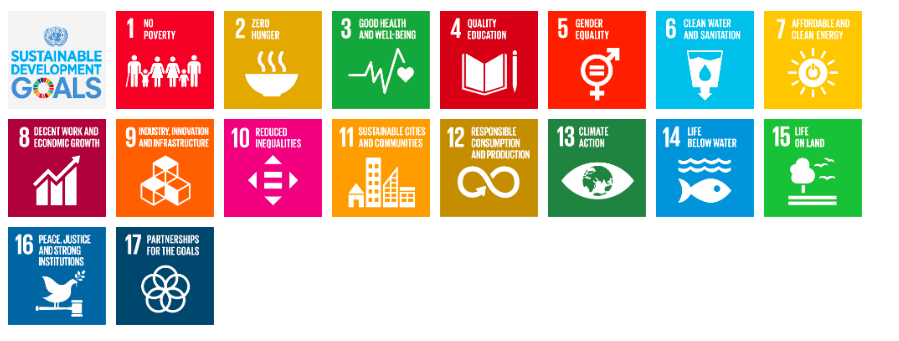
When we began analyzing the sustainable development goal’s at the beginning of the course, I learned a lot about how effective goal setting truly was. By this I mean that there is a constant rhetoric in the news that discusses how “pouring aid” into Africa would not be beneficial to either side. Though this project has shown that with aid targeted in very specific ways although the problems has not been completely solved there is visible progress. The SDG’s first were introduced in 2000 with a halfway point coming at 2015 for them to reflect on the progress that has been made this far. As of 2015, 43 million more children go to school, new HIV infections went down by 40%, over 2 billion more people got clean drinking water, extreme poverty got reduced in half. At this point seeing all that was accomplished in 15 years the SDG’s released multiple social posts about not stopping halfway to continue the progress that was made in the first 15 years we can see that the next 15 years can make most of these goals attained.
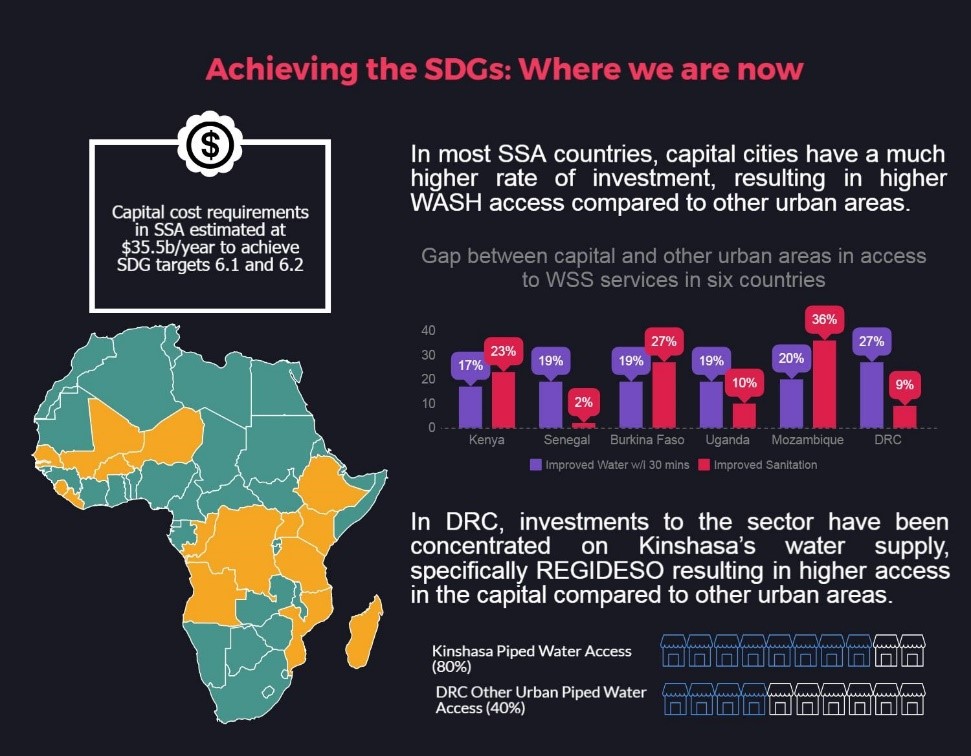
At the start of the class I was assigned to look at the Democratic Republic of the Congo. The DRC though it has improved still has notable problems with access to clean drinking water especially in rural areas where only 31% of the population has reliable access to clean water and 81% in urban areas. According to the world bank the Democratic Republic of the Congo has had a lot of sporadic data that seems to coincide with not only the changing of leaders but the change in names it encountered. The GDP remained on the lower side trending up and down until a sharp plunge down in 1999 that has been on a continuous increase since 2001, it reached its previous height in 2008 and has exponentially grown since then. Their GNI also follows the same trend line where 1999 was a low year that has increased since. The primary school enrollment was consistently high until 1984 when it dropped continuously hitting a record low in 1999 but around 2007 the number began to climb up now higher in 2015 than it was ever in previous years. While their import rates have remained relatively similar their export rates have increased by $2 billion.
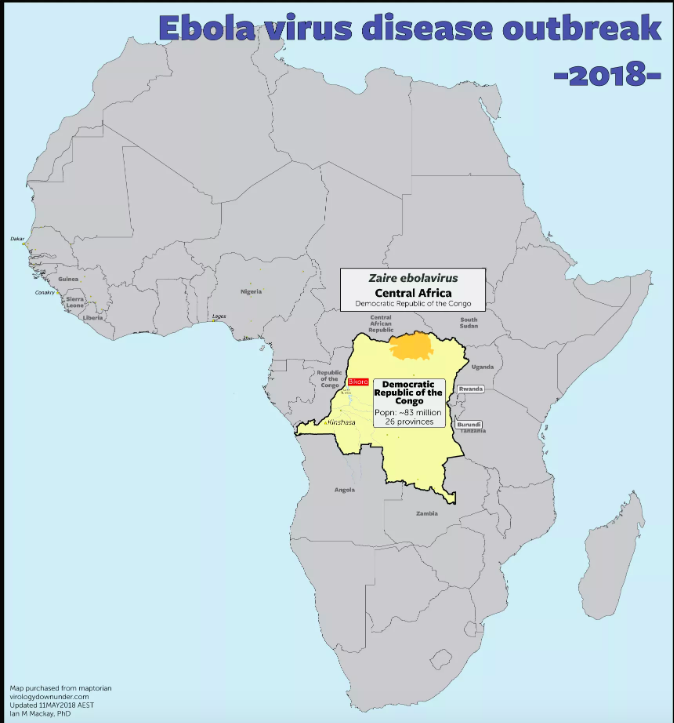
The DRC has made a lot of progress though toward changing and one thing this class taught me is the impact of the cheetah generation. The Cheetah generation seems to be the ones that are going to help pull Africa out of the problems caused during the Hippo generation due to corruption in power by being the educated investors of their countries future. The SDG’s partnered with DRC creating Young African Leaders that works to make a strong “cheetah” generation that talks about the youth becoming more involved in the institutions that govern them so they can have strong skills in being a part of their emerging society. Though as of last year they had an Ebola outbreak that affected many who were younger than 5 years old according to CNN. Their rates are the second deadliest recorded in history so looking forward how much of this population can survive or be strong enough to join this new discussed workforce. With problems such as disease it is hard to see the real impact that these programs are making because a big part of children are wiped out and even the children who survive through these diseases in their villages often, they or their family have lost something that doesn’t make education a top priority. One thing that is not missing though is the passion and drive to better their societies. There is a rise in the cheetah generation even with the fear of disease notable change has been made in this country with the help of the SDG’s and I believe that is probably having a very similar effect in the other countries that have been impacted by this help.
Resources
Congo, Democratic Republic of (Kinshasa). 22 Jan. 2016, https://freedomhouse.org/report/freedom-world/2016/congo-democratic-republic-kinshasa.
“Country of the Week: Democratic Republic of the Congo | YALI.” Young African Leaders Initiative Network, 2 Mar. 2017, https://yali.state.gov/country-of-the-week-democratic-republic-of-the-congo/.
Education | Democratic Republic of the Congo | U.S. Agency for International Development. 19 Apr. 2017, https://www.usaid.gov/democratic-republic-congo/education.
“Sustainable Development Goals.” UNDP, https://www.undp.org/content/undp/en/home/sustainable-development-goals.html. Accessed 5 Mar. 2019.
Blog 11- How hate found its way to limit immigration and divide the world
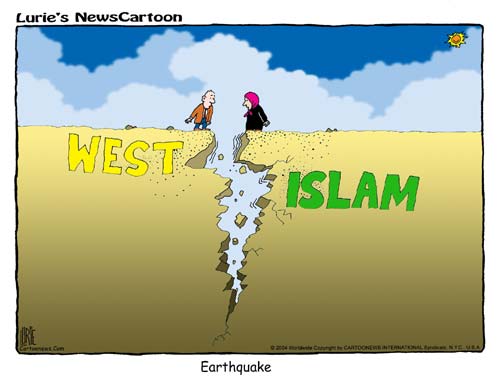
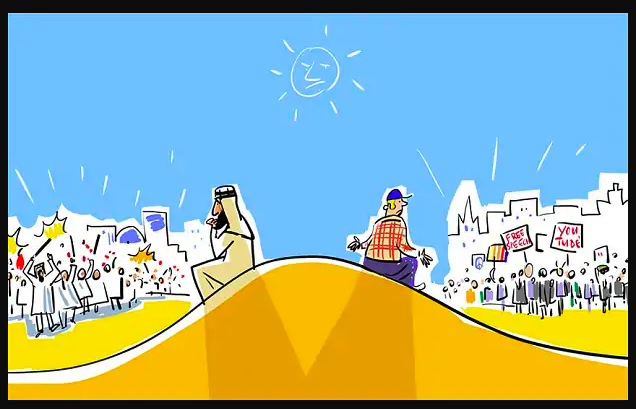
The first thing this text brings to the reader’s attention in the even use of the east vs. the west and create an idea of an us versus them. There a narrative that may be tied to certain events but are often framed through the media and affect the way that people interact with or think about other cultures. One of the biggest things that creates this problem is the lack of dialogue and understanding across the two cultures. There also needs to be conflict resolution due to the power of narrative there is a collective idea passed down through generations who haven’t even interacted with each other due to the way that people have been raised to feel about or thought about a culture before they ever got the basis to interact with these cultures for themselves. There are the words passed down through stories in social or political groups that pass down these narratives and derive them out of bits of truth such as taking one instance like 9/11 and painting that as the basis to judge Muslims. The longer these things become part of the narrative lifestyle of that community the longer it is inside and manifests in that community they are the shared feeling that creates unity in this area through creating a shared feeling toward an “other”. We must look past the retold stories and move into learning and living along those we consider the other to learn more about their true identity than the reinforced stereotypes. What are the hard decisions about immigration according to Frum that need to be taken in the US Do you agree? Is there a right level of immigration?
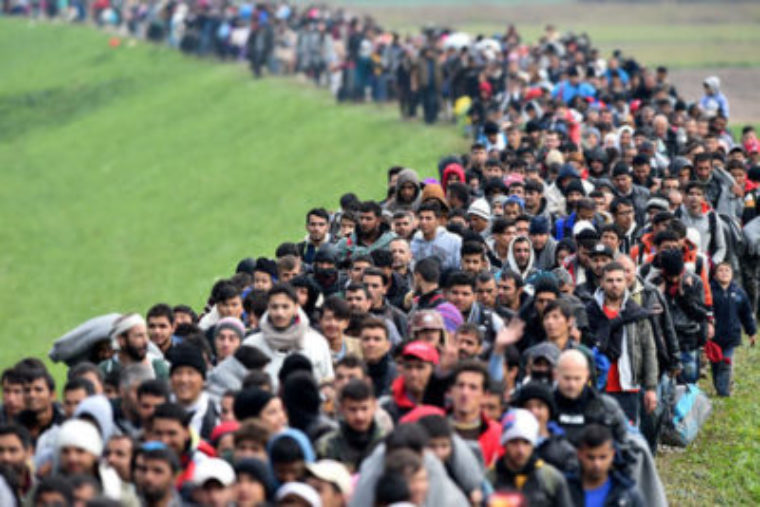
This article discusses immigration rates and the way that migration has changed not only in America but in other countries in the past century. There has been a shift in the number of refugees and immigrants that America took in the past and especially where these immigrants came from was a big part of the changing demographics. Today in populations of Europe though they may take in fewer actual numbers the percentage as compared to their population is much higher than that of the United States. Though immigrants have been a big part of the successful areas noted as Americans from fortune 500 companies to Nobel prize winners. Hilary Clinton in 2018 issued a warning to European cultures for them to be aware of the ways that large numbers of migrant population would affect them, and many citizens of these countries cited migration as problem. One third of British people said the reason they voted for exiting the EU was due to immigration. Especially since the inauguration of Trump the United States has also had a rise of immigration concerns and sentiment toward immigration. Though the author says that contrary to Trumps no immigration stance in a growing globalized world that is impossible the question isn’t yes or no migration it is how much? Those you pick can be either the basis to create a stronger more educated society or a society that places hostilities on each other and create social issues. There is a look at immigrants as either reinforcements or replacements due to many developed societies not reproducing at high enough rates to replace themselves. This has led to anxieties among Americans as feeling like strangers to their own country. This is due to a lot more mobilization between countries that within them, due to cost a citizen may not see the need to move from one state to another for opportunity but for an out of country immigrant the cost is nothing compared to the opportunity of life they may get.
There is a lot of discussion on immigrants coming in and stealing jobs but the reality for many whose “jobs have been stolen” it is clear that they are actually upskilling and getting better jobs though this is hard to track as unemployed people leave the labor force statistics. Due to this it may be true that the only ones reaping benefits from this labor shift are the wealthy within America not the low income. Though the money they bring in can be compared against the costs for taxpayers to pay for the social institutions that help them but when looking at the two one doesn’t outweigh the other. There is also a discussion of immigrants possibly having connection to safer America through lower suicide, drug abuse, alcohol use and crime rates in high immigrant communities though the media often makes it look otherwise. Companies who higher larger immigrant workers than native born workers are seen to have problems when it comes to providing safety for their workers. The author discusses how immigration needs to address as a system rather than a symbol. Many time family ties are what make the decision between who will transition from immigrant to citizen. The movement of long-term immigrants out of the country would serve no well purpose as they have become members of communities. Liberals need to change their tone on immigration according to the author because when they make claims of only being able to have reduced immigration with fascism will lead voters to vote for fascists if they see immigration as a main problem. Though Americans have a right to choose their peers they have also felt that the country is beginning to lose its right to be called the place of opportunity and the American dream as it seldom delivers and this a cornerstone of building a strong community native or immigrant.
Resources
Collom, Rachael. “A2 Government and Politics: Islam vs The West.” A2 Government and Politics, 7 Feb. 2016, http://rachaelsa2politicsblog.blogspot.com/2016/02/islam-vs-west.html.
Frum, David. “If Liberals Won’t Enforce Borders, Fascists Will.” The Atlantic, Apr. 2019. The Atlantic, https://www.theatlantic.com/magazine/archive/2019/04/david-frum-how-much-immigration-is-too-much/583252/.
Oprea, Megan G. “Is the U.S. Better at Assimilating Immigrants Than Europe?” The National Interest, 9 Aug. 2017, https://nationalinterest.org/feature/america-better-assimilating-immigrants-europe-21846.
TLAXCALA: The Failure of Western Narrative on Middle East</A>. http://tlaxcala-int.org/article.asp?reference=11024. Accessed 16 Apr. 2019.
Blog 10- Understanding the Pillars of Islam
By:Lana Henderson
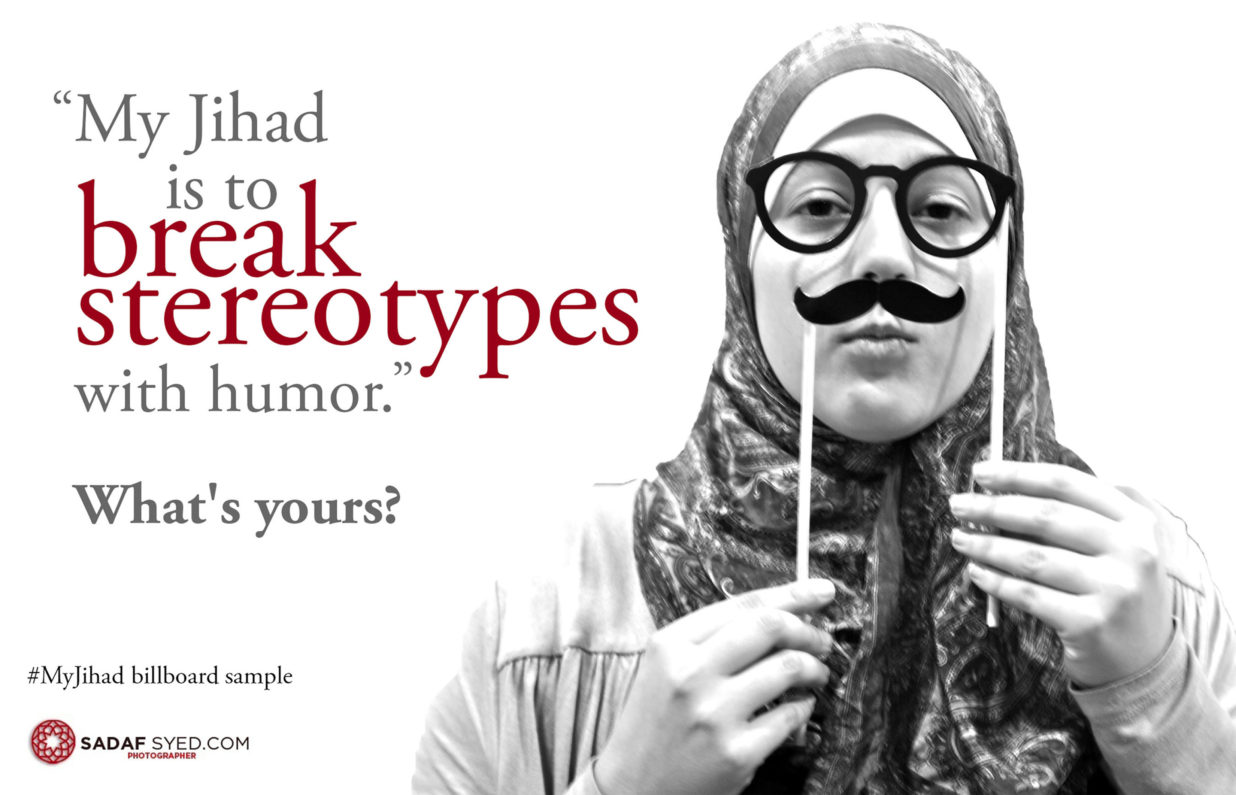
The Jihadi movement is one that really began out of the Quran with the well-known pillar of Jihad. What many don’t know is that there are two jihads one that is the battle to expand Islam and to fight against those who persecute it and the jihad around fighting against temptation or ill thoughts within yourself to assure that you are upholding the correct values. There has been a lot more media coverage of the lesser jihad and it has become known as the face of the jihadi movement often with extremist as the banner of this face. Sadly, this has misrepresented the way that the Jihadi movement has come to be known especially in recent generations with movements in the 70’s that advocated for less westernization and a rebel groups that wanted sharia law to be the prominent governing force over the countries they live in and see the need to have a jihad against the way the western countries have been able to influence their culture as well as the attacks and history they have had with hurting many of these cultures. Al Queada and ISIS are good examples of the understanding that currently goes along with the jihadi movement.
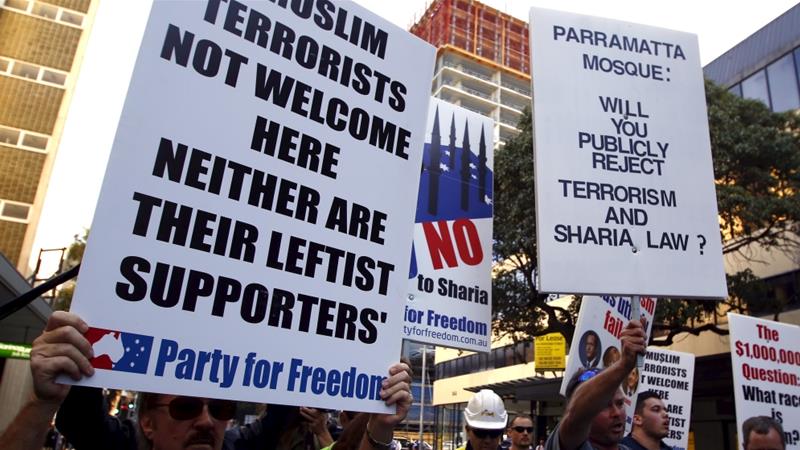
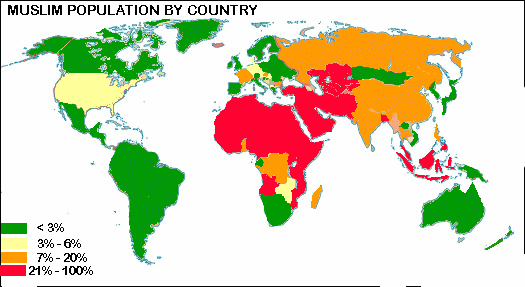
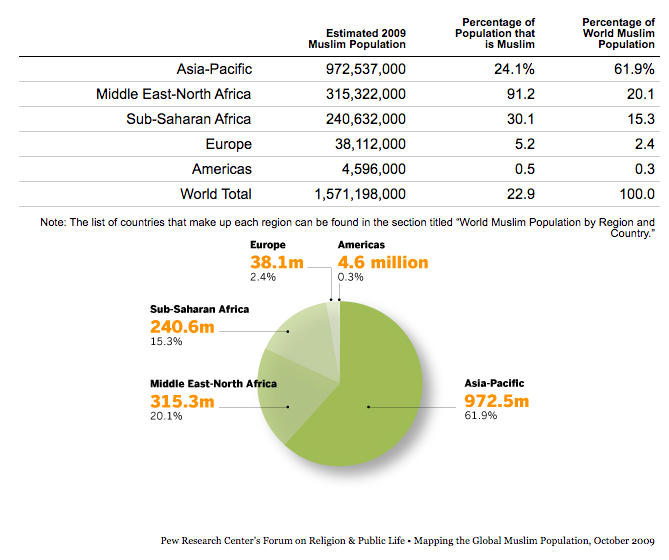
Sharia law is the foundations put in place in the Quran as the pillars of how to be a practicing Muslim. Rather than thinking of it like rules or laws it is more a set of values presented as the way to live a full Islamic life. Sharia law gives people a guide to the ways that day to day life is lived from the questions of marriage, divorce, rituals of life and how to deal with the problems. Though this is something that is usually practiced in Middle eastern countries that has not stopped many states from passing legislation that prohibits sharia law much of this shows that there is a lot of fear of Islam in the United States and also a lack of education about Islam and what sharia law truly is. When looking at population of Muslims in America this scare seems even more comical as the percentage of Muslims in America is very low. I think the biggest fear for people is due to misconceptions and sharia’s ties to extremist groups leaving people to believe that this will lead to women who are oppressed or having to lose foods they love, to become part of a terrorist organization. This is sadly because Islam has become misrepresented I the way that it is portrayed in media so therefore people see sharia as the thing that is pushing extremists to be extreme rather than thinking of them as a guiding book such as the ten commandments are for Christianity.
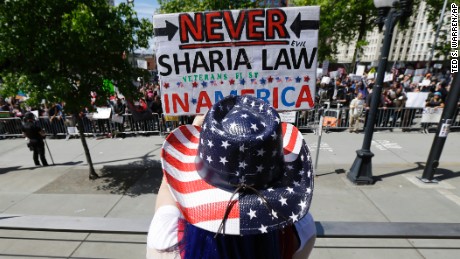
No, I do not agree with the statement that Islamic law is consumed with punishment it is filled with warnings and guides whether you follow them or not there is no direct punishment for you to fear. That was until man got involved much luck other religions once man bends the words to his will and decides what consequences will ensue, he can use religion as his cover. In the movie the stoning of Soraya M it discusses what injustices have happened due to people using Islam as a way to control their people. A woman was wrongly accused of cheating on her husband and when the community Iman was told her sentenced her to death by stoning. On the date marked for her stoning a lot of evidence was gathered to prove her innocence and her husband’s cheating but that did not stop the community members from stoning her to death. When people look to use religion to their advantage the punishments are often deadly but when looking at Islam itself it is a religion that promotes peace and harmony with your neighbors.
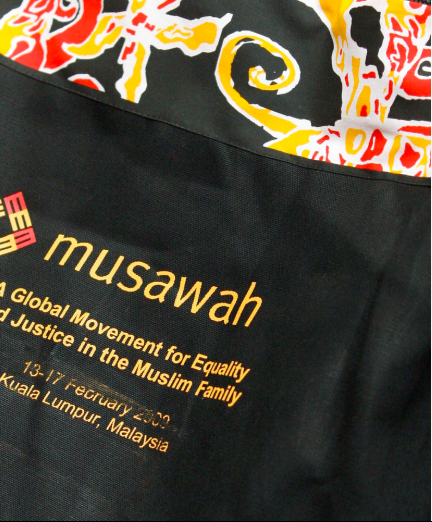
The Musawah organization is about working toward the equality for Muslim families and the ability to create strong communities. Having strong communities includes being able to create a community including people who aren’t Muslim as well or in big diverse cities and not facing discrimination as they are an international organization. Musawah is an Arabic term for equality and it is the basis for what this organization stands for. This organization is run and started by Muslim women that aims to create not only a unified space for Muslims but a safe space for all through creating an easy way to create events and make them well known. They have made it very accessible through making the signup very simple to be able to receive information about events.
Resources
“’The Movement Remains,’ Two Scholars Address the Future of Jihadi Culture.” National September 11 Memorial & Museum, https://www.911memorial.org/blog/movement-remains-two-scholars-address-future-jihadi-culture. Accessed 9 Apr. 2019.
BBC – Religions – Islam: Jihad. http://www.bbc.co.uk/religion/religions/islam/beliefs/jihad_1.shtml. Accessed 9 Apr. 2019.
CNN, Ralph Ellis and Tony Marco. “Anti-Sharia Groups, Counterprotesters Clash.” CNN, https://www.cnn.com/2017/06/10/us/protests-against-sharia-law/index.html. Accessed 9 Apr. 2019.
“Home.” Musawah, http://www.musawah.org/. Accessed 9 Apr. 2019. The Misrepresentation of Jihad –. 21 July 2015, https://www.connectfutures.org/the-misrepresentation-of-jihad/.
The Stoning of Soraya M.www.imdb.com, http://www.imdb.com/title/tt1277737/. Accessed 9 Apr. 2019.
VICE News. This Is What Life Is Like Under Sharia Law | VICE on HBO. YouTube, https://www.youtube.com/watch?v=3SPkw-1_rb0. Accessed 9 Apr. 2019.
What Is Sharia? 7 May 2014. http://www.bbc.com, https://www.bbc.com/news/world-27307249.
Blog #9 Muslim immigration to Europe and the hidden journey to the new land
By: Lana Henderson
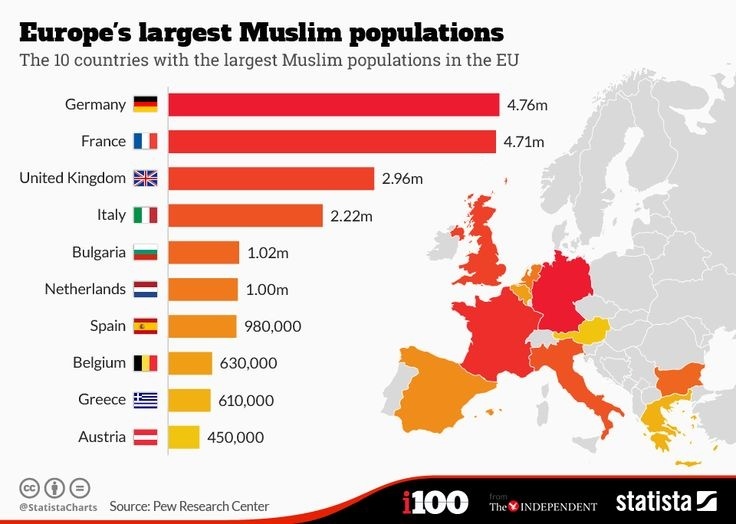
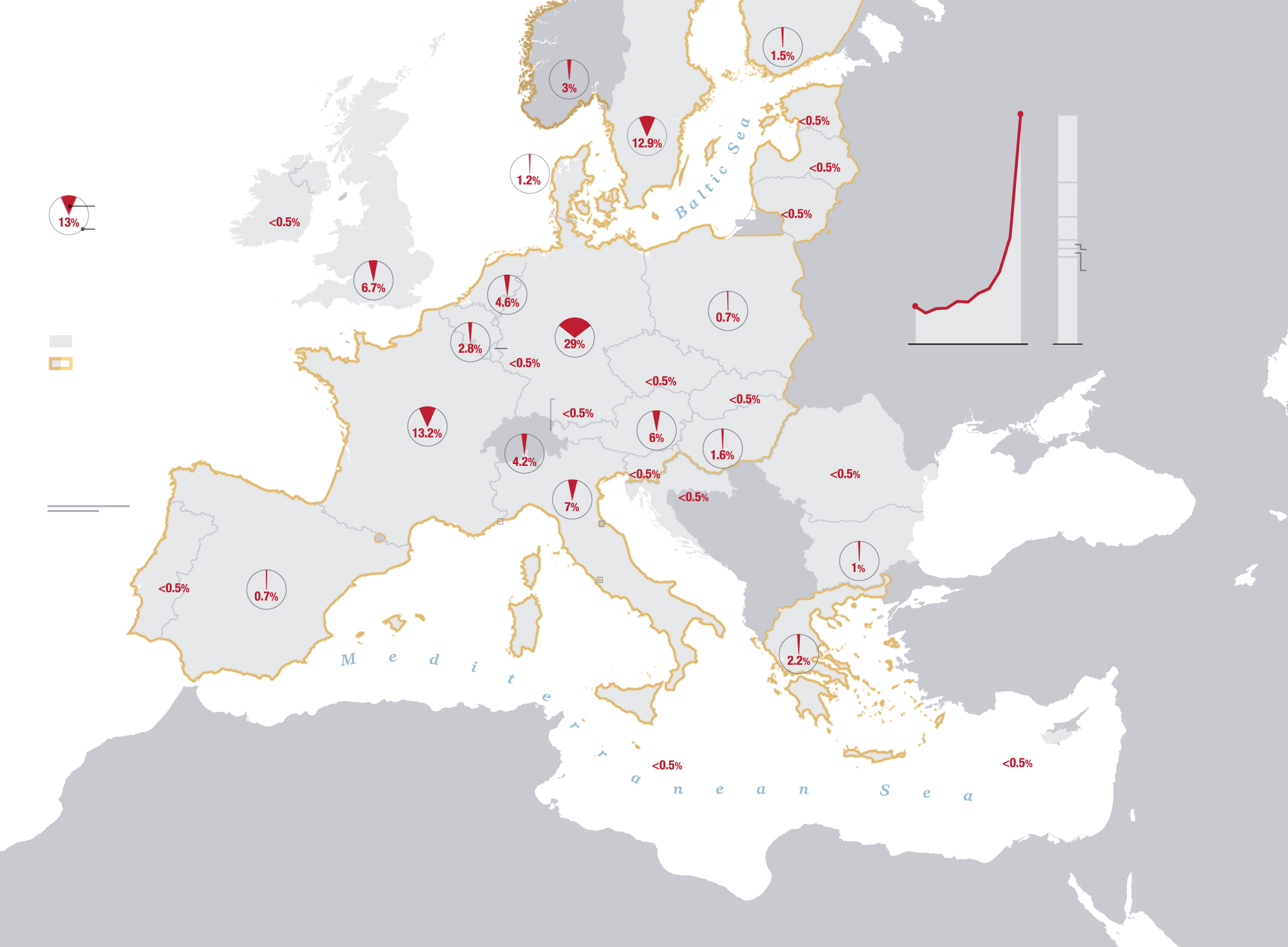
Zemni and Parker discuss how Europe was not the welcoming place it was portrayed to be after world war II. There was a lot of action put in place to try to unify the country itself that often-meant measures that where generally not very inclusive to immigrant populations. Due to historically context and relationships Muslim immigrants are among a group of immigrants who face discrimination and do not feel able to assimilate into their new countries as immigrants. This is especially due to colonization roots and ties to specifically northern African Muslim populations and the belief this created about being unable to integrate into the elite and civilized European societies. Due to this they were always seen as another even as a born citizen the cultural markings of Islam kept people separate from those in their country. Due to a multiculturalist vision that only services specific interests there is a lot of space for European immigrants to interact as in a different European country as immigrants, but Muslim immigrants do not face this same inclusion when the move into these areas. Part of this could be due to the Christian ties in European history though many European countries today are not influenced by religion the same way they were in the past.
While watching the film my escape it is clear that this is a very dangerous journey, and no one truly understands what they are really getting themselves into but because of the problems and war they face in their own country of Syria there is no doubt that they have to get out. The sprawl outwards took Syrian immigrants on many different paths out of the country to their surrounding neighbors. The journey through Germany was a point that showed that there was established refugee points that were not disturbed by police and often an area where people could find help to get them established or to their next destination. Though one big part of the process that made the situation extra scary for immigrating was the smugglers who would often pretend to be nice when they first start making the arrangements for paying for their trip to their new life and seem to only want to help the people.
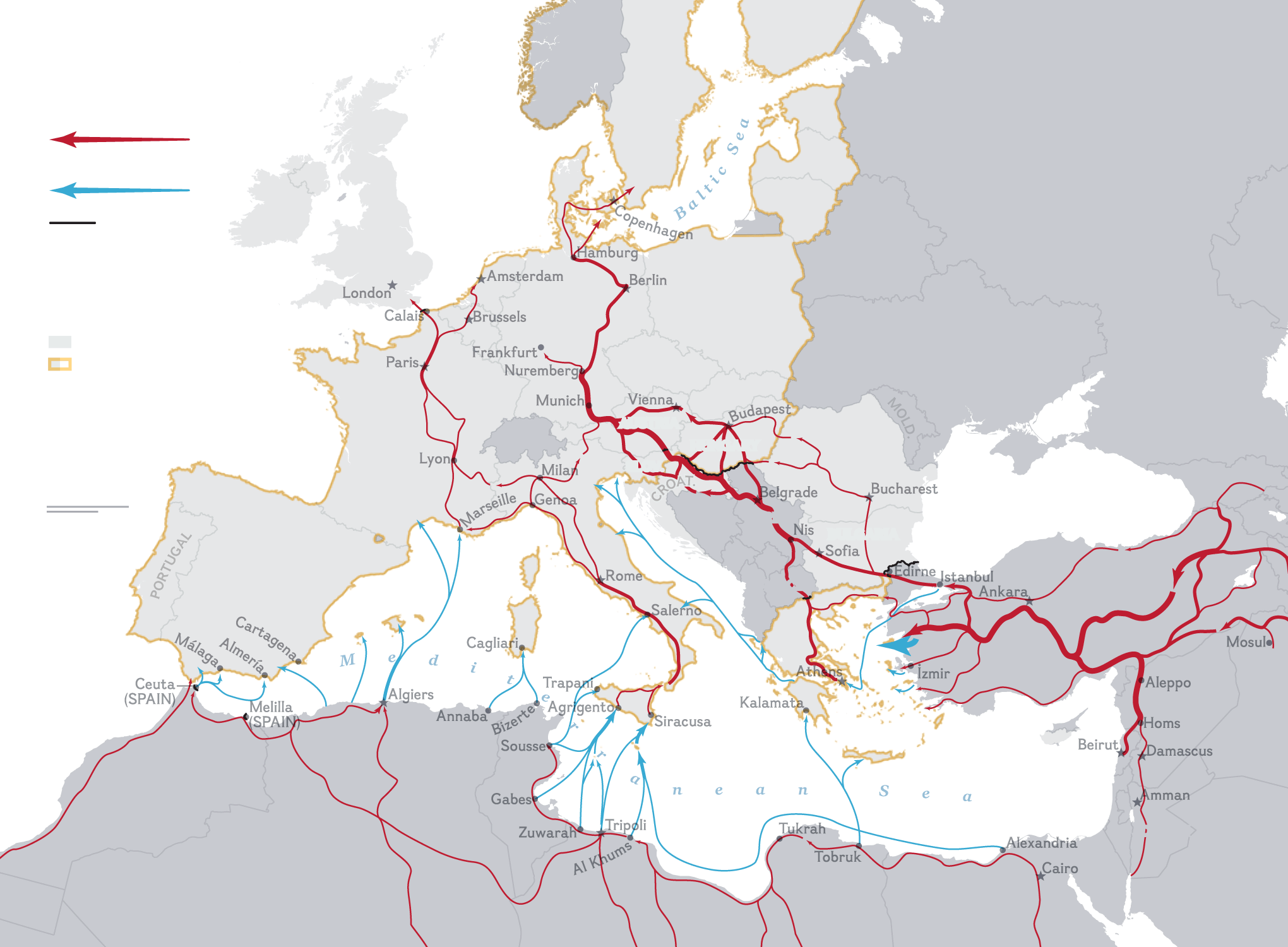
Though soon many come to realize that the smugglers are mean people who do not care about their lives only the money that they provide, and this is often apparent in the modes of transportation that they take to get across. Often the routes where on very dangerous roads in overpacked cars or by foot on mountain routes that were very dangerous and often lead to groups having to split up from their loved ones. People also feared the smugglers because they were often armed with weapons and it was clear that opposition to the way they were running their operation. Often people died on the trip because of the unsafe conditions and the smugglers wouldn’t care at all or repay the family. Another fear especially women faced on these trips was the fear that smugglers would exchange them with traffickers, and they would be taken away and held for ransom and many times their family had no money especially after paying the smugglers. This led to women becoming sex trafficked and many times their families never see them again. To be able to have less fear of this many woman will try to assimilate to look like women in the cultures where they are going to.
Resources
Desjardins, Jeff. “Does Europe Take in Enough Migrants? [Chart].” Visual Capitalist, 4 Sept. 2015, https://www.visualcapitalist.com/does-europe-take-in-enough-migrants-chart/. Hammond, Robin. “How the Latest Great Migration Is Reshaping Europe.” Magazine, 15 Sept. 2016, https://www.nationalgeographic.com/magazine/2016/10/europe-immigration-muslim-refugees-portraits/. Shah, Zia H. “Muslims in Europe: Promoting Integration and Countering Extremism.” The Muslim Times, 20 Sept. 2011, https://themuslimtimes.info/2011/09/20/muslims-in-europe-promoting-integration-and-countering-extremism/. The Trek: A New Life in Germany | Germany | Al Jazeera. https://www.aljazeera.com/programmes/witness/2016/09/trek-life-germany-refugees-160912111625923.html. Accessed 2 Apr. 2019. Von der anderen Seite beleuchtet. My Escape ⁄ Meine Flucht Part 1 with English Subtitles!!YouTube, https://www.youtube.com/watch?v=qtMlN3nqL4c&feature=youtu.be. Accessed 2 Apr. 2019. Which Countries in Europe Are Muslim Majority? – Quora. https://www.quora.com/Which-countries-in-Europe-are-Muslim-majority. Accessed 2 Apr. 2019.
Blog Post #8 Headscarfs and the misunderstood plight of a Muslim Woman
By: Lana Henderson
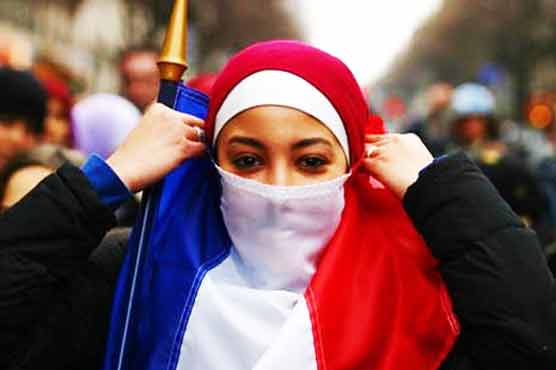
The history of Muslims in France is very similar to most immigration stories for those new to the western world. When Muslim immigrants began to enter France there was a movement to try and assimilate them into their new culture. Scott discusses that many Muslim immigrants came from the north African regions and were seen as un civilized based on French standards. When looking at France’s colonization within Africa it is not surprising the way that African immigrants were treated once they came to France as many of the cultural colonization stereotypes and treatments carried into immigration. Women in particular had even more issues when it came to being Muslim in their new French civilizations. During colonization Northern African woman faced a lot of sexualization and exploitation of their bodies and positions in society reduced to sexual work as a means of their value. These are not the only ideas that also made their way over to France and perpetuated racist and sexist stereotypes about the Muslim immigrants. Due to the recent terrorist attacks in the past 10 years and the way this has shaped the rhetoric of Muslims in the media. Though there are monuments in France that tie to the Muslim history in France such as in the edge of the Latin Quarter with an ancient mosque that is historically said to be an area that had many different kinds of people walking around and preforming.
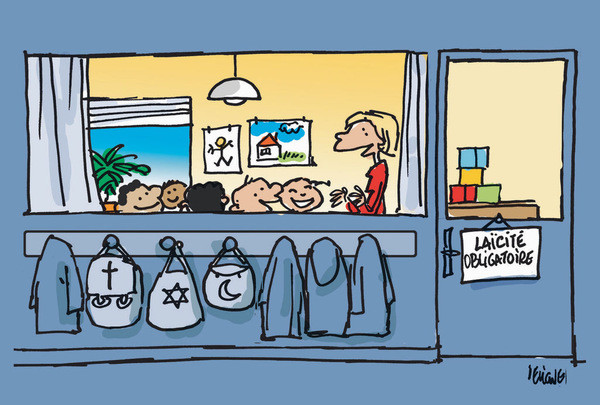
Laïcité is unique in some ways from the way secularism is discussed in certain other countries but is unique in its practice. China is one country that comes to mind when thinking of secularism and the way they have integrated that even into their government. China is an extreme version of a government that has turned secularism into a religion in its own way by making the government the “gods” or entities to be looked up to and praised for all they have done to make the lives of the citizens better. The French focus more on individualism though the same idea of being united through a French nationality is similar to the patriotism seen in secular countries such as china and a belief that what matter is having a strong tie to your national identity. Scott explains that the headscarf ban in French was tied to Laïcité due to the secular movement tie with protecting French citizens from being rules under a religion. The headscarf worm by many women who practice Islam is a clear way to mark a group outside of what is considered the cultural normal in Western Culture. In the French societal tradition of Laïcité, is the idea of individualism and having your own style belief and individualism that ties people more in unification under their French identity than to any specific group they are tied to.
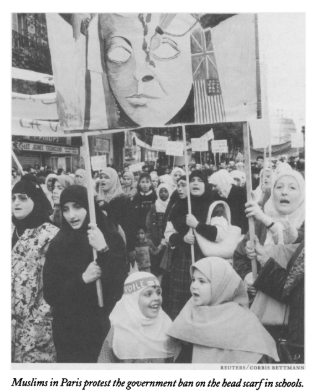
Laïcité is also meant to be a way in French eyes to promote equality through everyone being French no matter what race, religion or anything else they follow. Though the headscarf worn by many women who practice Islam to many in France goes against the traditions of Laïcité that they grew up in and in many cases distinguishes the group from other French citizens therefore the headscarves have been targeted in legislature that requires people not to wear them. Many women and organization in response to these laws began forming protests against the laws that caused this discrimination.
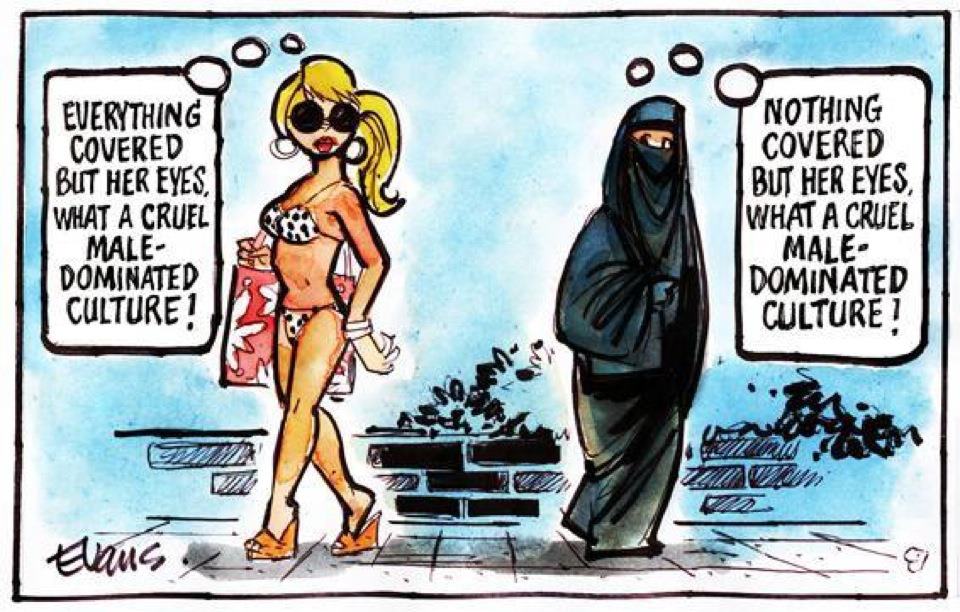
Due to the different way’s sexuality is explored in Western Culture and the way that other cultures are left out of general education has certainly led to a lack of understanding with differences in other cultures. I personally side with people who choose to rise up against unjust laws based in the French principle Laïcité. I think that at its core Laïcité is about celebrating being French and practicing your faith doesn’t take away from your national identity. This goes back to the discussions we had last week about Islam in a political context versus a religious context. One of the major notable differences is that within religion is really controlled by the individual who follows the faith and in the political dimension there is social and even sometimes governmental consequences of not following the word of the Quran. I think people misinterpret a practicing of faith with oppression, in many cases in the Western world women who wear the Quran have made this choice for themselves because unlike laws that may permit them not to wear them there really is no law permitting them to wear them. I’m not saying this is the case for all Muslim women in the western world but really most times it’s a lack of understanding how this act helps women to feel connected to their faith. Many times, women even began wearing the headscarf because their rights to wear it was taken from them. There is no doubt women around the world who experience oppression through wearing the headscarf but is not the reason many followers of the religion see the interpretation of from within the Quran. But a true act of oppression is arresting women at a beach for wearing a burkini, no matter its religious ties a woman should be able to wear whatever she wants to go out and enjoy day activities. Followers of Islam that I have talked to in the past see the headscarf as a protection for women so that they are valued for more than their looks. Many Muslim women see western women as the ones who are actually oppressed due to the sexual way they are discussed in media and shown to be sexual objects most times when others observe western culture. One thing to keep in mind is choice, many of us grew up with very different values or principles therefore what may be restrictive in one household can be seen as extremely liberating in another, unless there is a direct call to action from those impacted I think one thing the western world could benefit from is not interfering with other cultures practices unless asked.
Resources
La-Croix.com. “Laïcité, la loi « Baby-Loup » demeure bien floue.” La Croix, 13 May 2015, https://www.la-croix.com/Actualite/France/Laicite-la-loi-Baby-Loup-demeure-bien-floue-2015-05-13-1311844.
Piser, Karina. “A New Plan to Create an ‘Islam of France.’” The Atlantic, 29 Mar. 2018, https://www.theatlantic.com/international/archive/2018/03/islam-france-macron/556604/.
“R/The_Donald – Muslim Country Wins World Cup for The First Time! France Wins Final Match (With a Little Help From the Referee).” Reddit, https://www.reddit.com/r/The_Donald/comments/8z332n/muslim_country_wins_world_cup_for_the_first_time/. Accessed 18 Mar. 2019.
UC Berkeley Events. Conversations with History – Joan Wallach Scott. YouTube, https://www.youtube.com/watch?v=MrknwNl818Y. Accessed 18 Mar. 2019.
Viorst, Milton. “The Muslims of France.” Foreign Affairs, vol. 75, no. 5, 1996, pp. 78–96. JSTOR, JSTOR, doi:10.2307/20047745.
“Why France Is in Uproar over the Burkini – and Why It Matters.” The Independent, 24 Aug. 2016, http://www.independent.co.uk/news/world/europe/burkini-ban-why-is-france-arresting-muslim-women-for-wearing-full-body-swimwear-and-why-are-people-a7207971.html.
Blog #7 Islam in Europe: Who is more afraid of who? And why are they afraid at all?
By: Lana Henderson
Justin Viasse in the article “Muslims in Europe: A Short Introduction” discusses four myths that are circulating about the Muslim population in Europe. One of these myths is that demographically there is a rise of Muslims to the point of them surpassing the already existing population. Viasse discusses that this is untrue because when looking at the strengthening regulations on immigration there is a very low chance that Muslims would have the opportunity to grow any bigger than around five percent of the population in these countries. Another myth discussed is that the Muslim population is foreign to European customs and therefore would not be able to assimilate into the society’s they join. Viasse discusses that European and Muslim cultures have already had many interactions throughout history even to the point of having some Muslim practices integrated into current European society. There is also a need to distinct between culture and religion and although there are many connections between Islam and middle Eastern cultures there are also many proudly European but are also practicing Muslims. This leads into the next myth of discussing the idea that there a specific identity tied to being a Muslim and they are an easily categorized group. Viasse discusses that this is common within the way Muslims are discussed in the European media where they are often demonized or talked about in a light that depicts Muslims in a us vs them manner. The final myth is tied to this one discussing the idea that Muslims in Europe are a hostile and unified group. Viasse discusses that there is a lot of division within Islam with different sects and ethnicities and political identities. In this way Muslims are often believed and perceived to be a group within the Middle East that are trying to take over Europe on a unified front when really it is a religion that is practiced differently by many people all over the world.
In the text by Shireen Hunter discusses the need to make distinctions between Islam as religious or political due to different systems. When discussing Islam in a religious context you first need to look at the Quran to understand the principles that guide this religion. Therefore, a Muslim in the religious dimension is someone who follows the practices set within the Quran, similar to Christianity and the Bible or Judaism and the Torah. Though hunter things it is important to make it clear that whether someone follows the Quran or not if someone characterizes themselves as of that faith than they are, and it cannot be only defined by how much they incorporate the Quran into their lives. When looking at Islam in a political context there is a look into the rules stated by the Quran and implementing them into society’s rules and looking at the words of the Quran to interpret them into the modern society. One of the major notable differences is that within religion is really controlled by the individual who follows the faith and in the political dimension there is social and even sometimes governmental consequences of not following the word of the Quran.
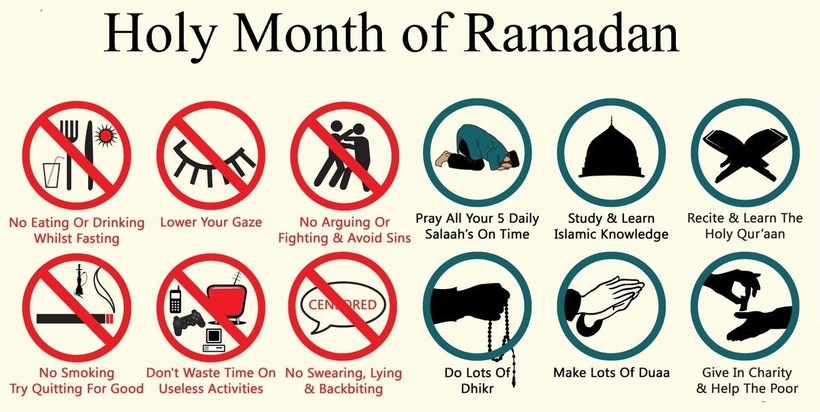
One of the problems that is faces in education and social rifts in Europe due to the educational emphasis on standard math, science and reading and there is a loss of understanding other cultures. Due to this there is a population of children and adults who have grown up with racist of xenophobic ideas due to the us vs them mentality instilled by the media added by a lack of educational systems aiding these social tensions. This leads to a division of communities with both sides being less willing to integrate into each other’s communities for fear of the unknown or the stereotypes they have learned to identify these groups with. Due to this there is a greater tie to religion in these European cultures to the point where even European born Muslims face in not feeling included into their own country’s identities due to the religion they practice. Ramadan is a Muslim holiday that incorporates the principles of Islam established by the Quran. Unlike what may be circulated in the media when it comes to Islam these principles guide Muslims to engage in peace and knowledge. There is a principle within the religion to educate on other religions and cultures due to being able to coexist peacefully through a mutual understanding and respect from both sides. Islam preaches the acceptance of others and a celebration of the things that make us different because unlike other mentalities Muslims see a deeper connection to their own religion and culture through being knowledgeable about others.
Resources
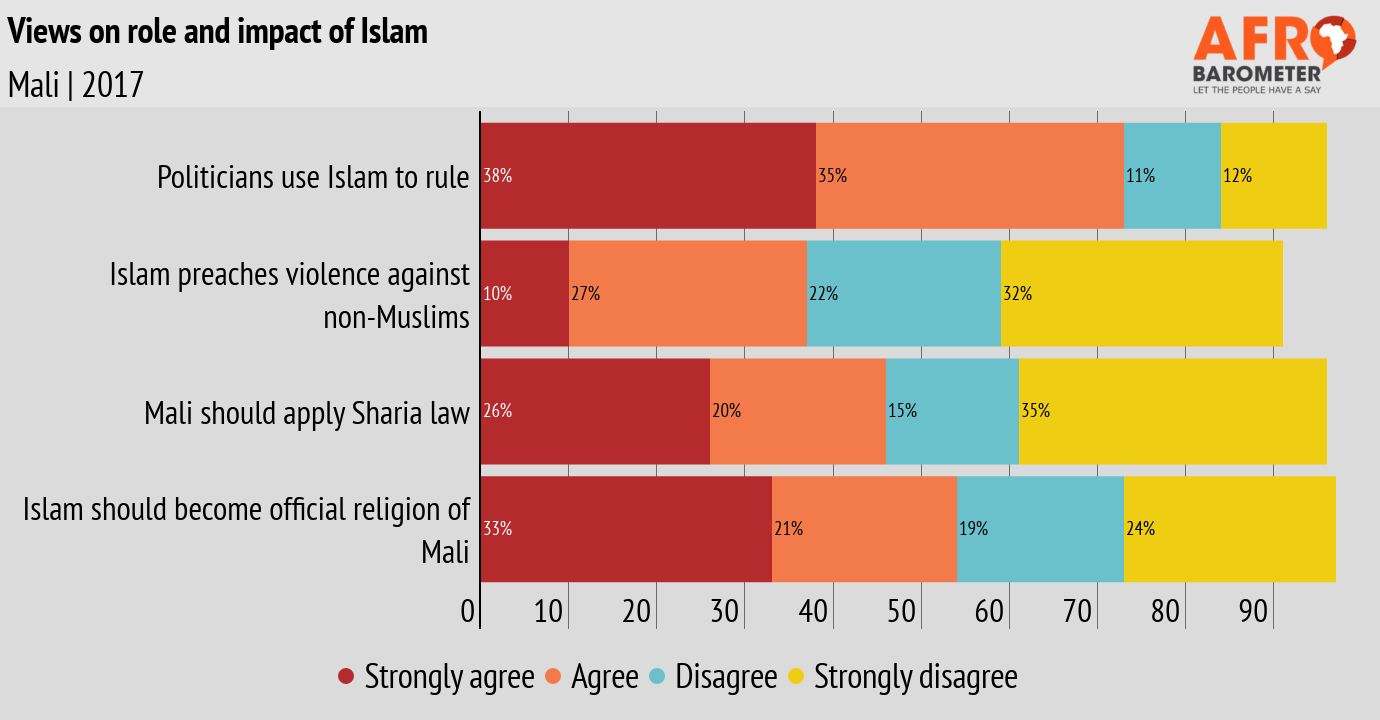
AD211: Malians Split on Role of Islam in Country, but Majority Feel Politicians Use Religion to Rule | Afrobarometer. http://afrobarometer.org/publications/ad211-malians-split-role-islam-country-majority-feel-politicians-use-religion-rule. Accessed 12 Mar. 2019.
Almontaser, Dr Debbie. “Ramadan in the Workplace.” Huffington Post, 3 June 2017, https://www.huffingtonpost.com/entry/ramadan-in-the-workplace_us_593236d0e4b00573ab57a392.
Hunter. Islam, Europe Second Religion.
Sardar & Davies. Islam.
Viasse, Justin. Muslims in Europe: A Short Introduction,” Pdf on Canvas-Islam in Europe. https://missouri.instructure.com/courses/18213/files/3732585?module_item_id=1104158. Accessed 12 Mar. 2019.
Blog #6 Is aid helping or hurting? Maybe a little of both
By: Lana Henderson
I side most with Jefferey Sachs on this debate, though there is one point that Easterly makes that I agree with. Sachs promotes a policy where aid is directed toward specific things that can be easily fixed and make a lasting impact through generations. These things could be as simple as vaccines, malaria nets, clean water, infrastructure and many other things that are small but are also inaccessible and causing significant death in some countries. The problem is with Sachs small scale impact following his plan he didn’t take variable recordings to make sure that his change could be noted. One thing that Sachs is notable of is the poverty trap which is institutional barriers that keep people from being able to raise in class or really even get out of “poverty”. When looking at racism there has be an understanding that at its core it is an institutionally backed oppressor of a certain race. So you can’t look at Africa now or many countries without first considering their colonization history and what influences that had on their economy and society. One reason I agree with Easterly is because of his free trade ideals, these could help a market flourish in these times because sadly fair trade though it is morally better and many times better for the environment its more expensive than the free trade market. Though many times the Free trade market is able to be so cheap due to its use of labor laws and company laws that if they were implemented in countries like America many people would be outrage. Many people admit though that even though that may be the case they are not willing to give up their cheap prices. My fault with Easterly is that he isn’t really as open to the idea of the poverty trap and its lasting affects but instead promotes his plan that these countries are completely self-sufficient if we back out we see that they face these extremely hard plights every day and find a way to live. Although overall Easterly believes that countries would benefit greatly if we cut off aid completely, so they weren’t so dependent on other countries. Both sides and I can definitely agree though the changes with aid or without make little difference in a place where there is a government that is not protecting the wellbeing of its people and instead has separate interests.
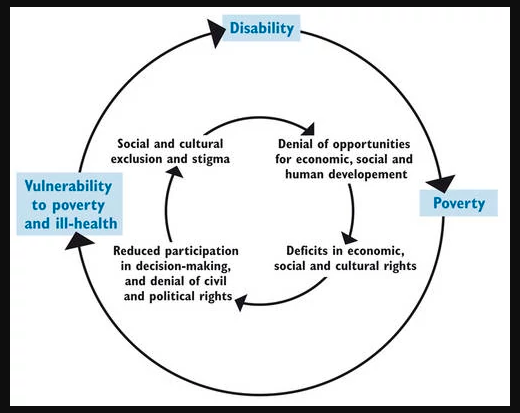
This reaffirms the debates from earlier weeks that though Jeffrey Sachs has a plan that in theory seems like it could be a good start to creating lasting change in African countries he failed to collect the data to back this up. Due to that many other economists can look at these economies and suggest other things that came into play that made a difference such as the digital age and the jobs that it brought with it. Easterly believes that countries are able to grow naturally and that often aid ends up making no notable impact in some places. The Bookings article discusses some the same ideas due to the choice of the western aid companies there are certain countries that are known as donor darlings that receive a lot of international attention and aid and may be said to have a better chance at success than donor orphans who are not as often given the continual and consistent attention that the darlings get to benefit from. The article further goes on to discuss how these are the ways that aid can fall off track for certain countries and though there has been a notable decrease in the amount of poverty listed through SDG goals there are certain areas that have made major impacts to this number while others are not having the same fate.

Banerjee and Duflo discuss micro credits as a solution that could help countries grow business that were sustainable while also incorporating aid in a way that made them investors instead of aid. As Easterly discussed, there can be problems were aid when not used sufficiently will not be as successful as people had hoped in their donations. This changes with micro credits because instead of seeing it as money lost people can see it as money invested and watch how their money is making a direct change in business or in the market of the businesses that they help. One problems with this is that there is a media outlook on many of these same countries that portrays them as helpless or unable to get it together when they are given a chance/aid. There is a lack of telling the full story of Africa when there is a one sided story that is shown and people don’t want to invest in a place that they think is going to be unsuccessful and will end in them losing money and helping no one. Chimamanda Ngozi Adichie addresses this in her TED talk title “The danger of a single story”. She discusses how she realized she and her country was viewed by those in the developing world. People see the continent of Africa as this hopeless poverty filled place because that is the only story they have ever been told. Chimamanda discusses how the Nigeria she grew up in was very different than the Nigeria her peers at university in England had been told about.
Resources
Adichie, Chimamanda Ngozi. The Danger of a Single Story. http://www.ted.com, https://www.ted.com/talks/chimamanda_adichie_the_danger_of_a_single_story?language=en. Accessed 5 Mar. 2019.
Earth Institute. Jeffrey Sachs on CBC. YouTube, https://www.youtube.com/watch?v=CNWzYy186W8&frags=pl%2Cwn. Accessed 5 Mar. 2019.
“Poverty Traps.” Health in Tamil Nadu, India Wiki, https://healthintamilnaduindia.fandom.com/wiki/Category:Poverty_traps. Accessed 5 Mar. 2019.
“Sustainable Development Goals.” UNDP, https://www.undp.org/content/undp/en/home/sustainable-development-goals.html. Accessed 5 Mar. 2019.
World Affairs. William Easterly: Freedom as a Solution to Poverty. YouTube, https://www.youtube.com/watch?v=ibJHEJrOs2s. Accessed 5 Mar. 2019.
Blog Post #5 Africa the Rich? or Africa the Rich with Opportunity
By: Lana Henderson
Banerjee and Duflo discuss how micro-credits help communities by giving small loans at low interest rates so that small businesses have the ability to stay open. These micro credits are meant to help people begin to think in the long term rather than being limited by short term money restrictions. Though one thing this fails to take into consideration is the poverty trap that keeps saving many times from being a realistic goal. There are many problems that can occur that would require people to use money they have been saving. Duflo and Banerjee discuss how long-term saving may not appeal to poor communities due to the long term planning and the amount of short term temptations that occur. They further discuss how money doesn’t necessarily create the answer to the problems these small businesses are facing that are delaying their ability to expand. There is also an issue when observing how people react when they are unable to repay their loans. I agree that micro credits are in theory a great idea to help small businesses stay afloat but I feel like the issue of just throwing money at things when not really addressing the issues that are creating the problems is commonly overlooked. There is not a lack of aid it seems but rather a lack of institutional change, if you keep putting money into a system that isn’t producing or affective then really it’s just a waste of money that could instead be used to invest into the problems that are limiting these businesses from being able to expand and grow successfully.
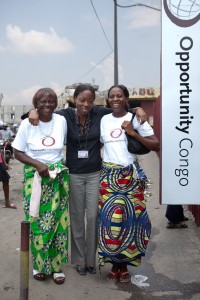
Opportunity DRC is a group that works with micro credits and financing in the Democratic Republic of the Congo. One thing that this program does that is very thoughtful is training on savings and loans to small business entrepreneurs and their families. So that they can gain financial literacy and learn more about what to do to successfully invest their money into their business rather than simply giving them a loan and expecting these communities to understand what this is or what to do with it. They also have a majority of woman owned businesses they support which is commonly shown that women are the missing link needed to uplift their communities. They have had 5 women graduate from the Goldman Sachs’ Emerging Leaders program. They also provide information past financial literacy teaching communities the importance of nutrition and healthcare. The real worry those is that even a company such as this one is that they are still working small scale and with less than 50 employees their impact can only reach so many people at a time. Programs like these that target overall rather than just focusing on one aspect of the problem does show a lot of promise because of the problems listed above about micro financing where people who are unable to save at the rate, they need to due to having other aspects of life that interfere.
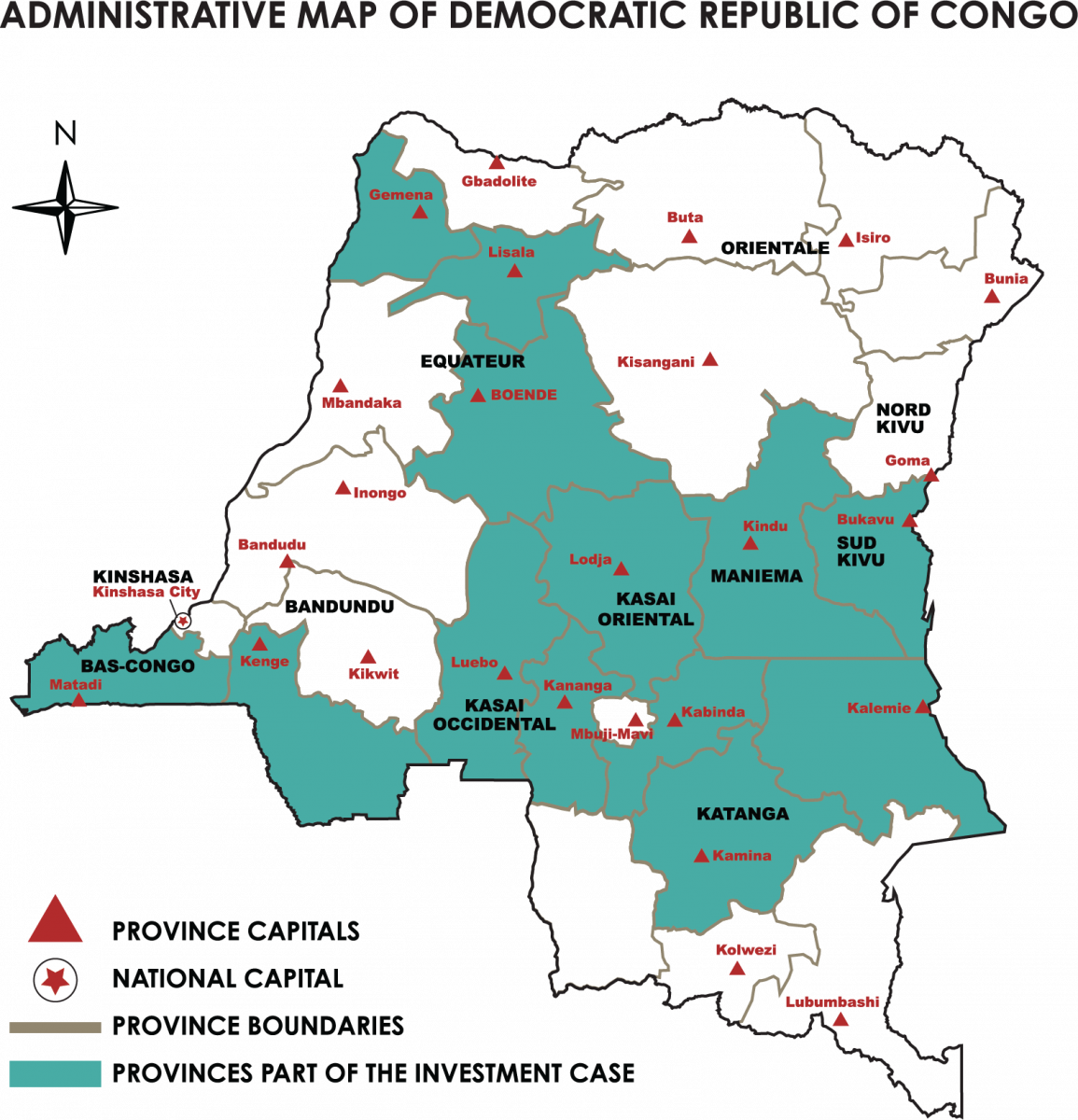
Another company that is working on improving things is the Global Financing Facility, GFF, which looks at provinces within the Democratic Republic of the Congo with the worst health and socioeconomic indicators as the region it targets with programs for help. There is a need to look at how to better finance all the problems associated with high costs of healthcare in those areas. Part of this includes financing essential vaccines, safe home-based management of diarrhea, services to support victims of sexual or gender-based violence, a sanitation and hygiene program and other things. They try to limit the problems see with other aid by changing investment plans into a program aimed at seeing results through continual contribution with program and frameworks to be followed from investors who are known to interact as international organizations who have economic stakeholders throughout the world. There are hopes that the investment returned is improved health, nutrition, family planning and health system strengthening.
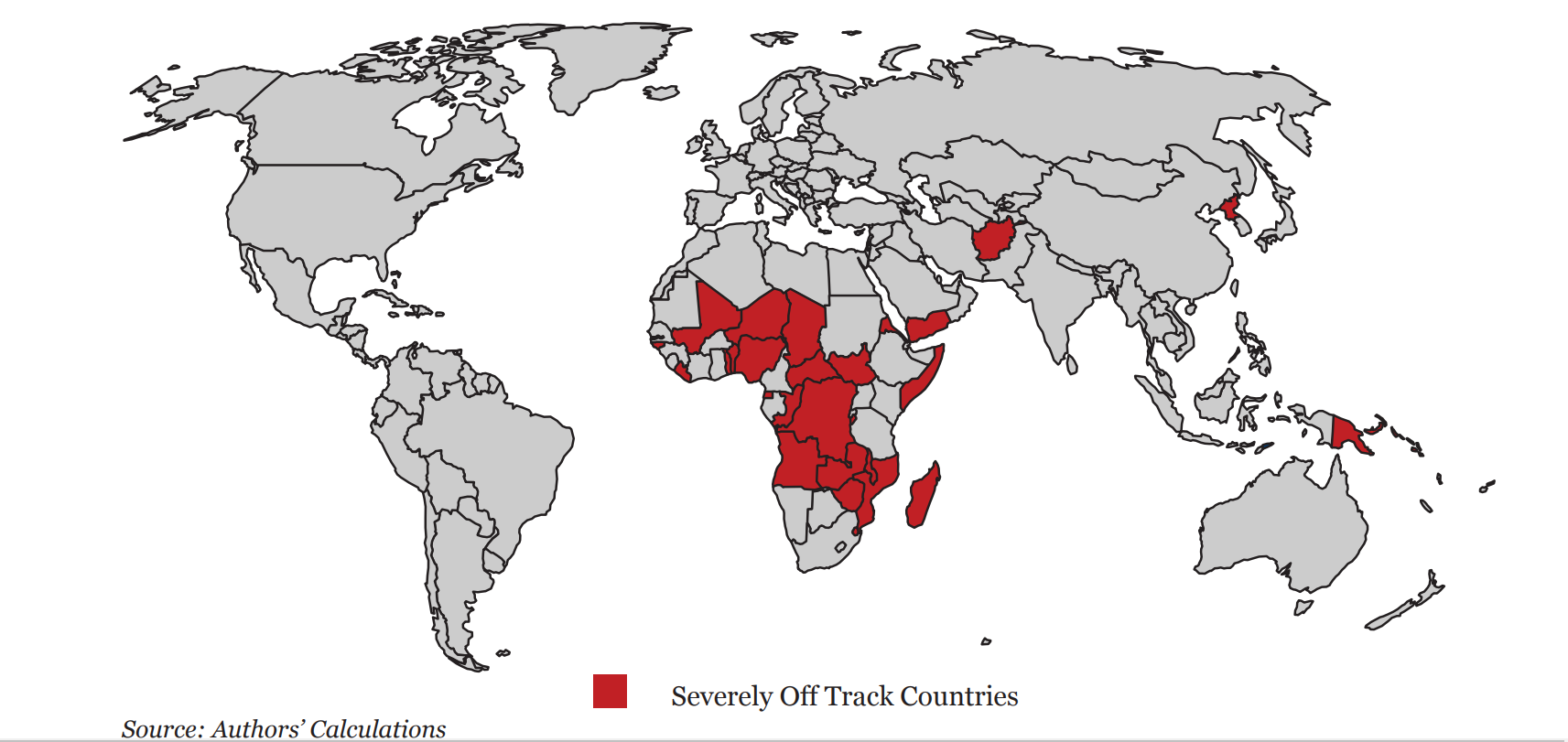
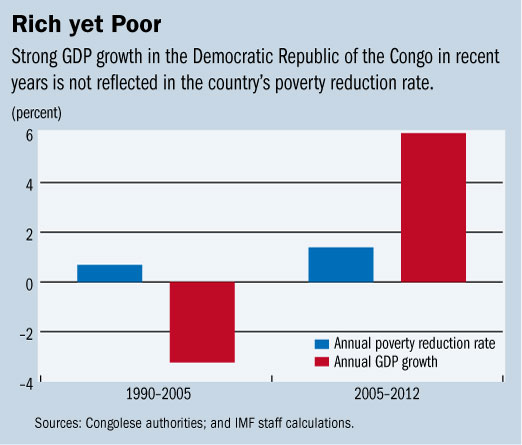
The Bookings article discusses some the ways that aid can fall off track for certain countries and though there has been a notable decrease in the amount of poverty listed through SDG goals there are certain areas that have made major impacts to this number while others are not having the same fate. Under the choice of the western aid companies there are certain countries that are known as donor darlings that receive a lot of international attention and aid and may be said to have a better chance at success than donor orphans who are not as often given the continual and consistent attention that the darlings get to benefit from. My country the DRC is noted on the list of countries that are not currently making a lot of improvements when it comes to decreasing their poverty or the other implications that are associated with the sustainable development goals. There is a lack of progress being made it seems for both countries who are not making the noted progress and those who are where you can see in the early 2000s they experienced a dip in the success that was followed by a rise in the amount of successfully implemented projects targeted at poverty reduction.
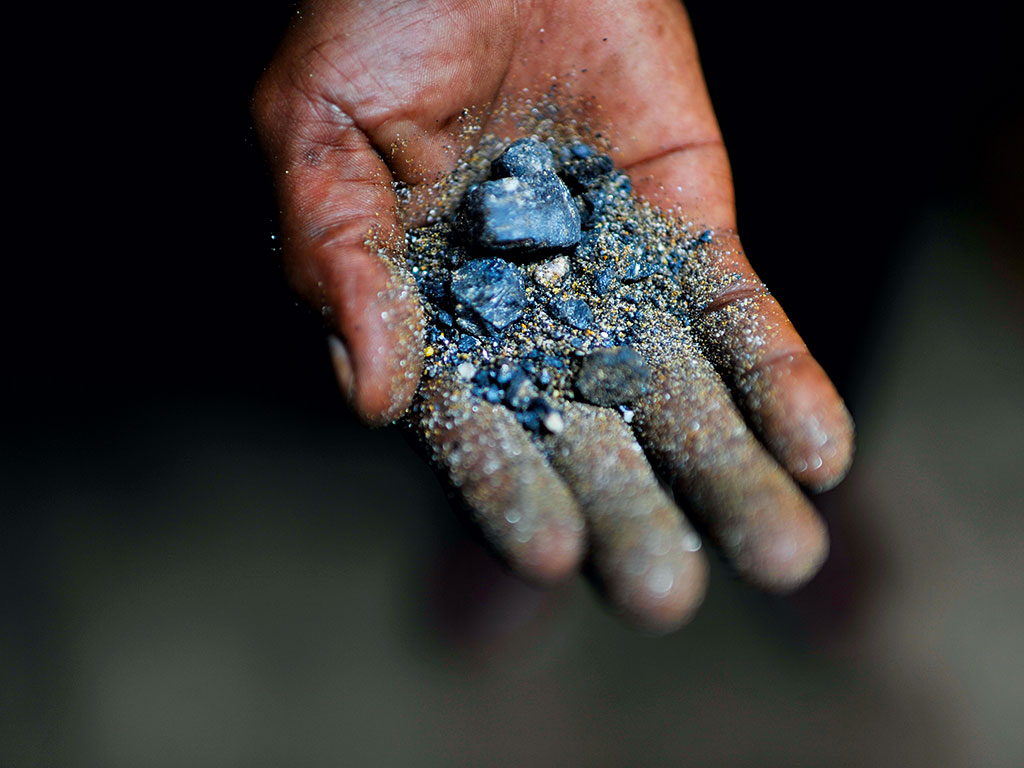
E-commerce has not had the ability to take off greatly in the DRC if given the chance it has the potential to boost the GDP. There has been reports that connect the growing youth population with a high mobile connect and handheld technology that is working better at connecting them to e-commerce. The DRC holds a lot of their job field from titanium mining which is later used to create a large range of mobile devices. There are currently not any big operating e-commerce companies, but this is not to be confused with them not engaging with this market. There has been interaction with international e-commerce and buying from platforms such as Amazon. In 2015 the country began to see a small rise of some e-commerce countries. There is still some problem with government regulations that lay out specific guidelines on how communication technology and information is set to be used within the conditions of the country. They have made technology information more of a priority proven by the networks that have popped up all around the DRC targeted at creating high speed internet.
The article discusses the ways that the same countries who are pouring aid into Africa are also taking from Africa at a much higher rate than contributions. There is a lot of money coming into Africa through aid but a lot of this can turn into debt because it is put into government or private sectors that is not being able to go through the same sectors that would promote investment rather than aid with the interactions that are already occurring through the amount of capital being taken out either through wildlife, natural resources, or tax breaks that corporations seek in these areas though majority of their money goes back to their host countries rather than these African countries. The private sector would be areas such schooling that then loses the ability for public schools to receive the same kind of attention that these areas are going to benefit from. Due to the amount of money and capital that is able to flow out of Africa there is a very big amount of control that this is allowing western corporations and governments to get a stronghold. This means that encouraging them to enter unfair markets or only giving money based. The general discussion that this author offers is that it’s about the way we discuss and interact with Africa in turn affects the way that investors and aid is seen in its interaction. We are not looking at the fact that many African countries are talked about in a way that doesn’t make them attractive to many of outsides investments and instead makes them seem like a wasteland for aid money with no notable improvement.
Resources
Dearden, Nick. Africa Is Not Poor, We Are Stealing Its Wealth. https://www.aljazeera.com/indepth/opinion/2017/05/africa-poor-stealing-wealth-170524063731884.html. Accessed 26 Feb. 2019.
Democratic Republic of Congo | Global Financing Facility. https://www.globalfinancingfacility.org/democratic-republic-congo. Accessed 26 Feb. 2019.
Kharas, Geoffrey Gertz and Homi. “The Road to Ending Poverty Runs through 31 Severely off Track Countries.” Brookings, 13 Feb. 2018, https://www.brookings.edu/blog/future-development/2018/02/13/the-road-to-ending-poverty-runs-through-31-severely-off-track-countries/.
“Opportunity DRC in Kinshasa Grows, Expanding Services in Congo.” Opportunity International, //opportunity.org/news/blog/2011/07/update-opportunity-drc-in-kinshasa-grows-expanding-microfinance-to-more-people-of-the-congo. Accessed 26 Feb. 2019.
Reluctant Entrepreneurs | Poor Economics. http://www.pooreconomics.com/chapters/9-reluctant-entrepreneurs. Accessed 26 Feb. 2019.
Blog Post #4 –The rise of the DRC Cheetah
By: Lana Henderson
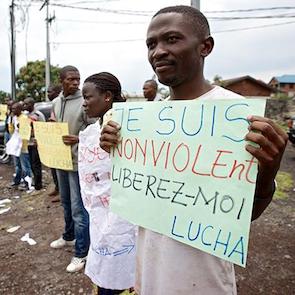
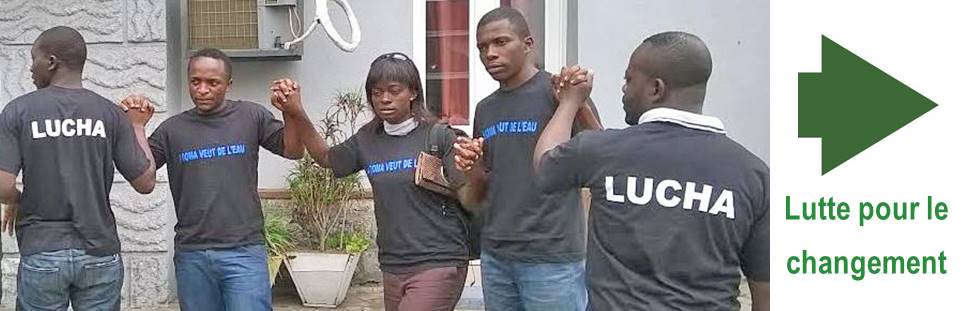
Part I: A) The group I choose to follow for this assignment is the Lutte pour le Changement citizen movement known as LUCHA in the Democratic Republic of the Congo. LUCHA can be identified by a green arrow as their symbol or the use of green on their text. This is a group of the Congo’s youth that is dedicated through protecting civil liberties through mobilization and organization over the use of weapons such as guns as a source of power. In 2014 they organized a march to demand for clean drinking water in Goma which had a turnout of 3,000 participants. They further mobilized to get their message all over the city on billboards, posters, vans, buses and essentially any way they could to get their message out. They have meet problems from authority when trying to get their demands met. At a concert representing One Peace Day LUCHA felt that there was a low level of demands requested and so they showed up to the concert to assert their demands. This was not appreciated by the National Intelligence Agency that arrested three of their members. LUCHA has organized numerous sit-down events, marches, rallies and open letter events that are consistent with their nonviolent approach. When talking to a member, Fred Buhama, he discussed the discontent youth were feeling with the lack of results they saw from already established groups, so they believed that the best way to go forward was the creation of their own group. They are an informal movement that gains a lot of its power through a collective the group doesn’t have a president or a certain director who oversees the mission of the group. They create decisions during general assemblies and that are hosted in a collective manner so that now one feels that there is one group of idea that is getting majority of the attention. One of their other member Micheline Mwendike discussed how this was a male dominated group with about 30 percent of the member bring women due to societal pressures. There is a big reflection poorly on women who engage in this type of activism especially without a husband present as well as the rhetoric that engaging in “this type” of behavior will limit prospects for future marriage.
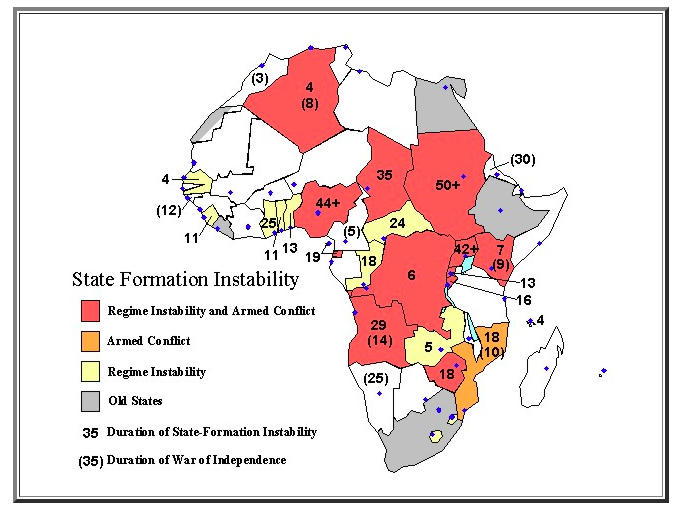
- According to Think Tank Freedom House the Democratic Republic of the Congo is not free. Part of the reasoning for this is like discusses by the group LUCHA there is harassment and unlawful detention of advocates, civil liberties groups and journalists After the attempts of president Joseph Kabila to make his term length longer in 2015 there were many eruptions of protests against this that led to many documented human rights violations as well as disappearances. There are also many rebel groups still prevalent that are contributing to internal displacement. For political rights they scored a nine out of 40 (9/40) due to their being corruption within the office of the presidency but also within the army and forces that enforce rules. There is plenty of violence occurring at the hands of authority to those enquiring about their civil liberties. On civil liberties they scored sixteen out of sixty (16/60), this is mainly due to the limit on freedom of expression that can be clearly seen through the detention of journalists. There is also already very low defined freedom of speech discussed in the constitution. The judiciary system also has political manipulation and the charges brought forth to courts generally do not favor the citizens over the authority in power even if there is clear documentation of their wrong doings often victims do not receive any promise that they will receive justice. Government and government allied forces seem to hold impunity against even the “most heinous crimes”. The Polity IV Index rates the Democratic Republic of the Congo as a regime instability and armed conflict which is the worst rating given in their African Conflict page. This is tracked through the periods of stability, state formation instability, and post-formation instability. Due to the amount of revolutionary wars and ethnic warfare specifically is seems that the DRC has had more than one issue with these in their developmental stage. Another thing that went into this rating was a genocide or politicide that happened in the 1970s, this was the change of the DRC from is previously known Zaire. They also went through many foreign power disruptions that disrupted their progress. As well as with the shift of so many governmental problems there has also been a lot of inter warfare occurring as well as the rise of rebel groups to accompany governmental power corruption.
The Washington post article discusses 2018 being the 12th consecutive year of declining democracy. Though there is a clear fall when looking at studies there is a still a big global pull toward democracy and majority of people claiming that is the type of leadership they want. There is also discussion on how world power such as America have impacted the approach to democracy, due to the way our president Trump has decided to discard American principles throughout his presidency and a sense of isolationism. There has also been a lot of look toward China that looks at how to use to technology to advance the control of a regime over its people. One reason being the Trump administration has had a loud voice in being racist, homophobic and otherwise generally speak against the tone that America has come to be known as when it comes to democracy. Also due to the growing amount of isolation America has taken from engaging in world issues a once known democracy powerhouse there is less fear about seeing consequences for their actions as a consequence it seems from the nations that are experiencing this change. YALI is active in the Democratic Republic of the Congo. On the site there is discussion from participants in the DRC who talk about the ways they’ve seen changes in their lives from being part of this program. One boy, James Ntakiruti Gihoma, discusses how through taking the online courses that are offered he has come to a realization about how strong it would be to raise the society if the girls where included in education. So, he has used the skills he is learned to help members of his community advocate for education. There is also another discussion with Santa Aziz who discusses how this program helps further their efforts with orphanages in the DRC. There is also a member Brackley Cassinga who discusses how this program has helped them to work with youth to make electronics from scratch and waste that help the community. He is teaching students how to create mobile apps, coding, designing websites, solar controller, an audio amp, inverters, regulators, and home automation systems. He works to empower the youth to be technologically literate. The most recent article I found on AllAfrica discussed the Ebola affected areas of the DRC. They have had a hard time with being able to collect data to understand more about the northern provinces. There is hope to use this survey to communicate a clear understanding of where the needs lie internally from the opinion of those dealing with it to the Red Cross.
Part II:
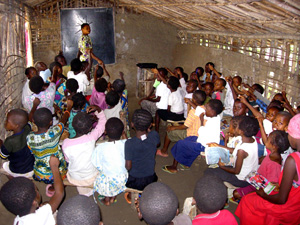
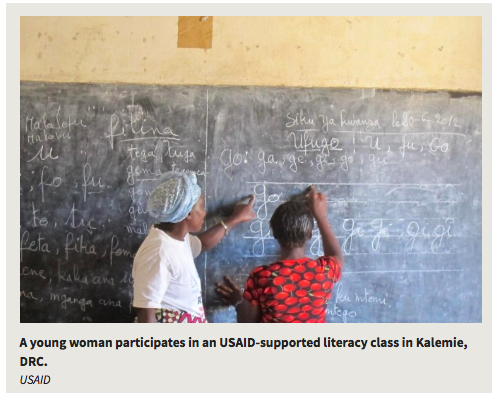
- Chapter 4 discusses the problems that have been seen with education. There is little help with teachers and creating an environment that promotes learning and retention. There are little resources that are invested into the schools which makes the ability to learn seem very hindered. There is a problem with favoritism and the idea that certain kids are going to go on further and be able to graduate and get government jobs and these children are valued over the others. The children can sense this change in behavior they experience from their teacher and it causes behavioral problems within the learning efforts on top of increased other problems. Men’s school life expectancy is 11 years, yet women school life expectancy is only 9 years. One thing that has continually been shown through our readings though is the loss there is between the capabilities of girls and the change women have made to their economies. Due to needing workers at home it is likely that daughters rather than sons will be the ones kept home away from their studies but even seen within the unemployment rates women often to more to contribute to the rise of their societies. There is a way that women are regarded in this culture that can even be seen in their absence in groups such as LUCHA that show that educated and liberated women are looked down on in this country due to that being equivalent with promiscuity or lack of ability to be a “wife”. Data from USAID indicates that only 67% of children who start in primary school make it to sixth grade. Though the government has made some shifts that show that the understand the need to place more emphasis on education, in 2015 the DRC increased financial commitment from 7.9 percent of their budget to 14.7 percent. There is a measure being taken by the USAID and the United Kingdom department of international development that is set to go from 2016-2025 that works to target governments missions for education. This program also gets teachers training on developmental approaches for local languages as well as works on student retention efforts.
Resources
Congo, Democratic Republic of (Kinshasa). 22 Jan. 2016, https://freedomhouse.org/report/freedom-world/2016/congo-democratic-republic-kinshasa.
“Country of the Week: Democratic Republic of the Congo | YALI.” Young African Leaders Initiative Network, 2 Mar. 2017, https://yali.state.gov/country-of-the-week-democratic-republic-of-the-congo/.
CSP Political Instability in Africa. http://www.systemicpeace.org/africa/africa.htm. Accessed 18 Feb. 2019.
Education | Democratic Republic of the Congo | U.S. Agency for International Development. 19 Apr. 2017, https://www.usaid.gov/democratic-republic-congo/education.
LUCHA: Youth Movement in Congo Demands Social Justice | Pambazuka News. /governance/lucha-youth-movement-congo-demands-social-justice. Accessed 18 Feb. 2019.
“Opinion | We Looked at the State of Democracy around the World, and the Results Are Grim.” Washington Post, https://www.washingtonpost.com/news/democracy-post/wp/2018/01/17/we-looked-at-the-state-of-democracy-around-the-world-and-the-results-are-grim/. Accessed 18 Feb. 2019.
Schlein, Lisa. “Congo-Kinshasa: Breaking Down Community Resistance in Ebola-Affected Congo.” Voice of America (Washington, DC), 18 Feb. 2019. AllAfrica, https://allafrica.com/stories/201902180258.html.
Top of the Class | Poor Economics. http://www.pooreconomics.com/chapters/4-top-class. Accessed 19 Feb. 2019.
—. http://www.pooreconomics.com/chapters/4-top-class. Accessed 19 Feb. 2019.
Post #3 Week Four- Zaire/ Democratic Republic of the Congo
By: Lana Henderson
Part I: Questions on Emerging Africa
Explain the meaning of a “Cheetah” and a “Big Man” also called the cheetah generation and the hippo generation? (Ch. 7 and 3 from last week’s reading) Explain how these terms refer to a different way of looking at democracy and civil society?
The cheetah generation is known as the new generation in emerging Africa that is more knowledgeable and involved with their government institutions. This intelligence is mostly tied to wealth and the ability to attend school but also discusses street smart as being a characteristic. This generation cares about looking at things through a new African point of view and not with the western/ colonial ideas that may have been pushed on them in the past. Even many cheetahs are beginning to emerge in African countries that are still facing many problems this presents hope to Africa about its future. Cheetahs are the ones responsible for bringing the new changes to their communities that are enacting these changes. Cheetahs also invest in new companies and businesses coming to their communities and being loyal consumers. Also due to their better availability to internet access they have a demand for honesty and transparency in their democracy in ways they haven’t always had. The big man on the other hand is a time defined by its high rise of dictatorships. During this post-colonial time many Africans were hopeful that new leadership would include democracy that protected their civil liberties. Instead they got leaders who used militaries to establish control and dismissing any entities established that were intended to maintain checks and balances. Essentially the Cheetah generation seems to be the ones that are going to help pull Africa out of the problems caused during the Hippo generation due to corruption in power.
Is Radelet’s positive view in Chapter 6 on the African ICT explosion valid and sustainable? What are challenges?
The ICT explosion has both been able to make a lot of changes to emerging African countries that have led to them being able to become more active in the globalizing world. With technology women are now able to start business and sell their products through the internet, people are able to communicate problems faster. The problem though has seemed to become its hard ability to access and big prices that are a lot higher than similar countries and even developed ones. Though there are a lot of aid organizations being formed that are aimed at alleviating this challenge through bringing access to areas that don’t have it. Phones though have not quite had as many limitation problems and they have helped to bring help to many different job fields in African countries. This is able to help businesses succeed better and know more about their peers to enable a best price market. This has also extended to teaching of language and literacy as well as opened up new sectors for job growth.
Part II: explore one country as assigned in class
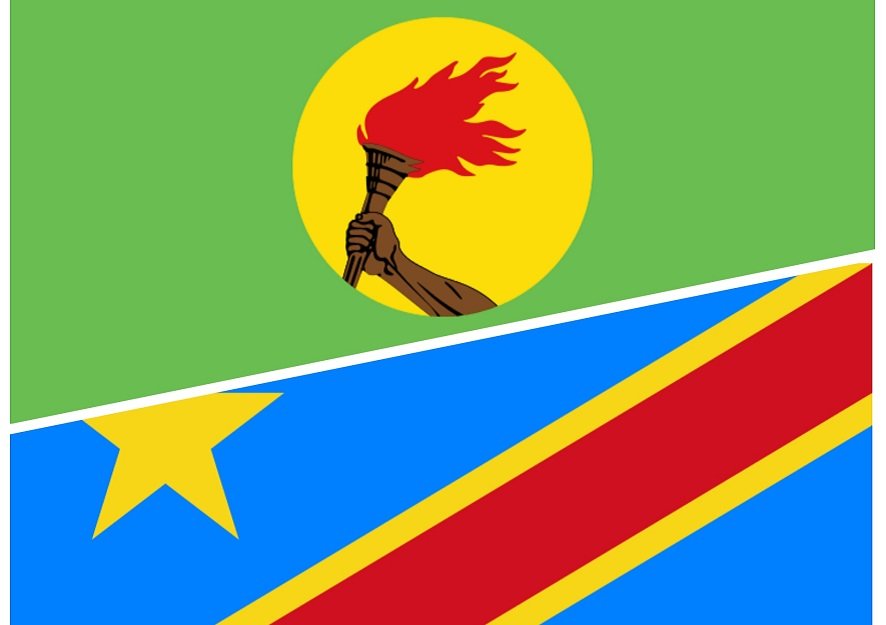
Zaire/Democratic Republic of the Congo
In 1997 the country of Zaire underwent a name change back to the name it had before 1971 of the Democratic Republic of the Congo. My country is not listed on the Banjaree and Duflo website. I do believe it is possible to get trapped in poverty through the way institutions are set up it is often hard for people to save up money and instead are living paycheck to paycheck. Especially in areas like these where it is easy to get sick or go an extended amount of time without consistent work it is not surprising that even if an opportunity to save money did present itself it is unlikely how long before a problem arose that required those finances. They discuss a hunger poverty trap that leads to many having to spend any money they have on food to be able to eat is one of the most basic necessities of life so if your choice is between going hungry or having no money you can only go without eating for so long. The DRC though it has improved still has notable problems with access to clean drinking water especially in rural areas where only 31% of the population has reliable access to clean water and 81% in urban areas. According to the world bank the Democratic Republic of the Congo has had a lot of sporadic data that seems to coincide with not only the changing of leaders but the change in names it encountered. The GDP remained on the lower side trending up and down until a sharp plunge down in 1999 that has been on a continuous increase since 2001, it reached its previous height in 2008 and has exponentially grown since then. Their GNI also follows the same trend line where 1999 was a low year that has increased since. The primary school enrollment was consistently high until 1984 when it dropped continuously hitting a record low in 1999 but around 2007 the number began to climb up now higher in 2015 than it was ever in previous years. While their import rates have remained relatively similar their export rates have increased by $2 billion.
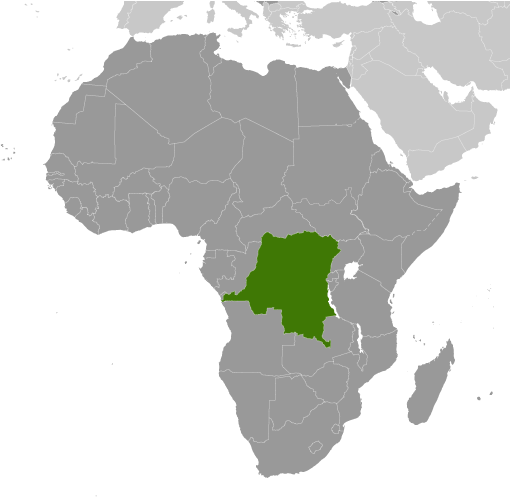
The poverty headcount ratio is the only trendline where there is a decrease that has happened from its initial reading to the most current one, but this is on trend with how the other graphs have moved. When looking at the age structure the DRC has a high dependency population due to 41% of their population being between 0-14 years of age. One thing I found notable is that men’s school life expectancy is 11 years yet 11.3% of the male population is unemployed as compared to women whose school life expectancy is 9 years and only 6.8% of their population is unemployed. These numbers suggest that if the current young population is able to outlive disease and hunger then there will be a good amount of people coming into the workforce in the next few years. One thing that has continually been shown through our readings though is the loss there is between the capabilities of girls and the change women have made to their economies. Due to needing workers at home it is likely that daughters rather than sons will be the ones kept home away from their studies but even seen within the unemployment rates women often to more to contribute to the rise of their societies. Though in 2017 the rate of child marriages declined by a lot creating hope that parents are investing more in their children’s especially daughters’ futures. The SDG’s partnered with DRC is one that is a Young African Leaders that works to make a strong “cheetah” generation vibe that talks about the youth becoming more involved in the institutions that govern them so they can have strong skills in being a part of their emerging society. Though as of last year they had an ebola outbreak that affected many who were younger than 5 years old according to CNN. Their rates are the second deadliest recorded in history so looking forward how much of this population can survive or be strong enough to join this new discussed workforce.
References
Africa :: Congo, Democratic Republic of the — The World Factbook – Central Intelligence Agency. https://www.cia.gov/library/publications/the-world-factbook/geos/cg.html. Accessed 12 Feb. 2019.
CNN, Rob Picheta. “Nearly 100 Children Dead from Ebola in Congo as Crisis Worsens.” CNN, https://www.cnn.com/2019/02/10/health/ebola-save-the-children-report-intl/index.html. Accessed 13 Feb. 2019.
Congo, Dem. Rep. | Data. https://data.worldbank.org/country/congo-dem-rep?view=chart. Accessed 12 Feb. 2019.
“Human Capital Definition and Importance – Economics Help.” Economics Help, https://www.economicshelp.org/blog/26076/economics/human-capital-definition-and-importance/. Accessed 12 Feb. 2019.
“Year in Review: 2017 in 12 Charts.” World Bank, http://www.worldbank.org/en/news/feature/2017/12/15/year-in-review-2017-in-12-charts. Accessed 12 Feb. 2019.
YOUNG AFRICAN LEADERS INITIATIVE – RLC EA – United Nations Partnerships for SDGs Platform. https://sustainabledevelopment.un.org/partnership/?p=26780. Accessed 13 Feb. 2019.
[Today in History] Zaire Renamed the Democratic Republic of Congo after Mobutu’s Ouster – Face2Face Africa. https://face2faceafrica.com/article/today-in-history-zaire-renamed-the-democratic-republic-of-congo-after-mobutus-ouster. Accessed 13 Feb. 2019.
Blog Post #2 Emerging Africa
By: Lana Henderson
- What
are the factors that classify as good news in Africa according to Radelet?
- In Africa there is an overwhelming rhetoric that the people live in chaos and suffering at all times. Therefore, whenever we see African countries in the news it is often to address a new issue or recurring problem they have been having keeping the idea that they are a continent in turmoil. The Radelet article discusses emerging countries who are breaking through these barriers and advancing through fundamental changes to their economic and political systems. Radelet classifies 5 fundamental changes that have lead to notable changes in the emerging good news countries of Africa. The first two go hand in hand being, the rise of more democratic and accountable governments and the introduction of more sensible economic policies. The following three are the end of the debt crisis and changing relationships with the international community, the spread of new technologies, and the emergence of a new generation of public and private leaders. The first factor has created a big difference through having democratic leadership, in the past some African countries had to overcome leaders who were corrupt and used force to get their way. With new leadership there has been a positive change to civil rights and freedoms which has allowed and created stronger political institutions. The second factor of more sensible economic policies has been able to get rid of economic mismanagement and led to a better balance between the private and public sectors. This also helped affect budget and trade deficits. The next big change is influenced by the former being the end of the decades-long debt crisis and changes to Africa’s relationship with the international community. There has been a shift between African countries and countries that would commonly invest in them due to a shift in process to pull themselves out of debt through choosing strategies that were country led rather than stipulations given by the IMF or World Bank that gave a lot of conditions that often left African countries unable to affect change in the ways they really needed from aid. The next factor is no surprise in a an increasingly advanced world technology has also made a profound impact on African countries. The internet is cutting the time it needs to share information and overcome geographical boundaries to receive critical information. This has also opened a new sector of jobs that where not previously available and have an increased influence on the betterment of life in the future of Africa. The last factor is the emergence of a new generation of policymakers, activists and business leaders. These are often people who were born in Africa but had international experiences especially in their education that has given them a global way to analyze the world and their countries place in it.
Millennium Villages
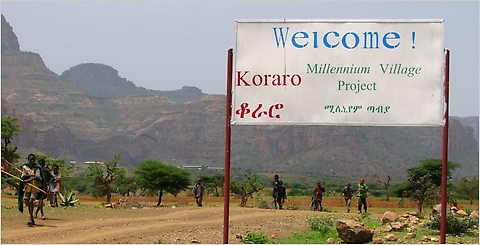
-Why was that particular village chosen? I chose to look into this village because Ethiopia unlike most other African countries was not under colonial rule in the same way it shaped a lot of their neighboring countries due to their powerful government. This made me curious what shift led to it being on the same playing field as many of the countries who are recovering from a colonial shift.
-What is the goal for that village? There is a beekeeping program being tested as a new source of income in this community. About 1,200 colonies have been introduced for honey business.
-What successes or failures have been recorded? There have been five health posts and six primary schools built as a result of new wealth in the area. They have also trained 80 women on how to manage poultry, dairy cows and fattening animals and trading textiles and grains. There has been a decrease of dropouts due to “girl’s club’s” being stablished in schools which encourage female education. 6,000 people have easier access to clean water. New irrigation techniques have diversified crops in this area as well as increased farmers income by 72 percent on average. A very big change will be the projects currently underway to construct roads.
-What do the critics say? One of the biggest themes introduced by critics is the idea of creating aid dependent rather than actual self-sustainable. There is a lack of a system available to chart the progress of the Millennium villages in context to surrounding similar communities. Many critics have also said that because of Sachs close relation to the issues it has clouded his judgement for reality and facts when he presents his arguments for why his way will be a successful way to end poverty. Some have gone as far as to say that due to this project he has lost his credibility as a once extremely credible economist to an aid propogandist.
Ethiopia GDP: 80.56 Billion (2017) , GNP: 198.1 billion PPP dollars, HDI: Index= .463 Rank= 173,
-How are local, national and global issues addressed and involved? There are other African countries that have asked for guidance implementing some of the MVP protocols.
-And finally, what do you think: Is it a viable project towards ending poverty? I think this is dependent on many other factors including how connected they become with other areas around them. One thing that is a negative factor for them right now is that they are effectively cut off from many other areas but if these policies are making notable change at faster rates than villages around them are able to might there be an influx of a population looking to get in on their notable success. Though majority of the Millennium Villages site pages have not been updated since 2013 so it’s hard to tell what change has been made since then.
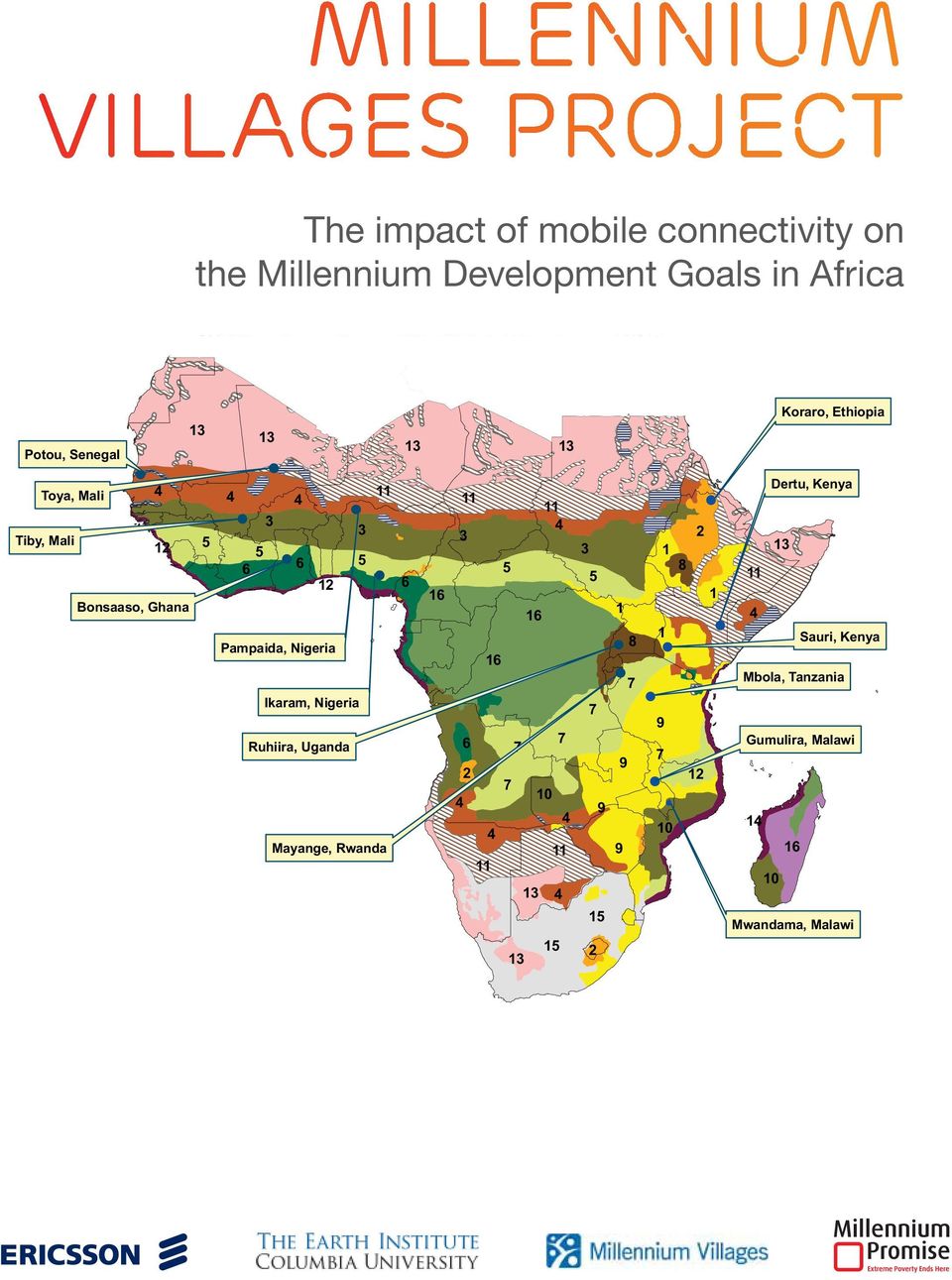
-Why was that particular village chosen? I chose this village because I have done a service trip to a different area of Senegal in Palamarin Fakou but was curious if both of the regions had seen similar problems to the ones I saw in the villages I visited.
-What is the goal for that village? The goals for this village were to get more stable infrastructure
-What successes or failures have been recorded? Some of the notable successes of this community has been their ability to produce high-value crops, dairy farmers have received beneficial training, there is newly constructed clinics and new jobs for trained nurses, teachers have received training on personal hygiene and sanitation. Some of the most notable changes to me listed were the federation of 125 women’s business to boost entrepreneurship and the ability for clean piped drinking water to reach nearly the whole population.
-What do the critics say? Critics say while the project has been able to gather a lot of celebrity attention that doesn’t necessarily mean that it is a program that is effective. Due to the lack of systems integrated at its start to track progress it is very hard to say whether or not this program has been effective. There has been insufficient data collected and any production of statistically significant results. There are also many investors who feel that there is an outpour of talk about the model being a great one to get you on board but once you have donated a lot of money there is silence and constant reasoning behind why the system doesn’t look like the one pitched to investors. It also seems that money that was set to be used in certain places isn’t being used correctly found in a study done on the Ghana villages that tested donations versus the amount that could actually be seen being invested into households.
SENEGAL GDP: 16.37 billion (2017), GNP: 41.5 billion (2017) per capita: $2,384, WDI, HDI: index= .505, Rank: 164
-How are local, national and global issues addressed and involved? African countries that have asked for guidance implementing some of the MVP protocols and surrounding villages probably reap the benefits from having access to more clinics, schools and other infrastructure that was previously even further way than the next village over.
– what do you think: Is it a viable project towards ending poverty? According to world factbook there is a youth population that has not turned into successful human capital. There is not a lack of children but instead a lack of education that gets children ready to participate in the work force beyond their parents positions or homemaking. The fore I think this would be lot more successful if instead of focusing on infrastructure they focused more on giving the children versatile education. This is hard though because many of the projects that Sachs instituted have focused on fixing infrastructure and getting clean water. These are obviously necessary goals though with no one having access to clean water would make a notable difference with the amount of time children could be in school versus having to get clean water. Overall, I think these are complex issues and tackling the direct problem doesn’t necessarily mean it will make a difference because of other issues that are limiting society from being able to reach their potential.
Resources
| Human Development Reports. http://hdr.undp.org/en/countries/profiles/ETH. Accessed 5 Feb. 2019.
—. http://hdr.undp.org/en/countries/profiles/SEN. Accessed 5 Feb. 2019.
Africa :: Ethiopia — The World Factbook – Central Intelligence Agency. https://www.cia.gov/library/publications/resources/the-world-factbook/geos/et.html. Accessed 5 Feb. 2019.
Africa :: Senegal — The World Factbook – Central Intelligence Agency. https://www.cia.gov/library/publications/resources/the-world-factbook/geos/sg.html. Accessed 5 Feb. 2019.
Hirsch, Afua, and west Africa correspondent. “Jeffrey Sachs Fast-Tracks New Millennium Village Project in Ghana.” The Guardian, 31 Aug. 2012. http://www.theguardian.com, https://www.theguardian.com/global-development/2012/aug/31/jeffrey-sachs-millennium-village-project-ghana.
Millennium Villages | Koraro, Ethiopia. http://millenniumvillages.org/the-villages/koraro-ethiopia/. Accessed 6 Feb. 2019.
Millennium Villages | Millennium Villages Project. http://millenniumvillages.org/the-villages/. Accessed 6 Feb. 2019.
Millennium Villages | Potou, Senegal. http://millenniumvillages.org/the-villages/potou-senegal/. Accessed 6 Feb. 2019.
Millennium Villages | USAID Awards $1.1M for Solar Irrigation in Senegal. http://millenniumvillages.org/field-notes/usaid-awards-1-1m-for-solar-irrigation-in-senegal/. Accessed 6 Feb. 2019.
Starobin, Paul. “Does It Take a Village?” Foreign Policy, https://foreignpolicy.com/2013/06/24/does-it-take-a-village/. Accessed 5 Feb. 2019.
Tollefson, Jeff. “Millennium Villages Project Launches Retrospective Analysis.” Nature News, vol. 524, no. 7564, Aug. 2015, p. 144. http://www.nature.com, doi:10.1038/524144a.
Blog Post #1 SDGs and Globalization
by: Lana Henderson
- There are different levels of poor. We generally look at certain levels that are so low that we don’t realize that in other areas there re still people struggling yet at this level their is a good amount of ‘aid’ that could make the difference. Novogratz discusses aid as helping people to become self sustainable so investing in factories of businesses and she goes further to state that women based businesses really are the backbone of uplifting an economy. In the areas that seem to be a lot poorer and not able to self sustain we have to work and engage with them to figure out how they can build the products they need as well as how these things should be advertised for it to be successful in these communities. The other TED talk I watched that was similar was Chimamanda Ngozi Adichie discussing the danger of a single story. Here Chimamanda discusses how she realized she and her country was viewed by those in the developing world. People see the continent of Africa as this hopeless poverty filled place because that is the only story they have ever been told. Chimamanda discusses different stories about her in her own house growing up middle class and having lower classes work in her house, something many people would be shocked to here occurs in Nigeria. She also discusses influential writers such as China Achebe who write stories that show Africans in many different roles of life and not just one singular way like they are usually characterized in European stories.
- The goal of SDGs is to create realistic goals that with universal support could help eradicate poverty, disease, child mortality, environmental problems and much more. Sachs all encompasses SDGs through the sentence “ SDGs call for socially inclusive and environmentally sustainable economic growth(Sachs, pg. 3)” Wealth disparity has been an adverse affect created by Neo liberalism. With many countries opening up their markets to find the cheapest prices there has been globalization as as factor and because of this things that we do may effect someone in a part of the world we will never visit. As more markets turn to capitalism we are teaching them how to be advanced on our standards rather than realizing the pace they are at and the time they need to evolve to a higher economic status.
- When McArthur discusses players on the bench he means the United States and their early interactions with MDG’s. Due to political tensions between other countries involved in MDG’s the then president george w bush and ambassadors were afraid to use the term MDG due to the fear that this would put the United States in an alliance with a UN backed initiate. Yet this was strange because the United States supported many of the agendas set on the Millennial development declaration but did not support them once they received the name millennial development goals. Therefore the United States lost an opportunity to include their foreign aid contributions as targeted toward helping the millennial goals even though this is exactly what they were doing. The world bank has a similar experience through losing the opportunity to facilitate MDG ground efforts. This could have helped as the World Bank is established political economists they could have alerted countries about existing issues with donor financing gaps and could have had a chance for budget and office expansion had they supported and took on the economic power role of MDGs.
- In the text ‘How to Help Poor Countries’ there is a discussion on what leads countries to have the economic issues they have and why foreign aid is not the answer in these authors minds. They believe that political systems are the main controlling aspect of wealth in a region and therefore moving more money into an area with an unstable government is not going to help the economic situation improve. The text further goes on to discusses that although there have been many ways that aid has created success and eradicated problems this was due to governing that used the money to target specific issues. This doesn’t mean that overall the society improved but the aid was able to help certain issues. There needs to be internal measures set up that is ready to allocate aid to specific areas, these have been the most successful applications of aid. The authors believe that eliminating TRIPS and tariffs by increasing the costs of medicine when an area needs it most, often medicine that Is the difference between life and death. Tariffs make it cost more for countries to import their goods into America or other markets usually due to trade agreements that give preferences certain areas imports. Another part of this is the need for countries to have a voice on how the aid will work for them. Organizations such as the IMF and World Bank have created cookie cutter solutions when every countries problems are unique and therefore so are the solutions. The authors also discuss that instead of investing money there could be a huge benefit to investing in technology and crop development that could help these areas begin to become sustainable. Another way of giving aid the authors suggest is through special work visas that allow skilled and unskilled workers to work in rich countries for a few years interchanging new workers so that there is constantly new money being brought into the country once workers return.

