Blog Post #11
Funk and Said, in their article “Islam and The West…” talk about conflict between cultures and the clashing of ideologies amongst different cultures that leads to these conflicts. Early on in the article they discuss how the viewpoint of each side in a conflict is different. Nobody views themselves as the bad guy. You can apply this to jihadists versus the people fighting against them. The jihadists truly believe they are doing the morally right thing when they carry out their attacks, as cruel as that may be. Nobody thinks what they are doing is wrong. We have a tendency to look at things exclusively through our own viewpoints, and never through the eyes of the other side. We never put ourselves into other people’s shoes and frame shared conflicts from their position. Of course, there is no excuse for murdering others, but for less extreme examples, with issues like the refugees and the immigration crisis, there are two sides. When you look at something through the eyes of, say, a European citizen who lives in a country being flooded by refugees, it may be best to think about how scary change might seem to them. Humans are innately afraid of change. Westerners have been lead to believe by the media and by certain politicians that Muslims are people to be feared, be it through over publication of fringe groups and them being made out to be the majority. When you think about how that is the idea of Muslims that people are getting shown nonstop, it becomes understandable to see why they might think that way. And when you look at things from a refugees point of view; a lot of them didn’t want to be refugees in the first place. The word “refugee” implies that conditions and circumstances forced their hand to lead them to where they are. They are forced out of one place they cannot be, and are told that the place they are going, they can’t be either. These people feel stateless and are understandably angry that their life was uprooted and they face constant discrimination. If both sides can look at things from each others point of view, maybe tensions would not be so high amongst these separate groups.
Frum states in his article “How Much Immigration is Too Much?” that immigration is taxing on economies and resources of the countries that let them in, and while it may be tough from a humanitarian perspective, borders need to be more enforced. Personally, I find it hard to take a firm stance on this issue because my head and my heart disagree. I don’t believe a country can function, or be a country, without borders. To some degree we need to be our own country, or else we will not be able to maintain our spot in the global economy and keep our high standard of living for the people that are living here, who we ultimately are most responsible for. But the humanitarian side of me wants to help everybody, and let everybody in. And it begs the question, should our loyalties be to our fellow citizens of our country, or to the human race as a whole? I find it ironic that America often tries to be the world’s police in global affairs, intervening in foreign countries often, taking that stance, but we take the America-first stance when it comes to our doorstep.
International Journal of Peace Studies, Volume 9, Number 1, Spring/Summer 2004ISLAM AND THE WEST:NARRATIVES OF CONFLICT AND CONFLICT TRANSFORMATION, Funk and Said
Blog Post #10
The term “jihadism” is one that was not widely used in the west or by westerners until the past few decades, when journalists coined the phrase in the wake of Islamic revolutions in the middle east and events such as 9/11. “Jihad” means holy war, a war waged against infidels, (non-believers/those who oppose or go against Islam,) and jihadists believe it is their duty to eradicate them. As western powers in the world grew, so did western influence, and a lot of the world became “westernized.” The Middle East was no exception. A lot of middle eastern countries became westernized in things like clothing for example, and western troops that were in the country intervening in middle eastern affairs brought a lot of their western culture with them. This was considered to be an invasion of ideals by Islamic extremists, they viewed the westerners as foreign invaders compromising their way of life, and radical fringe groups sprung up and started waging jihad in retaliation.
Sharia law is law of the land/government that is influenced, dictated and controlled by the Islamic faith. The main goal and concern of Sharia law is to make sure that all Islamic values and traditions are upheld, in all aspects of life. This includes women wearing the appropriate attire and headdresses, upholding the scheduled times of prayer and worship, controlling relationships by outlawing things like premarital sex and homosexuality, etc. To go against Sharia Law would be punished criminally by the state, where as in the west, you are free to oppose religion in any way you see fit.
I think saying Islamic law has always been about “punishment” is an interesting statement to make and one that should be unwrapped. I do not personally believe that the core values of the religion center around punishing people, punishing people is not the goal. People are punished for not falling in line with the religion and upholding the beliefs of the religion, and going against Allah, but in an ideal world for most Muslims, especially nowadays, I believe nobody would be getting punished because we would all be following Allah’s will.

Musawah is a feminist movement in Islam, that seeks to liberate women, and give them more control and freedoms in the religion. The term “musawah” is Arabic for “equality,” which is very literal in terms of what the movement is about. It is about equality between the sexes, which Islam does not really have. They believe that the Koran and Islamic faith are not necessarily as anti-women as a lot of people believe, and they are advocating to change the mindset of a lot of radical, more traditional Muslims. They want women to play a greater role in society and be treated as equals, being able to do things like divorce from unhappy marriage, play greater roles in politics and business, and in general, have the same control over their lives and choices that men do. Of course, I am all for equal rights in every aspect of life, for every gender, creed, race, what have you. So naturally I support these groups, and I wish them success and hopefully they achieve their goals. I do, however, find feminism in Islam to be an oxymoron. I do not generalize Muslims and am aware that beliefs and extremeness of beliefs greatly varies from person to person. But the traditional way of the religion, and the text in the Koran, is very much not egalitarian, and contains a lot of hateful and harmful speech, and Islam at its core is not pro-feminism. While things may have changed for a lot of Muslims, I believe that you aren’t really faithful to your religion if you’re changing it to make it more inclusive and palatable. When religions bend like that to be more modern, it makes me much less trustworthy of that religion. If they truly believed in what their religion was saying, they would not be willing to change anything about it to make it so that people do not leave it for being hateful. And the ones that stay rooted in traditions are often very hateful. So while I wish these feminist advocates success, I do believe that it would be best for them to break away from the religion entirely.
Blog Post #9

It would be difficult to argue that there has not been a failure to integrate in regards to Muslims and Islam in Europe, and that is evident just from looking at the country today. Post World War 2, a lot of Europe was in a rough place, recovering from the war both physically and economically. Europe was already so heavily divided amongst themselves, with countries being divided and split in two, that “outsiders” like Muslims would only be looked at as even bigger outsiders in the years to come. This has rippled into today where Islamophobia is prevalent in Europe perhaps more so than any other part of the Western world. (Because it is much easier for immigrants from the middle east to get to Europe than it is to get to North America or Australia.) People are naturally afraid of change and have an innate desire to cling to themselves and those that are similar to them, so people get worried and nervous when floods of people that are culturally very different from them come in and threaten their way of life. It makes a lot of Europeans unwilling to accept and integrate them. This is an issue because, whether or not the Europeans want to integrate the Muslims, it really doesn’t matter, because they are there. The immigrants that are there are already living there and that cannot be undone, and more people are going to come in regardless. If you’re not going to stop it, then wouldn’t it make the most sense to just make the most of it, and learn to live with each other?
I do think that the comic and the film do a decent job of doing justice to the refugee situation. I think they are relatively entertaining and easy to consume pieces of media, which is important when trying to portray a message to the broader audience. You don’t make this kind of thing about refugees for refugees to watch, you make it for the average person to watch and sympathize with, so it needs to be entertaining and watchable/readable. I think the film did a good job of adding faces to the issue and showing us real people talking, people that honestly seem not much different from the average westerner, which will humanize them more and differentiate them from the stereotypes that a lot of westerners probably associate Muslims with.
Sources: https://www.youtube.com/watch?v=qtMlN3nqL4c&feature=youtu.be
Blost Post #8
The refugee crisis in Europe is one of the most pressing issues in the region today, primarily Islamic refugees fleeing the less-than-desirable conditions that war and conflict have left their countries in. At arguably the center of this crisis is France, which has the largest Muslim population in the Western World. France has the largest Muslim population in the Western World for a variety of reasons, one of those being simply it’s geography, notably its close proximity to northern Africa. France used to colonize a lot of what is now Muslim countries, therefor, it was necessary for the citizens of those countries to learn French. French is a more commonly spoke language as compared to others amongst native Muslims, so France makes sense as a desirable destination. And, it is closer than the English speaking United Kingdom, which is farther away and more isolated and hard to get to on it’s own island. During the Spanish Inquisition, a lot of Muslims were forced into France from Spain, so the prevalence of Islam in France has always been more present than others.

The Islamic community does tend to lag behind socially and economically, and this can be attributed to them being “outsiders.” Nowadays, a lot of Muslims are refugees, fleeing from their war torn areas with nothing really to their names, so for them to jump right into the economy and be as well of as a people as the native French in their homeland, would not make much sense. Throughout history, in every part of the world, minorities in any given area are always ostracized. It’s happened in America with the African American community, for example. Minority groups are discriminated against, and people are afraid of them. This leads to them being segregated from the dominate community and unable to join in their economy and social standings, leading to them being trapped in lower income situations.
I do not think France’s concept of “Laïcité” is entirely unique. From what I understand, the concept is essentially a separation of Church and State. Religion does not influence the government, and the government does not influence religious activities. The United States does that so some extent, we are supposed to not have religion influence our laws (even though it does) and we stay out of religious affairs and give exceptions on certain rules to religious groups. (For example, not taxing churches.)
There is no such concept in much of the Islamic world, where the Islamic faith essentially runs the government and totally dictates peoples lives. The separation between religion and law, and religion and people’s actions and morality that exists in the western world, does not exist in the Muslim world. This has been interesting in France however, as due to the influx of Muslim immigrants and refugees, as France has had legal debates amongst its Government about the banning of the burqa. French politicians in favor of the burqa ban say that it is unsafe for people to hide their faces in public, but it would not be too much of a leap to assume that some of it has to do with a fear of Islam.
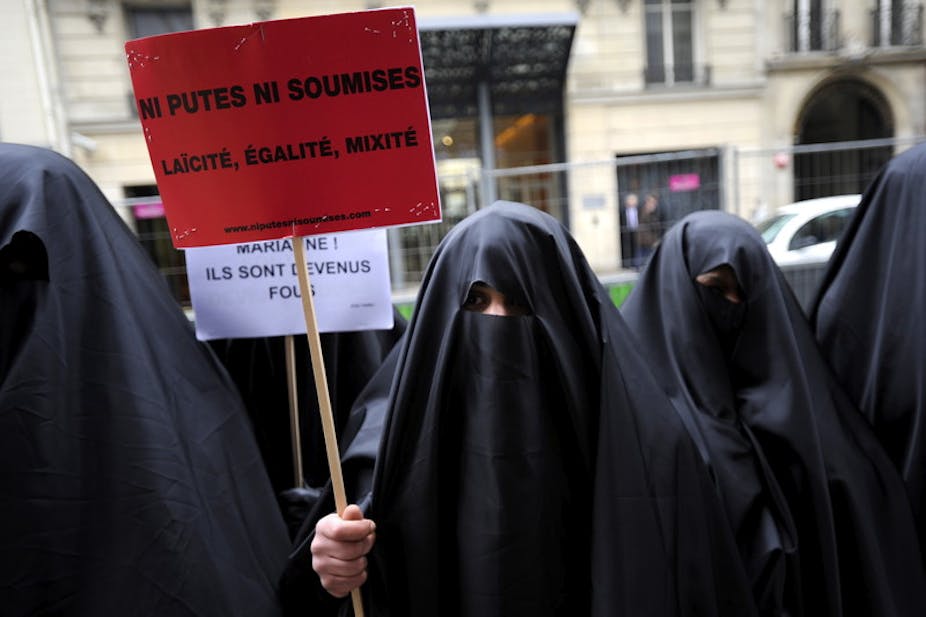
Amongst the most conflict striken places in the world right now are Islamic nations. We have had troops in these nations for decades now, and a lot of people view the Western and Islamic ideals and moralities to be opposites, ones that cannot coexist. This has lead to a lot of conflict, coming to a head with 9/11. There are extremists that often publicly vocalize their desire to kill westerners, and these attacks are now not uncommon. This has caused Westerners to fear Islam as a whole, and the headscarf is something that immediately signifies somebody as Muslim. When people associate Muslims with terrorists, they will assume that anyone wearing the headscarf means them harm.
https://www.theatlantic.com/international/archive/2018/03/islam-france-macron/556604/
https://en.wikipedia.org/wiki/La%C3%AFcit%C3%A9
Blog Post #7
Some of the Myths that Justin Vaisse discusses in his paper are
“Being Muslim constitutes a fixed identity, sufficient to a fully characterized person.”
This is the idea that Muslims identify themselves with their religion in a way that is different to other people, that they all fit this mold of a “typical Muslim” first and foremost and that is wholly what defines them. A lack of individualism. He also mentions that immigrants from the Middle East are often all called Muslim Immigrants, despite the fact that not everybody in that region automatically has the same faith.

The second myth is that,
“Muslims in Europe are, in one way or another, inherently foreign, the equivalent of visiting Middle-Easterners who are alien to the “native” culture.”
Vaisse points out the vast and long Muslim influence in Europe.
“Muslims in Europe form a “distinctive, cohesive and bitter group”.”

Again, not all Muslims fit under the same blank slate. You can’t categorize them all as the
same just as you couldn’t with any other group. In fact, as Vaisse points out, one of the biggest conflicts amongst Muslim countries is the division amongst Muslim sects.
The final myth that Vaisse mentions is that
“Muslims are demographically gaining on the “native” population.”
Not only is that statistically not the case, as Vaisse points out, but he also questions why people should be concerned if ethnicities and cultures blend and melt together? Why is that looked at as a negative?
Making the distinction between the religion and politics that are associated with Islam and innacted in Islamic countries is extremely important because it is important for us to differentiate intentions. There are Islamic leaders that use the religion to oppress people, that is undeniable. But that does not mean all Muslims believe the same way, in fact, quite the opposite. (If they did, then we probably wouldn’t be talking about so many immigrants in Europe in the first place.) It’s important to differentiate different groups and look at people as individuals so we don’t falsely assign malintentions.
Europeans in Europe have been around for a long time. A lot longer than us white Americans living in America. We have only been here for a few hundred years, and we all understand that there really isn’t a distinct “American” ethnicity, we are all descended from people that immigrated here, were brought as slaves or laborers, etc. We have, in my understanding, a better understanding of immigrants and immigration and more of a tolerance to other cultures in America than we do in Western Europe. England has been distinctly white for a long time, they are an old Empire, so it is a lot more shocking for them to have hundreds of thousands of people of a different color come in. A lot of European countries emphasize STEM entirely in their teachings (perhaps why they kill us in standardized testings,) but their lack of diversity and cultural learning in school, and generations of no diversity, make it hard for them to accept Muslims and for them to assimilate.
Blog Post #6
I’ll start off this week’s blog post, in regards to the respective arguments of Sachs and Easterly, I find Sachs’ personality to be extremely off putting and it makes it difficult for me to give validity to what he is saying, despite the fact that I may agree with some of it. In his article “the ethics and practicality of foreign aid” I find his dismissal of all readers of certain publications as racist to be an intellectual cop-out and very lazy. It’s an ad-hominem, and somebody as educated as him should have learned about logical fallacies like that in primary school education.
But I have to admit, as much as I do not care for Sachs, I tend to align with him politically. I think it is at some point our responsibility not as Americans, but as human beings sharing the same Earth with one another, to help each other when we can. When you take a look at our economy, and look at where we are bleeding money, I think the proportion we spend on the military is wholly outweighed by what we spend on foreign aid, so it does not entirely make sense to me to slash foreign aid to increase spending on the military.
However, I am not completely unsympathetic to that idea. There is an idea that is pervasive amongst a lot of people that America should put America first. We should not be getting involved with other countries, and the well being of our own citizens should be the first and only priority that our government has. I do not consider that ideology to be evil, and to an extent, I agree with it. I do think America involves itself too much in foreign affairs, we seem to always be intervening via our military in countries across the world, especially the middle east, and getting mixed up in whatever conflicts these nations are having. But I think there is a difference between that and sending out comparatively small foreign aid, and perhaps our military budget would not need to be so high and we wouldn’t need to spend so much on our military if we didn’t throw ourselves into the middle east. Then we may not need to cut foreign aid.
Banjeree and Duflo, in my opinion, do address the ideas of “ending poverty in all forms everywhere” and “end hunger, achieve food security and improved nutrition and promote sustainable agriculture” relatively well. I think the idea of “ending poverty in all forms everywhere” is a little…ambitious. Perhaps idealistic. It is a nice thought, but to me, the idea that you can completely one hundred percent eliminate poverty is kind of crazy. Greatly reduce? Of course, we have been moving in that direction and Banjeree and Duflo do a good job outlining this and ways to do it. But totally eliminate? Shoot for the moon and if you miss, land in the stars, I guess.
There are a lot of policies that can be implemented in order to reduce poverty in developing countries. I think establishing some sort of minimum wage guarantees that people are at least able to feed themselves to some extent. When you look at certain countries, like the Congo, you see that they make on average less than four hundred dollars per year per household. That is less than two dollars a day. It’s hard to feed a family on that, much less pull yourself out of poverty. Back on the topic of foreign aid, foreign aid can be used to directly subsidize certain things, such as food, housing, etc, that is handed out directly to the people that are in poverty. Some sort of subsidized income, such as welfare, can also be distributed. Although if a country is in poor states, it can be hard to institute these things, because the government itself does not have the money or resources to make this kind of thing happen. This is exactly why foreign aid is important, and in my opinion, backs up Sachs.
SOURCES:
https://www.businessinsider.com/the-23-poorest-countries-in-the-world-2015-7
https://www.economicshelp.org/macroeconomics/inequality/policies_reduce_poverty/
Blog Post #5
Micro-credits and Micro-financing and financial concepts that have to due with loans and financing. Instead of lending out massive lump sumps of money that will be paid back over decades, like say, an American getting a loan for their house, micro-credits are small loans that are paid back with small interest rates. An argument in favor of these that Banjeree and Duflo make is that these loans are relatively easy to pay back due to their small interest rates. It’s not going to be something that dangles over their heads, and theoretically they can pay them back very soon after they start making money. But small amounts of money are still small amounts of money, and there is only so much you can do with a small amount. You can’t buy a building to run a business out of with micro-credits. I personally am in favor of the idea, as I think the low interest rates and low money in general makes it seem less predatory, than say, the events that led to the economic collapse and the collapse of the housing bubble in America in 2008.
In my assigned country, Senegal, financing and getting loans is not easy. A lot of loans are reserved only for the rich and the upper class. There are, however, examples of micro-credits working to establish people in Senegal. Africanews.com reports on a woman in Dakar, a successful poultry farmer, who started up her business by purchasing chickens in small quantities via micro-credit. She turned her small poultry farm into a success business. This is an example of micro-credits doing their job, as they allowed this woman to start up a small business and bring herself up a level in life, but hypothetically, if she failed, she wont be totally bankrupted over a couple of chickens.
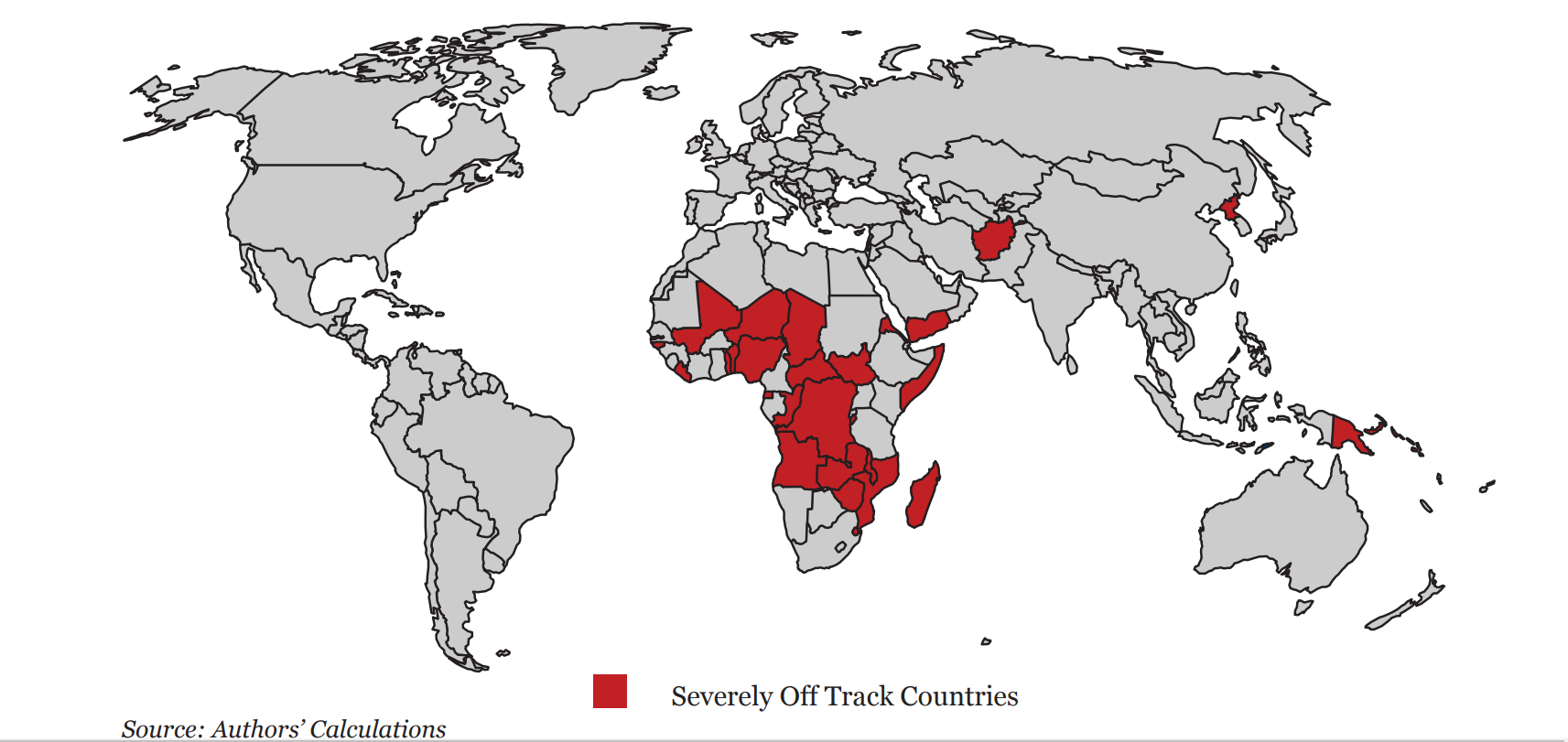
In the brookings article, Senegal was not listed as one of the 31 countries. This is encouraging, as Senegal enjoys more wealth and a generally higher standard of living and quality of life than a lot of its surrounding countries in Africa, and produces a higher GDP. I found it interesting to see how conflict and violence can throw these countries into poverty, and I also contrasted and compared it with what violence does for a country like the United States. These countries are plunged into and stuck in poverty due to war and conflict, but we had perhaps our strongest economic boom after World War 2, and generally are profitable in industry due to war. Not saying that war is good or that in any way justifies the loss of human life, but’s its definitely a “rich get richer” game.
I would argue that Digital Technology is a big difference maker in geopolitics and global economies. Digital Technologies, the Internet, etc, and becoming the standard across the world. We don’t do things the old fashioned way anymore. It is very much an “adapt or die” scenario for a lot of countries. For countries that are able to have the infrastructure, emerging technologies and digital technologies do wonders. They serve to equalize the world in a lot of ways, make commerce and business easier, makes the world smaller, advances in technology also lead to advances and the spreading of education and healthcare. However, if you are a country that does not have the ability to afford these things right now, having all your neighboring countries getting these technologies could push you even further behind and make the country even more of a relative bottom feeder.
Right away, in terms of technicality, I disagree with the article. I understand in principle what the article was saying, and morally I line up with the author, but Africa is not “rich.” If someone breaks into my house and steals all my money, I no longer have that money. It does not matter if I owned it, or I originally had the money, or how I lost the money, the money is in someone else’s hands now, no matter the morals of how they got it. And comparing the standard of living, quality of life, GDP, all other measurables in Africa to that of the Western world, they are indeed “poor.” Of course there are plenty of rich and elites in Africa, but that can be said of any country. A citizen in the Congo does not enjoy the same life that a citizen of Connecticut does. Predatory practices and things like using countries as tax havens, things that the Western world does to keep Africa down, should not be done. But that does not change reality.
Sources:
https://www.aljazeera.com/indepth/opinion/2017/05/africa-poor-stealing-wealth-170524063731884.html
http://blogs.worldbank.org/ic4d/digital-economy-senegal-envisioning-future
Blog Post #4
Part 1:
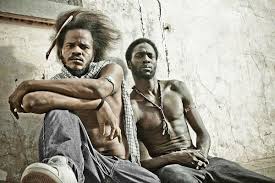
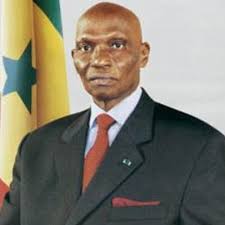
The “cheetah” I have chosen to take a look at in Senegal is the rap group Keur Gui. Music is something that resonates with all kinds of people. If someone is trying to reach as many people as possible with their message, news outlets might not always be the best way. They tend to appeal to more specific demographics and younger people/impoverished people may not have the same level of access to news outlets. But music is much more universal. The rap group Keur Gui, founded the Y’en a Marre movement. They did this by teaming up with journalists and other movements. This movement came in response to Senegalese President Abdoulaye Wade’s attempt to bypass the law and secure a third presidential term for himself. President Wade could be considered a Hippo, he is uninterested in the wellbeing of the country and sought personal power for himself. Keur Gui and their Y’en a Marre movement brought widespread notoriety to this issue, an issue that a lot of people who may just be struggling to get by day to day might not otherwise notice, to ensure that Wade’s actions do not go unnoticed. Keur Gui were tired of the corruption in their government, the same old bigwigs acting out of personal gain, and decided to speak truth to power and hold their feet to the fire. Members of the group were even arrested for speaking out against Wade, but, in large part due to their activism, Wade was defeated and replaced in the Presidency. The group did not stop their, they continue to write about pressing issues in Senegal today, and use their power and their reach to continue making progressive strides in government.
According to freedomhouse.org, Senegal is classified as “free.” Senegal has had peaceful transfers of power since 2000, not facing any major war or conflict. More So than a lot of other countries, Senegal has done a good job at holding its government officials accountable when they show corruption or abuse their power. One of these examples was what I had discussed previously in this blog post, with President Wade being stopped from getting a third term. Another example of a corrupt Senegalese politician getting justice would be the mayor of the city of Dakar, Khalifa Sall, getting put in jail for stealing and misusing millions of dollars of government funds. Are there still politicians that are corrupt and getting away with misusing their power? Almost certainly. I feel like that could be said for any country. However, at least Senegal is taking some action and setting somewhat of a precedent that the people will not tolerate this, and that is you are caught, they will punish you. This is not the case in all African countries.
YALI is active in Senegal, and they have enacted programs to do things such as develop entrepreneurship skills in citizens and empowering local women.
The most pressing thing in Senegalese news right now is the upcoming Presidential election, which is actually slated to happen on February 24th, a mere five days from the publishing of this blog post. There are suspicions clouding the election, that the incumbent, President Sall, is following in Wade’s footsteps and trying to manipulate and rig the election results. Ironically, it has been President Wade that has been calling him out for manipulating the election results. “Why even have the election?” He asks. Worst case scenario, these allegations are true, and President Sall gets away with it and gets the Presidency. At the very least, the information is out there and being spread, and is being made common knowledge amongst the people. They aren’t living in the dark and living in ignorance of what is happening. But this remains to be seen, and Sall could very well lose the election for all we know at this point. This is the first election for the Presidency that has happened since Senegal reformed its election policies. They did this to break up the two major parties that have dominated their government forever, and now, new political parties are being represented in the election. They did this by requiring candidates to receive citizen sponsorship from electorates. Perhaps the United States could learn something from this, seeing as we have our own issues with the two party system and the electoral college?
Part 2:
There are a lot of practical and sustainable health developments. Things like vaccinations are always good, and the benefits of those are self explanatory. Things that have a more everlasting effect, like mosquito nets, that do not need to be continually resupplied, also have great benefits. It is also very good to establish facilities in regions, send doctors over to work and educate and train the local population in medicine and healthcare so they can start to create their own better healthcare systems.
https://freedomhouse.org/report/freedom-world/freedom-world-2016
https://yali.state.gov/country-of-the-week-senegal/
BLOG POST #3
PART 1

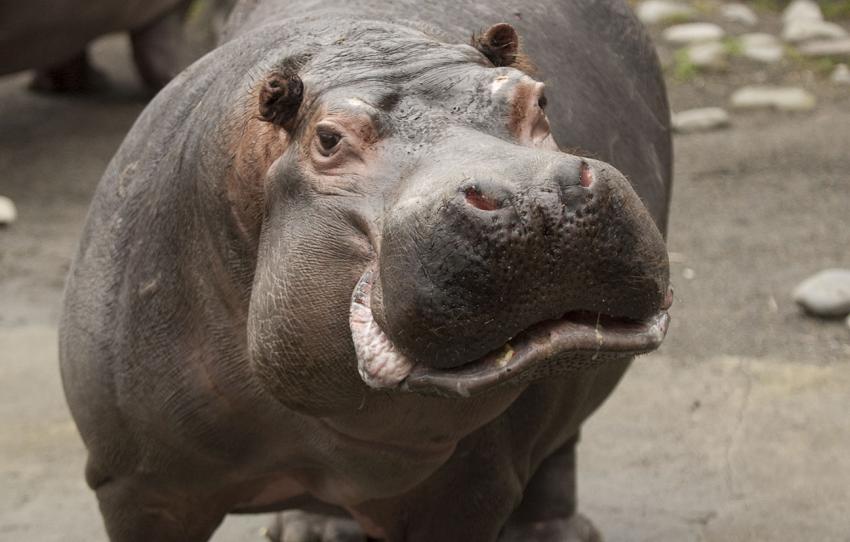
The “Cheetah Generation” refers to a new generation of young Africans, largely graduates and professionals, who are progressive, and want to tackle long standing issues in Africa in new, progressive ways. Cheetahs are “dynamic, intellectually agile, and pragmatic.” (CNN, 2010.) The same article says that Cheetahs do not blame past issues and dwell on them for Africa’s current state, they hold their leaders accountable and want African citizens to hold themselves accountable for their wellbeing. The “Hippo Generation” can be looked at as the exact opposite. They are the older, more pragmatic generation. The CNN article references says they are stuck in the past, and are generally holding back African progress. If we take the article for its word, at face value, we can assume that the Cheetah Generation is trying to fix the problems the Hippo Generation caused and are too stubborn to acknowledge.
In Africa, and, the entire world, the explosion of ICTs (technologies that provide information through telecommunications) has effectively made the world a lot smaller and has helped to equalize the global playing field. This has helped Africa in many ways. For example, a lot of jobs are able to be done remotely online and it makes access to education much easier, leading to a more educated population which will only help their economy. However, in life, there are no free lunches. Every good thing comes with a catch, and not everything the explosion of ICTs bring is positive. The availability of these technologies could create an even bigger disparity amongst some groups if access is not widespread enough. If Village A has access to the internet, and Village B does not, two villages that may have been equal will no longer be. The outsourcing of jobs due to ICTs, while it does provide people in developing countries with jobs, they are doing them for undercutting wages that are not entirely fair, not comparable to what these companies would be giving western employees, because they do not yet have the same labor laws that protect their workers.
PART 2
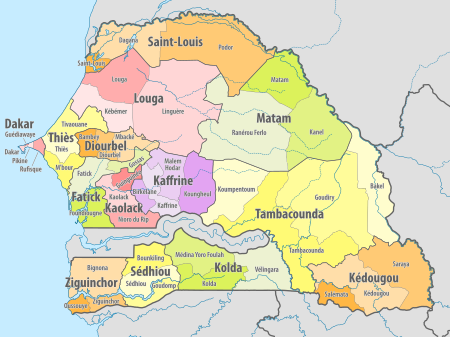
I do personally believe it is possible to be trapped in poverty. I feel like it’s evident from even looking at the United States. When one is born into poverty, they are surrounded by it, they don’t have the same resources available to them nor the same expectations placed on them, or the same opportunities surrounding them as those born into privilege do, so it makes poverty much more cyclical and generational. This is especially true in Senegal, the country I am using for this segment. The definition of human capital is a “stock” of knowledge, personal attributes, and abilities that a person possesses which help them contribute to the economy. Senegal is a poor country, lacking in human capital, so the opportunities for individuals to rise up to higher classes is not there. The GDP per capita in Senegal is only roughly nine hundred US dollars per year. This is barely enough to scrape buy and feed families. When you are barely scraping by, scraping by is all you can focus on. There is no time for investing, upstarting businesses, getting an education, nobody is even putting these institutions in place because it becomes every man for himself. In Senegal, twenty percent of children who start primary school are unlikely to reach grade five. These numbers do not happen in the Western world. They do not have the same laws that force children into education there, so if a family decides that putting their child to work farming their fields is more beneficial than sending them to school, which it is in the short term, that is what a lot of them will do. Education is one of the best ways to garner human capital. Education is free in Senegal up to age sixteen, although it is not enforced in all parts of the country, especially those under Islamic rule. This divide makes it harder for certain areas of the country to rise up to the status of the more well off ones. Senegal’s literacy rate sits at just above fifty percent, while it’s unemployment sits at just below. Compare this to the nintey-nine percent literacy rate in the United States, and a roughly four percent unemployment, and it’s easy to see why western countries can produce so much more human capital.
REFERENCES
http://www.cnn.com/2010/OPINION/08/25/ayittey.cheetahs.hippos/index.html
https://en.wikipedia.org/wiki/Education_in_Senegal
https://www.scholaro.com/pro/countries/Senegal/Education-System
BLOG POST #2
RADELET’S IDEA OF AFRICAN SUCCESS
To get an idea of what a success means for Africa, and for what Radelet defines as success for Africa, you have to put the continent of Africa into perspective. Africa is synonymous with poverty and unfortunate living situations, very much drastically different than the western world most of us are used to. Although, there are parts of Africa that are comparable to the west, a lot of the country is still developing and catching up to these standards of living. Radelet lists out ways of defining success for Africa, one of them being the government itself becoming more of a democracy and being held accountable. A lot of Africa was and is run by dictators, who cared little to none about the people and had no real interest in anything but personal power. Dictators would force their subjects into horrible living conditions and kill indiscriminately. However, nowadays, due to increased globalization and global pressure, the world, Africa included, is heading more towards democracy, and a lot of African governments are becoming accountable for their people..
When you get rid of dictators and get an elected government controlled by the populous, naturally more fair laws and policies are put into place, since power hungry tyrants are no longer abusing and hoarding resources. Radelet states this as one of his standards of success for Africa.
Globalization has played other roles in helping to rise up Africa. Radelet talks about the emergence of new technology, such as smartphones and the internet, which has effectively shrunk the entire planet and allowed for a widespread sharing of ideas, political discourse, and business, equalizing the planet to some degree. Africa’s economy is also on an upturn, Radelet talks about how changes in economic policy following Africa’s economic crisis. They reduced borrowing and their spending habits in general, investing more into themselves and their own economy.
EXPLORING AFRICA’S VILLAGES
The first village I wanted to take a look at is Mayange, Rwanda. This village stood out to me because of the country it is located in. The Rwandan Genocide is one of the most widely known in modern times, and one of the most brutal and horrific. No country that could allow something so horrific on such a large scale is in a good position, if anything, the country of Rwanda is probably most well known for the Genocide by most westerners. I wanted to explore how an average village in this country is doing, today, in the aftermath and years following of this horrific act.
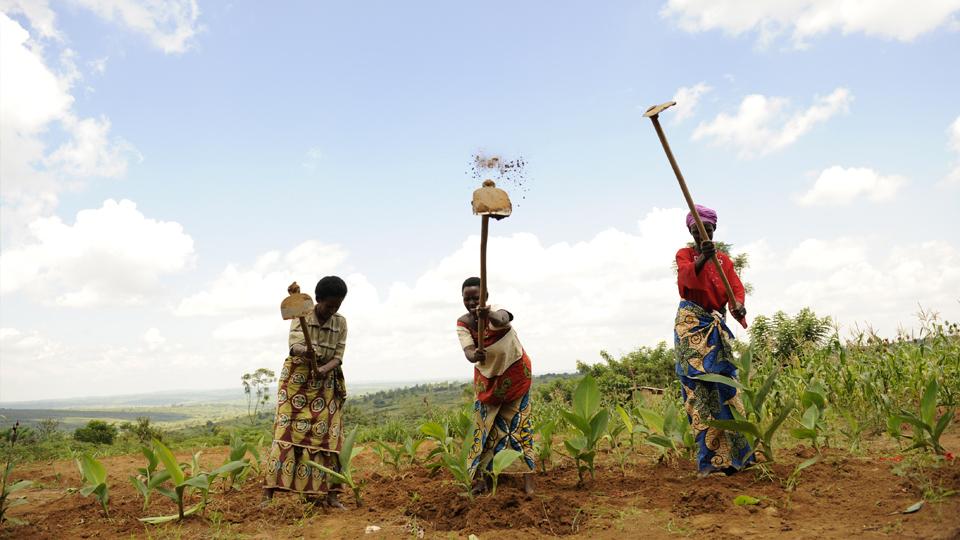
Before the Millenium Villages Project took action in Mayange, conditions were dire. The village was largely set up with and filled with survivors of the Rwandan genocide, who were left with nothing after the ordeal. One in five children died before the age of five. Schools were overcrowded. The whole village was overcrowded. Much of the village had no running water or electricity.
The goal for the village was to improve the standard of living by means on increasing literacy, improving healthcare, and allowing access to more resources. Through the MDP, they achieved a lot of their goals, and bolstered quality of life in the village. Libraries were built, businesses were established giving the village means to provide for itself, and access to running water was tripled.
In 1994, the year of the Rwandan Genocide, the GDP of Rwanda was 753.6 million U.S. dollars. Compare that to recently, 2018. In the first quarter of 2018, Rwanda’s GDP was 1.816 billion U.S. dollars. In one quarter. That is an extremely large jump, and much of that can be attributed to humanitarian efforts and projects like the MDP.
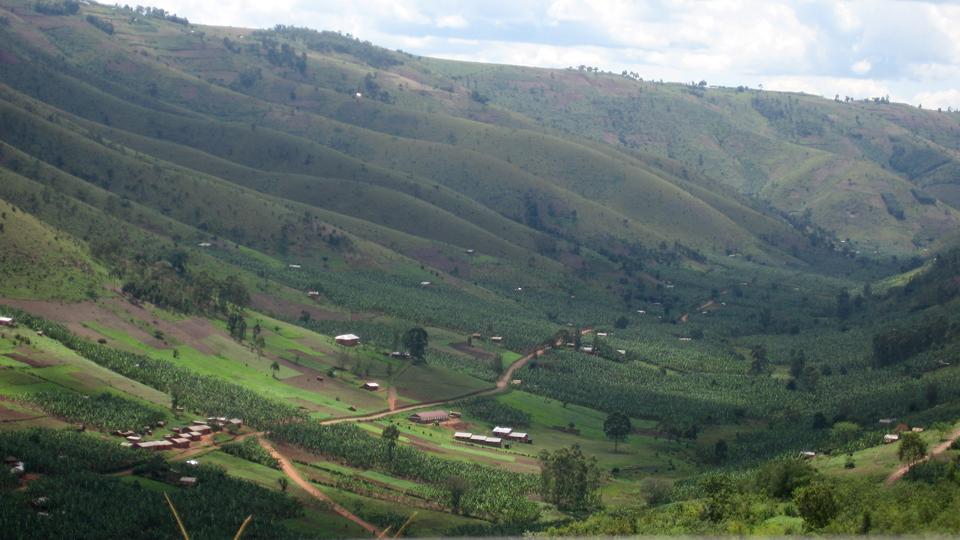
For my second village I explored, I decided to take a look at Ruhiira, Uganda. I found this village to be particularly interesting because of their main export, bananas. It’s not uncommon to farm things such as wheat, tobacco, cotton, sugar, corn, but I feel like banana farming is distinct to a select few geographical regions and gives them a unique identity.
Ruhiira was created in the wake of the man-made destruction of a sub-tropical rainforest. The village is very spread out, and the roads are very poor, which kind-of isolates the village, and makes it hard for them to connect and do business with the outside world. The destruction of the forest has lead to a serious shortage of wood, and firewood.
After the MDP, the village was able to improve its economic standing. “Farmers are successfully selling their bean surplus to WFP and have set up 32 banana marketing groups that were able to market their products at an average price of 3$ a bunch instead of 1$ previous” (milleniumvillages.org). Malaria has almost been evacuated from the village, more people have access to drinking water than ever, and the village agricultural industries have all been seeing new found levels of success.
Blog Post #1
- On a macro-level, Jacqueline Novogratz defines poverty as those who makes less than four dollars a day, which, interestingly enough, would comprise the third largest economy in the world. (Over four billion people.) Her main message in the TED talk is about what it means to combat poverty, and what is required to make it go away. She talks about propping up local businesses, retailers, giving them access to sustainable resources, getting some sort of a working local economy in place, rather than just dropping in tons of aid and care packages. In my opinion, it goes with the old saying “give a man a fish and you feed him for a day, teach a man to fish and you feed him for life.” Upon looking for other TED talks on the subject of poverty, I found an interesting one, called, “Poverty Isn’t a Lack of Character, It’s a Lack of Cash,” by Rutger Bregmen. In his talk, he delves into the idea of giving everyone a universal, guaranteed basic income and why that is the way out of poverty. I personally have mixed feelings on this idea. I feel like in theory, the idea is good, but I find it hard to implement in a lot of cases. I do not see how we can all of a sudden make the change in our country to start giving everybody, say, 30,000 dollars a year. Nothing is free, everything must come from somewhere, and I don’t see how practical that idea is. We are already in massive debt as a country, and I think a better idea would be to bring jobs back to America and create opportunities for people to work and contribute to our GDP would be a better solution.
- The goal of SGD’s is very simple, it is to make the world a better place. The goals include ending world hunger, poverty, stopping climate change, essentially tackling the biggest issues our planet faces head on. It is a call to action for our citizens and our governments to make the changes necessary to save our planet and make quality of life better.One effect of cutting government spending, is that we will decrease government borrowing. Sounds simple. The less we spend, the less money we need to borrow from others. This is a positive, because we are in massive amounts of debt to nations (such as China) that is only increasing. But often times, the government needs to spend money to make money. Government spending is required to create jobs, and pay government employees (teachers for example,) and create jobs by making projects, like road construction/repair, for instance.
- “Player’s On The Bench” are governments/organizations (McArthur sites the Bush administration) that distance themselves from MDGs and want to “sit on the bench.” Foreign aid is still given by these players, but they don’t want to be tied into the UN’s goals and have foreign powers dictate where and how much money the United States is supposed to spend. McArthur is critical of this because he says the fear is baseless, that the UN and their MDGs do not do these things, and in fact the only figure that has been promoted was endorsed by Bush himself.
- The article “How to Help Poor Countries” talks about the MDGs and how nations are to increase their foreign aid to .07 percent of their GDP to prop up poor countries. The authors of the article disagree with the principle of just simply pumping money into these countries, and they say that it is up to these poor countries themselves whether or not they want to use the resources given to them to elevate themselves. I agree with this idea. They say that it is necessary to create infrastructure and work for the people of these countries, so that they can increase their own GDP, and forge their own self sufficient economy.

