Amber Jones, Blog Post #10
When we look at this term “Jihadi”, we find that this term was dubbed to Western languages to describe Islamist militant movements. But there is much more to the term than what our language has given it.
Islamic Scholar Rudoph Peters tells us that Islamic modernists choose to emphasize the aspect of Jihad, while more fundamentalists view it as a struggle for the expansion of Islam and its ideals. This idea of fundamentalism could be seen all the way back to the 19th century, in which Islamic followers struggled against colonial powers in northern Africa, such as seen in the Mahdist War in Sudan.
What’s equally as interesting is that the Jihad is actually 2 movements. The first, as mentioned above, regards the battle to expand Islam and fight those that persecute it. But this lesser know jihad is one figured around resisting temptation and believing in the appropriate Islamic value system. This second jihadi system promotes less “Westernization” and have led to the extremist groups of Al Queda and ISIS, in which most of the globe knows, and many fear.
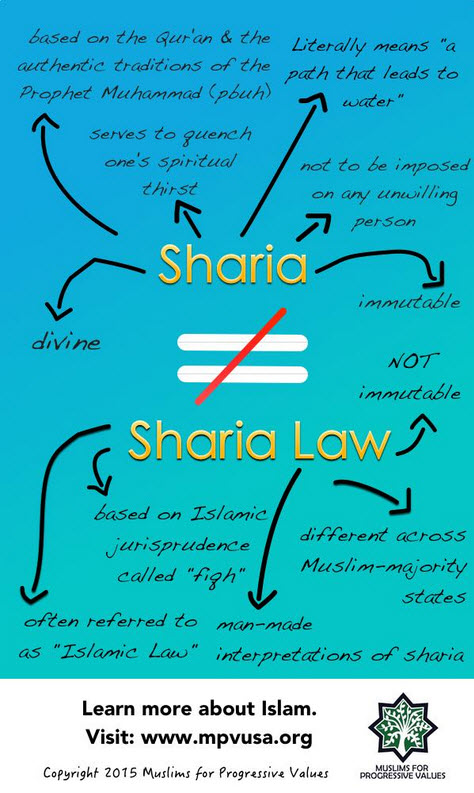
Now that we’ve looked at this idea of Jihadi, we need to also understand the concept of Shari’a law. Now, the Arabic definition of sharia is “way” or “path” and is not a legal system in and of itself. Sharia law is based on the Qur’an, as well as things Muhammad said and did. Shari’a is not a legal system in Islamic culture. It instead is a set of principles that help guide people to new answers and includes common cultural practices that date back to specific times and places in history. Many Muslim rulers wanted to find a way to make Shari’a into law, and decided which rules needed to actually be laws. This interpretation led to what the community now recognizes as Islamic law.

https://nationalinterest.org/feature/isis-here-return-the-jihadi-14600
Islamic law is based on a person’s interpretation of Shari’a. Because it is based on a human’s reading, Islamic law can and does mean different things to different sects and places, as well as different time periods. It is important to not that while many Islamic countries believe that family law matters should be handled according to Shari’a, many of these matters have to have some sort of Islamic law saught out as well, as Shari’a is not a legal system.
Islamic fundamental purists are affected because they feel that “modernization” or western & colonial influence is moving their law and practice in a direction that is against Shari’a and the Qur’an. A large portion of this is directed at how women are seen, treated, and activities they partake in. Many countries and sects have varying degrees of how women are treated. One good example is that in some Islamic countries, only men are allowed to vote, while in more progressive countries, both sexes have the option to partake, especially Muslims living in countries like America, Britain, Canada, and other democratic nations. Fundamentalists worry that this modernization will rock the foundation.

http://www.meramirpur.com/mehreen-baig-28-who-wants-to-be-a-good-muslim-and-a-modern-british-woman/
I personally don’t think that Islamic law at its foundation is consumed with this idea of “punishment”. I feel that as a religion and a set of laws, it seeks to help people lead a good and faithful life. Many differing Muslim groups and sects that practice Islam are adopting new practices. Some Islamic countries are allowing women to stop wearing the headscarves, some countries are giving everyone the right to vote or attend school. Islamic law and the Shari’a feel fluid, in that as long as a person is leading a good life, free of temptation, they are fulfilling the Qur’an’s ideals.
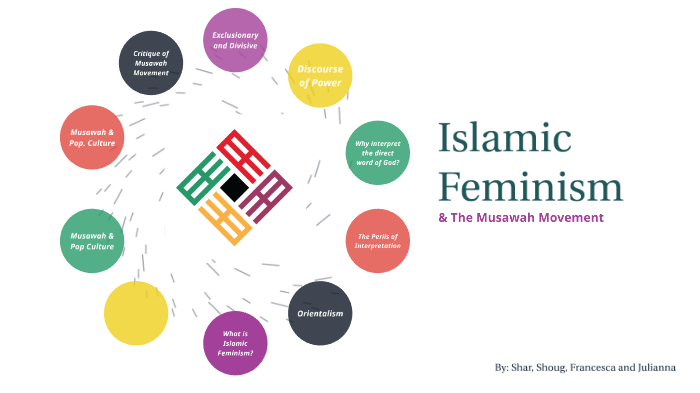
In keeping with this idea of Islamic law being fluid and more tolerant, we look to this group called Musawah. This is a movement started by women of Islam in 2009 who seek to teach, engage, and provide outreach regarding Islamic law and culture. They seek to promote equality in the Muslim family, primarily for women. Musawah facilitates access to existing knowledge about women’s rights in Islam, and how to apply feminist and rights-based ideals into understanding, equality, and justice with the Muslim legal tradition.


