By: Lana Henderson
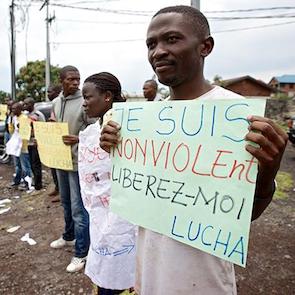
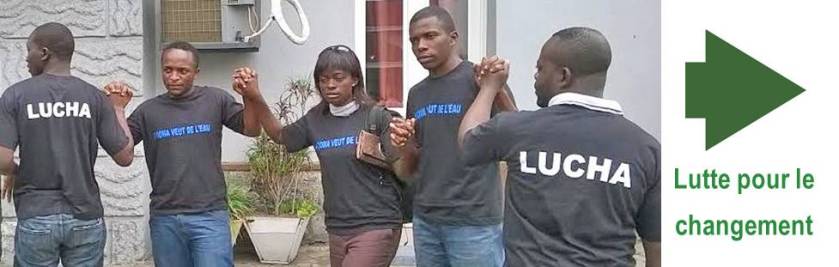
Part I: A) The group I choose to follow for this assignment is the Lutte pour le Changement citizen movement known as LUCHA in the Democratic Republic of the Congo. LUCHA can be identified by a green arrow as their symbol or the use of green on their text. This is a group of the Congo’s youth that is dedicated through protecting civil liberties through mobilization and organization over the use of weapons such as guns as a source of power. In 2014 they organized a march to demand for clean drinking water in Goma which had a turnout of 3,000 participants. They further mobilized to get their message all over the city on billboards, posters, vans, buses and essentially any way they could to get their message out. They have meet problems from authority when trying to get their demands met. At a concert representing One Peace Day LUCHA felt that there was a low level of demands requested and so they showed up to the concert to assert their demands. This was not appreciated by the National Intelligence Agency that arrested three of their members. LUCHA has organized numerous sit-down events, marches, rallies and open letter events that are consistent with their nonviolent approach. When talking to a member, Fred Buhama, he discussed the discontent youth were feeling with the lack of results they saw from already established groups, so they believed that the best way to go forward was the creation of their own group. They are an informal movement that gains a lot of its power through a collective the group doesn’t have a president or a certain director who oversees the mission of the group. They create decisions during general assemblies and that are hosted in a collective manner so that now one feels that there is one group of idea that is getting majority of the attention. One of their other member Micheline Mwendike discussed how this was a male dominated group with about 30 percent of the member bring women due to societal pressures. There is a big reflection poorly on women who engage in this type of activism especially without a husband present as well as the rhetoric that engaging in “this type” of behavior will limit prospects for future marriage.
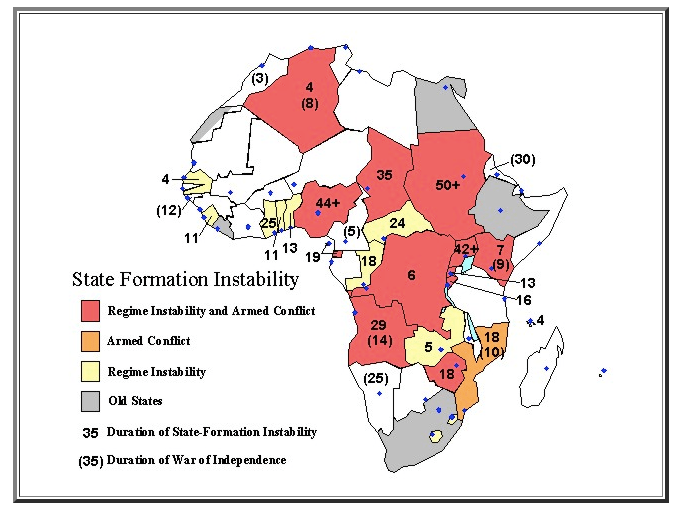
- According to Think Tank Freedom House the Democratic Republic of the Congo is not free. Part of the reasoning for this is like discusses by the group LUCHA there is harassment and unlawful detention of advocates, civil liberties groups and journalists After the attempts of president Joseph Kabila to make his term length longer in 2015 there were many eruptions of protests against this that led to many documented human rights violations as well as disappearances. There are also many rebel groups still prevalent that are contributing to internal displacement. For political rights they scored a nine out of 40 (9/40) due to their being corruption within the office of the presidency but also within the army and forces that enforce rules. There is plenty of violence occurring at the hands of authority to those enquiring about their civil liberties. On civil liberties they scored sixteen out of sixty (16/60), this is mainly due to the limit on freedom of expression that can be clearly seen through the detention of journalists. There is also already very low defined freedom of speech discussed in the constitution. The judiciary system also has political manipulation and the charges brought forth to courts generally do not favor the citizens over the authority in power even if there is clear documentation of their wrong doings often victims do not receive any promise that they will receive justice. Government and government allied forces seem to hold impunity against even the “most heinous crimes”. The Polity IV Index rates the Democratic Republic of the Congo as a regime instability and armed conflict which is the worst rating given in their African Conflict page. This is tracked through the periods of stability, state formation instability, and post-formation instability. Due to the amount of revolutionary wars and ethnic warfare specifically is seems that the DRC has had more than one issue with these in their developmental stage. Another thing that went into this rating was a genocide or politicide that happened in the 1970s, this was the change of the DRC from is previously known Zaire. They also went through many foreign power disruptions that disrupted their progress. As well as with the shift of so many governmental problems there has also been a lot of inter warfare occurring as well as the rise of rebel groups to accompany governmental power corruption.
The Washington post article discusses 2018 being the 12th consecutive year of declining democracy. Though there is a clear fall when looking at studies there is a still a big global pull toward democracy and majority of people claiming that is the type of leadership they want. There is also discussion on how world power such as America have impacted the approach to democracy, due to the way our president Trump has decided to discard American principles throughout his presidency and a sense of isolationism. There has also been a lot of look toward China that looks at how to use to technology to advance the control of a regime over its people. One reason being the Trump administration has had a loud voice in being racist, homophobic and otherwise generally speak against the tone that America has come to be known as when it comes to democracy. Also due to the growing amount of isolation America has taken from engaging in world issues a once known democracy powerhouse there is less fear about seeing consequences for their actions as a consequence it seems from the nations that are experiencing this change. YALI is active in the Democratic Republic of the Congo. On the site there is discussion from participants in the DRC who talk about the ways they’ve seen changes in their lives from being part of this program. One boy, James Ntakiruti Gihoma, discusses how through taking the online courses that are offered he has come to a realization about how strong it would be to raise the society if the girls where included in education. So, he has used the skills he is learned to help members of his community advocate for education. There is also another discussion with Santa Aziz who discusses how this program helps further their efforts with orphanages in the DRC. There is also a member Brackley Cassinga who discusses how this program has helped them to work with youth to make electronics from scratch and waste that help the community. He is teaching students how to create mobile apps, coding, designing websites, solar controller, an audio amp, inverters, regulators, and home automation systems. He works to empower the youth to be technologically literate. The most recent article I found on AllAfrica discussed the Ebola affected areas of the DRC. They have had a hard time with being able to collect data to understand more about the northern provinces. There is hope to use this survey to communicate a clear understanding of where the needs lie internally from the opinion of those dealing with it to the Red Cross.
Part II:
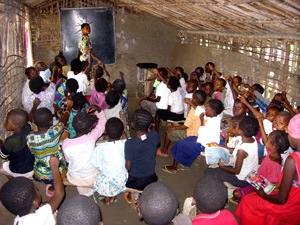
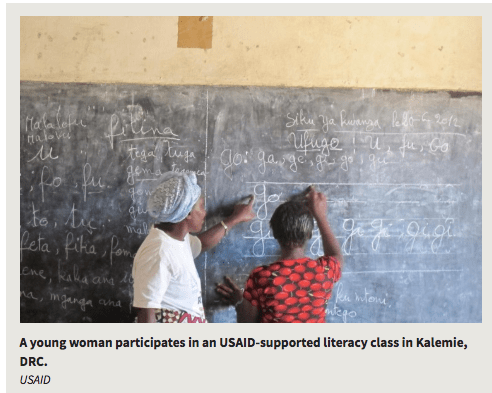
- Chapter 4 discusses the problems that have been seen with education. There is little help with teachers and creating an environment that promotes learning and retention. There are little resources that are invested into the schools which makes the ability to learn seem very hindered. There is a problem with favoritism and the idea that certain kids are going to go on further and be able to graduate and get government jobs and these children are valued over the others. The children can sense this change in behavior they experience from their teacher and it causes behavioral problems within the learning efforts on top of increased other problems. Men’s school life expectancy is 11 years, yet women school life expectancy is only 9 years. One thing that has continually been shown through our readings though is the loss there is between the capabilities of girls and the change women have made to their economies. Due to needing workers at home it is likely that daughters rather than sons will be the ones kept home away from their studies but even seen within the unemployment rates women often to more to contribute to the rise of their societies. There is a way that women are regarded in this culture that can even be seen in their absence in groups such as LUCHA that show that educated and liberated women are looked down on in this country due to that being equivalent with promiscuity or lack of ability to be a “wife”. Data from USAID indicates that only 67% of children who start in primary school make it to sixth grade. Though the government has made some shifts that show that the understand the need to place more emphasis on education, in 2015 the DRC increased financial commitment from 7.9 percent of their budget to 14.7 percent. There is a measure being taken by the USAID and the United Kingdom department of international development that is set to go from 2016-2025 that works to target governments missions for education. This program also gets teachers training on developmental approaches for local languages as well as works on student retention efforts.
Resources
Congo, Democratic Republic of (Kinshasa). 22 Jan. 2016, https://freedomhouse.org/report/freedom-world/2016/congo-democratic-republic-kinshasa.
“Country of the Week: Democratic Republic of the Congo | YALI.” Young African Leaders Initiative Network, 2 Mar. 2017, https://yali.state.gov/country-of-the-week-democratic-republic-of-the-congo/.
CSP Political Instability in Africa. http://www.systemicpeace.org/africa/africa.htm. Accessed 18 Feb. 2019.
Education | Democratic Republic of the Congo | U.S. Agency for International Development. 19 Apr. 2017, https://www.usaid.gov/democratic-republic-congo/education.
LUCHA: Youth Movement in Congo Demands Social Justice | Pambazuka News. /governance/lucha-youth-movement-congo-demands-social-justice. Accessed 18 Feb. 2019.
“Opinion | We Looked at the State of Democracy around the World, and the Results Are Grim.” Washington Post, https://www.washingtonpost.com/news/democracy-post/wp/2018/01/17/we-looked-at-the-state-of-democracy-around-the-world-and-the-results-are-grim/. Accessed 18 Feb. 2019.
Schlein, Lisa. “Congo-Kinshasa: Breaking Down Community Resistance in Ebola-Affected Congo.” Voice of America (Washington, DC), 18 Feb. 2019. AllAfrica, https://allafrica.com/stories/201902180258.html.
Top of the Class | Poor Economics. http://www.pooreconomics.com/chapters/4-top-class. Accessed 19 Feb. 2019.
—. http://www.pooreconomics.com/chapters/4-top-class. Accessed 19 Feb. 2019.

