By – Jacob Feist
Part 1: Background, History & Economy
Background: Post 7 outlined the current relationship between the Muslim community and the native community in Europe. This dynamic is highlighted and amplified in France due to population size and current events. France has the largest Muslim population of all European countries and many Muslims have found France to be their home. These members of the French community have embraced the local culture and Identify as French Muslims. Yet, certain dimensions of French culture have created conflict. In the book, “Islam, Europe’s Second Religion” Hunter breaks down these cultural aspects into three categories.
- Laicité secularism discourages government from operating within religious affairs or capacities
- Negative Muslim generalizations and reputation stemming from France’s relationship with Algeria
- The Muslim community not assimilating creates friction with the French community
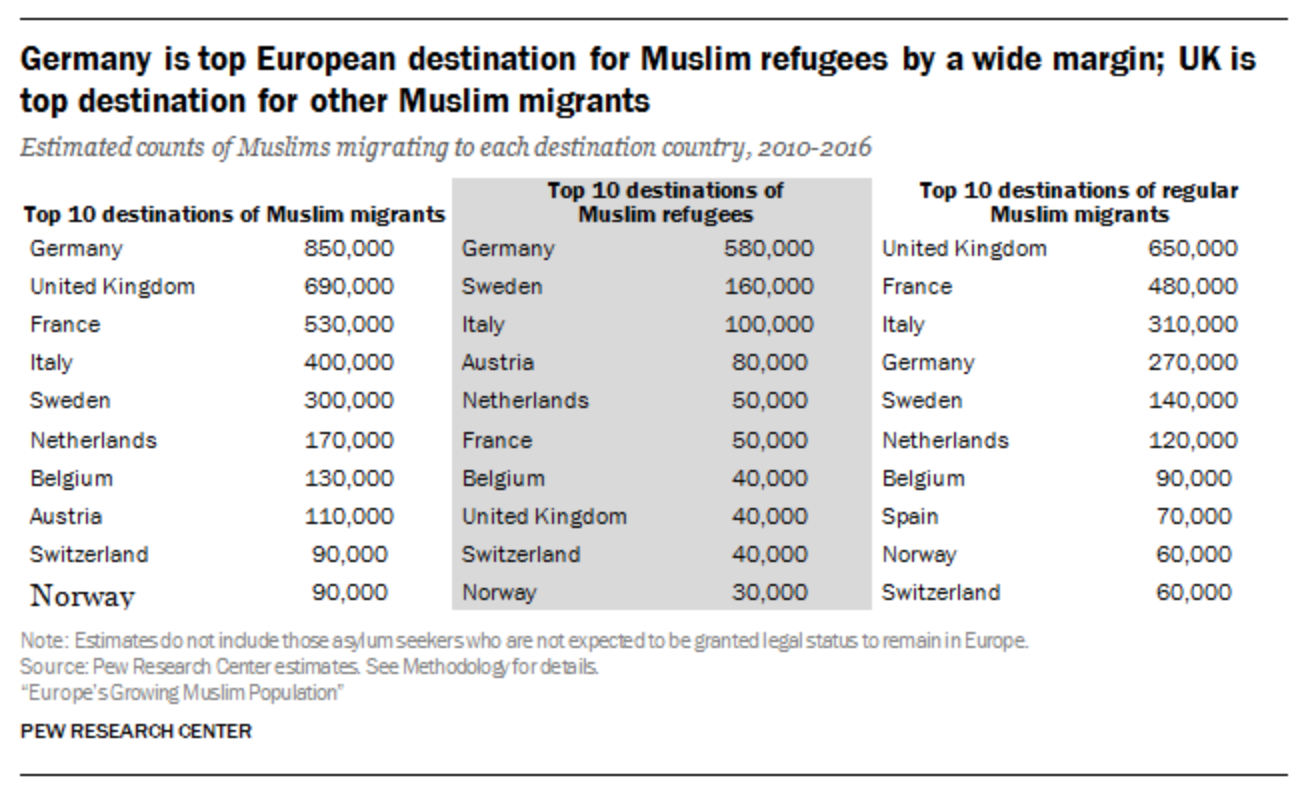
History: However, to further understand the current situation, one must understand the history of the situation. The first wave of French immigration occurred in 1914 as a result of the WWI and the rise of industrialization in France. This trend continued, as labor and industry developed, as did the need for workers and immigrants. Many of these vacant jobs were filled by Algerians who fought on the side of the French during the War for Independence. In 1970, this immigration model was drastically changed. The job market decline and immigrants stopped coming to France in search of work, rather they were attempting to reunite with their family members. Consequentially, the goal of immigration shifted from temporary work to permanent relocation.
Economy: Naturally, friction within history and government has shaped the modern economic landscape for French Muslims. Unemployment for the Muslim community is almost twice the French national average. This problem is reinforced by a lack of full-employment, as Muslim discrimination has caused educated Muslims to receive less fortuitous job opportunities. As a result, Muslims have been trying to find alternative methods to entering the job market. The current models include the 1998 “Positive Discrimination” law to receive greater opportunity and finding progressive globalized businesses.
Part 2: Laicité in Modern Context
Briefly mentioned above is the concept of Laicité, which can be best paralleled to the separation of church and state in the U.S. This law from 1905 ordains that French government should not interact or interfere with religion. The critical difference in the U.S. version and French version is that the French takes the rule to a far greater extreme. Laicité dictates that no official statistics about religion can be surveyed by the government. Hence, there are no official records regarding Muslim residents in France. Yet, accurate census data is not the only, or most critical, aspect of Laicité being challenged by Muslim presence in France. Laicité has been challenged by the use of hijab in public spaces, Emmanuel Macrons recent comments about “Islam of France”, and civil and government debates.
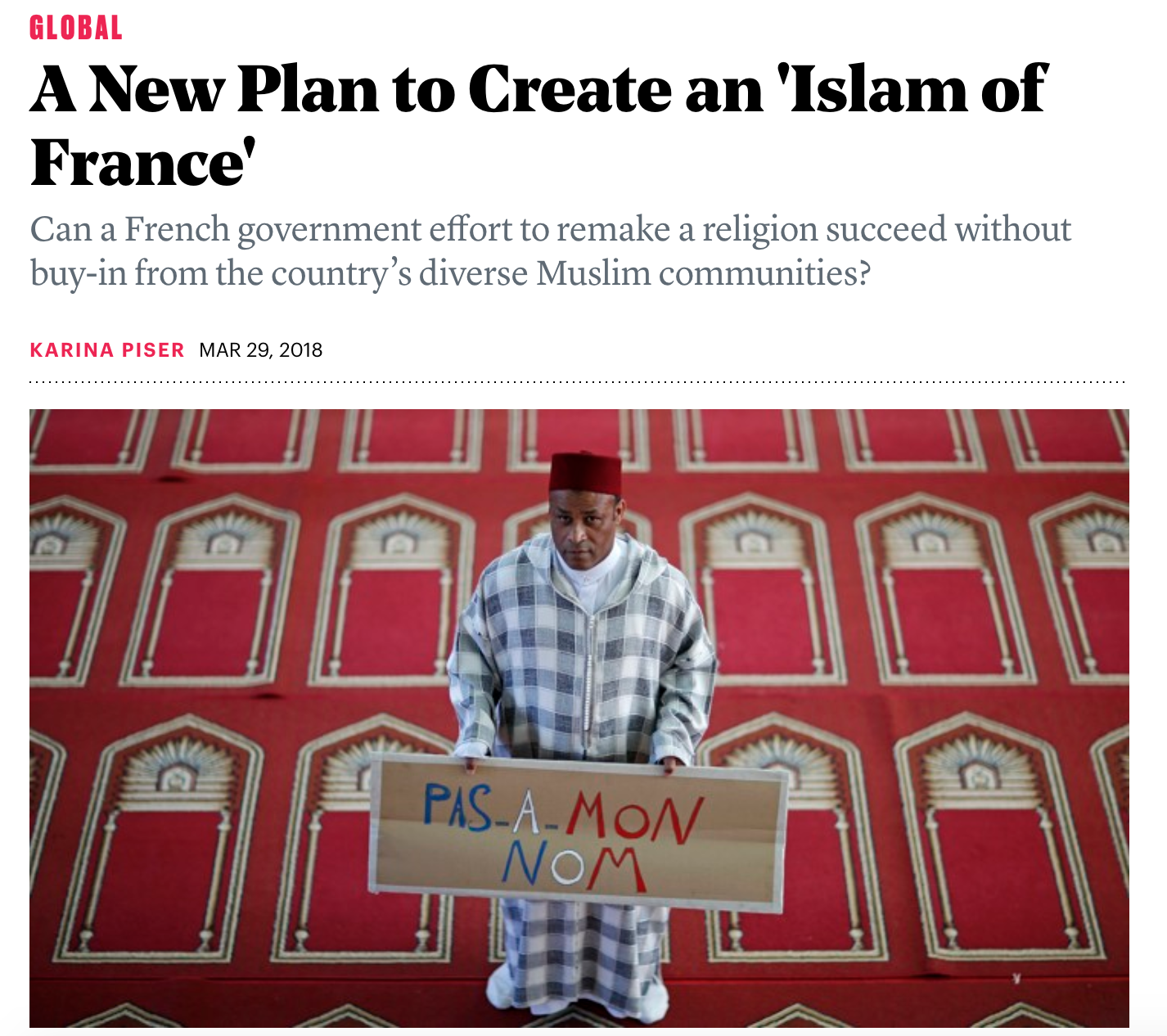
This brings in the argument of Laicité’s place within the modern world. I understand the division between religion and government. Additionally, I think most functioning democracies require this separation. That being said, dialogues must occur within government to address certain realities. As Hunter explains at the beginning of chapter 1, the religion of Islam is a reality in France. Thus, the government must respond accordingly to create systems of integration.
Part 3: Hijab painted as a threat to the west
One of the most difficult aspects of Muslim integration and acceptance in Western society is the hijab. This symbol of privacy and modesty has been radicalized by the western world as a symbol of tension between Muslims and non-Muslims. Moreover, this is not a new phenomenon. This demonization and negative imagery has been created over the course of several decades.
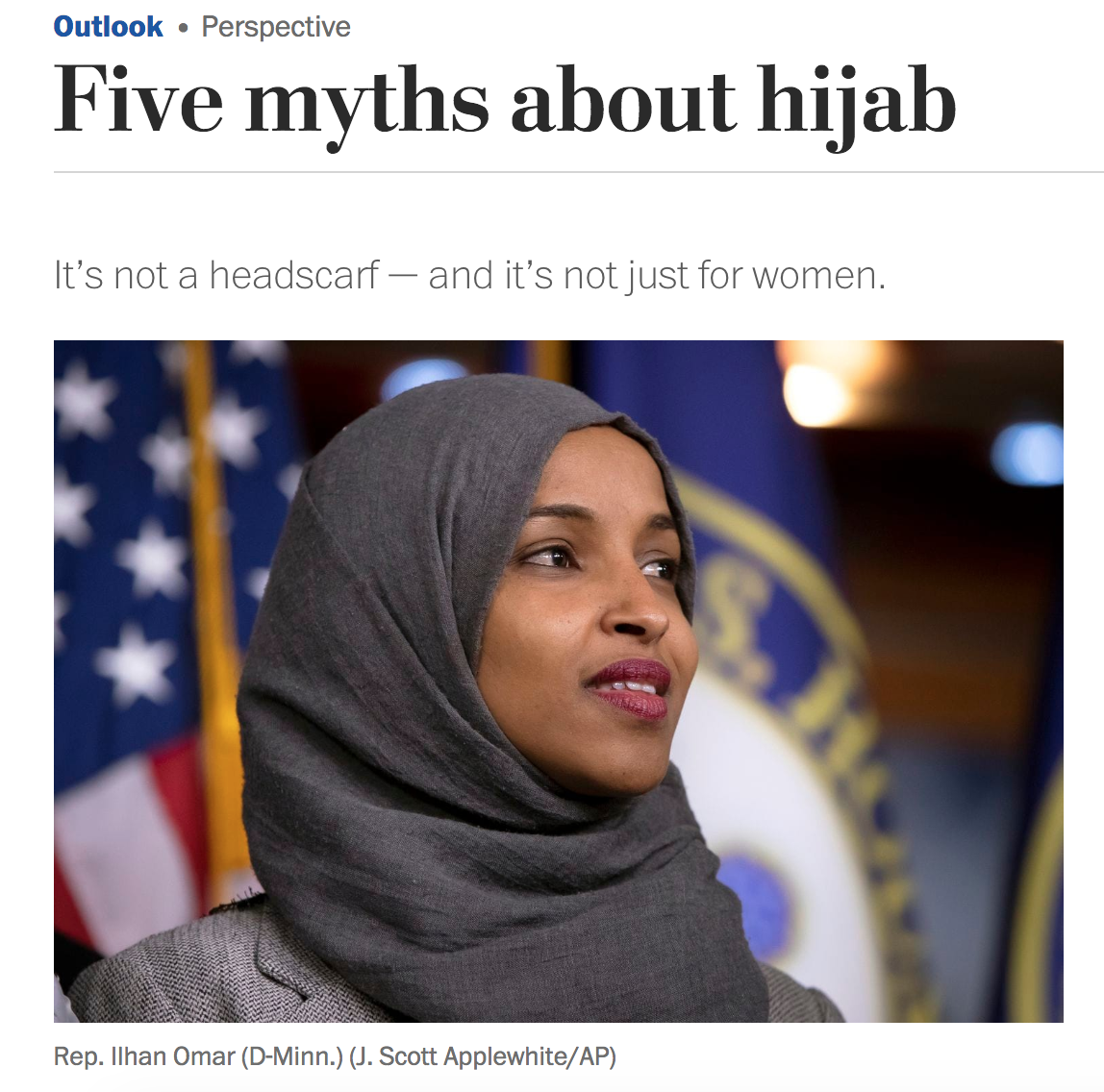
In France, it was publicly criticized as being a symbol of jihad extremists, which is objectively false. This extends to America, with recent headlines criticizing political leaders for wearing a hijab. Certain American news outlets and political leaders have questioned whether people wearing the headscarf can truly be loyal to America. The quote that resonates with me is, “People fear what they do not understand.” A lack of dialogue has allowed anti-Muslimism parties to paint the hijab as a threat to the west. Thus, creating the notion that somehow religious expression is a threat to one’s own ideals.
Sources:
“Chapter 1 – Islam in France.” Islam, Europe’s Second Religion: the New Social, Cultural, and Political Landscape, by Shireen T. Hunter, Praeger, 2002.
https://www.cnn.com/2019/03/16/media/jeanine-pirro-fox-news/index.html
http://www.pewforum.org/2017/11/29/europes-growing-muslim-population/
https://www.theatlantic.com/international/archive/2018/03/islam-france-macron/556604/

