By: Amber Jones
When we look at the article “Islam and the West”, we have to understand the idea of conflict transformation to understand the importance behind it. Cultural transformation refers to the idea that a person can alter perceptions in order to create new realities. This idea usually refers to religious issues and racial issues between multiple groups. This idea hopes to bring a tempered state of conflict between the groups, as long as the perceptions of them can change. If a group can change their perception, they can also change the relationships that they have with others.
Now that the basis of this idea is explained, we can apply this information to the Middle Eastern and Western conflict. The authors describe the relations between the two cultures in terms that both cultures tend to have issues with each other. In the West, we find that many people have skewed views of the culture and the religion, while in the Middle East, they tend to look at Western culture as indulgent, immodest, and other things. The authors note that while the Middle Eastern cultures do have much to offer us, both economically and socially, we still look at them negatively. To the Western world, they are seen as terrorists, or a culture looking to invade and take over.

This type of thinking leads to this idea of “the other”, which is defined as seeing those who are unlike us as people in conflict with us. This ideal breed ill will and contempt and furthers relations. By understanding this, we note that this idea of “the other” promotes conflict and promotes discontent between groups. I personally agree with this ideology of this statement, but not the promotion of the topic. I feel that we as a society should be able to look that “the other” and integrate more cultures into our own, as this is what America was founded on.
Shifting focus to immigration, we look at Frum’s article “How Much Immigration is Too Much”. He presents the idea that this is a complex issue, and he’s not wrong. Even today, our government is fighting to lock borders, keep others out, and calling for strict reform, instead of helping those truly looking to start a new life. Frum also points out that immigration is rising not only due to this idea of needing opportunity, but also people reacting to the need to get away from their own country of origin, whether due to political climates or other societal problems. This however, is causing issues with the American population, as many see new immigrants as a bad idea, that no matter the culture, we are going to be “overrun” with immigrants, instead of seeing these people as peoples in need.
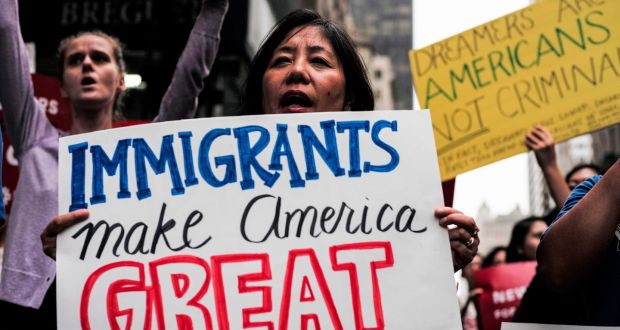
Frum goes on to say that none of our political systems, whether Republican or Democrat, are either right or wrong. We as a country obviously need to respond to humanitarian issues. We also need to realize the benefits that come with immigration, such as finding workers who are willing to accept lower paying jobs to support families while they seek to obtain their version of the American dream. But with this idea of lower paying immigrant work, we have to also put into perspective that some of these immigrants may not ever be able to carry insurance or have benefits, which in the long run, could put a strain on the medical culture and workforce as this population ages and requires more from the system. Frum greatly illustrates that immigration needs to be compromised and set up in both parties, and that it is up to us to make the change.
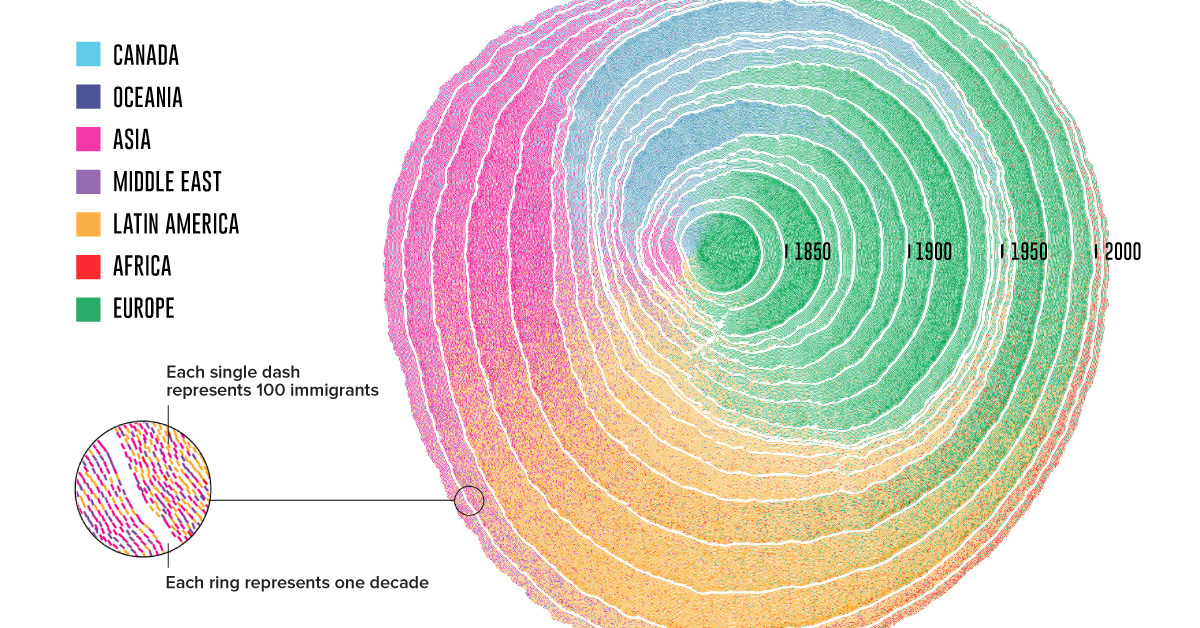
This is an animation site, but it distinctly shows the pattern of U.S. Immigration for the past 200 years, and the populations migrating here.

